Iranian Scientists, Colleagues Design Self-Repairing Nanofibers for Smart Wearables
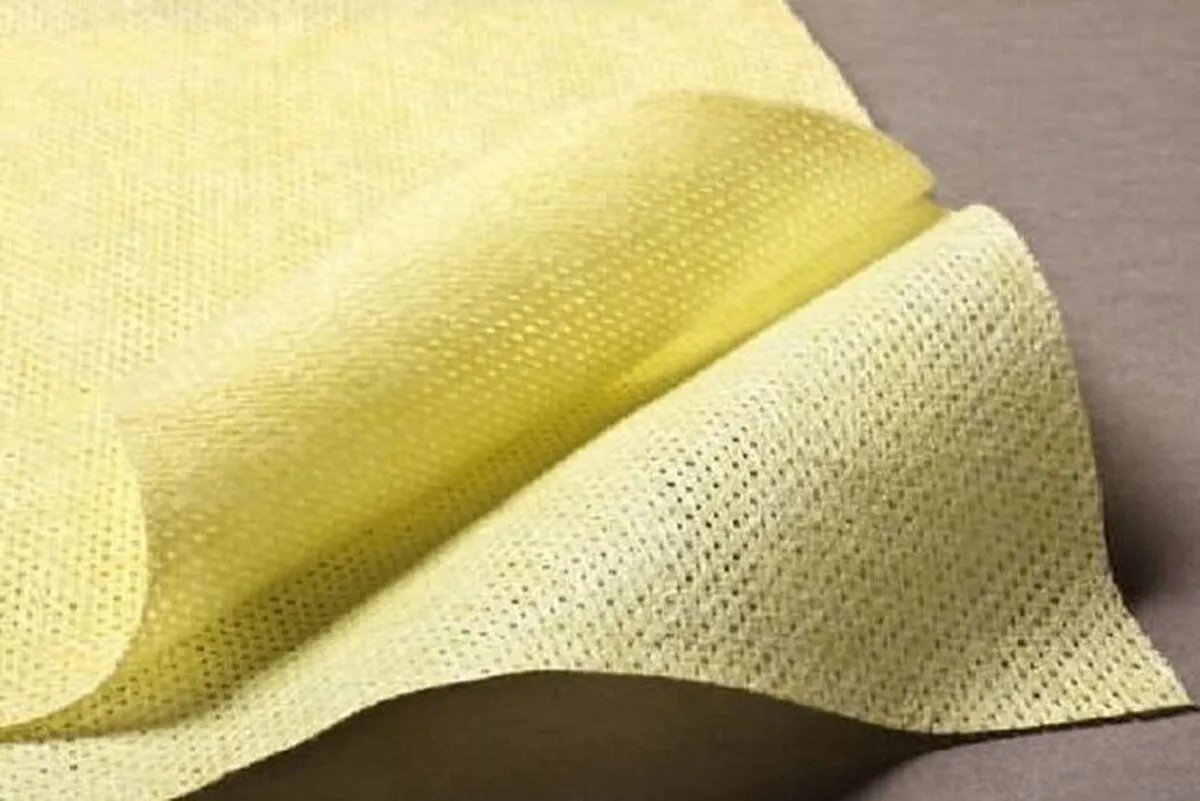
This achievement, which is based on a combination of polyurethane and cellulose nanocrystals, could bring about changes in the field of smart wearable textiles, since one of the fundamental challenges in this industry is the weakness of common fibers against mechanical stress and the passage of time. Experiments showed that these fibers not only repair surface cracks and scratches in wearable devices, but also do not reduce their strength and elasticity after severe tests.
The Iranian researchers and their colleagues succeeded in creating polyurethane-nanocellulose composite fibers that, in addition to high flexibility, enjoy self-healing ability and remarkable resistance to fatigue and aging.
The basis of this innovation is the use of cellulose nanocrystals (CNC); bio-based and environmentally friendly materials that can form hydrogen bonds with polyurethane molecular chains. These bonds create a dynamic and flexible network that, like a natural glue, repairs cracks and damages in the fiber structure. In other words, whenever the fibers are scratched or broken on the surface due to pressure or tension, their molecular structure is rearranged and the damage is repaired spontaneously.
The results of mechanical tests showed that adding just one percent of nanocellulose to polyurethane increased the elasticity to the breaking point by 33.92% and increased the tensile strength of the fibers by 17.93%.
In a relevant development in 2023, researchers at an Iranian nanotechnology company had also used electrospin nanofibers on filter papers to separate particles from liquid.
Specialists at ‘Fanavaran Nano Meqyas’ company applied a thin layer of electrospun nanofibrous polymeric web which can be produced in the form of a nanoporous filter. It results in production of a superior filtration capacity, lowest pressure drop in the passing air/liquid flow and long lifespan.
Covering the surface of conventional air filters with a thin layer of the nanofibers improves filter efficiency and increases dust absorption capacity.
The product can be used in making respiratory face masks, air filter papers, and separation of compounds from liquids.
Earlier this year, an Iranian knowledge-based company had also used nanofibers to make filters for industrial units, especially power plants, last longer.
Nanofiber filters possess a handful of advantages over conventional fibers.
Nanofiber filters tend to have very high filtration efficiency. They require less energy for the air to ventilate through them.
4155/v