Russian Scientists Develop Nanomaterial to “Burn” Infection Sites and Tumors
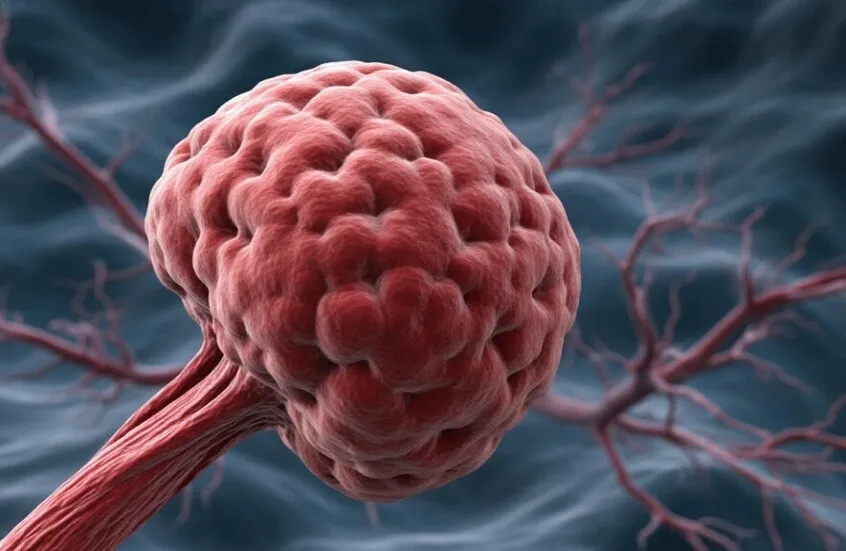
Scientists in Russia have transformed a combination of amino acids and layered sheets of a two-dimensional compound made of sulfur and molybdenum into a nanomaterial that produces heat under infrared light. According to the press office of the Russian Academy of Sciences, the new material could be used to target cancer cells and bacterial infection hotspots.
Alexander Goloveshkin, senior researcher at the Institute of Organic Compounds of the Russian Academy of Sciences, said the structural and physical properties of the material make it a strong candidate for medical applications. “The material we obtained is promising as a biocompatible photothermal agent for anti-cancer and antibacterial therapies. The availability and low cost of its raw components are also significant advantages,” he noted.
Researchers explained that targeted therapies for tumors, pathogenic microbial clusters, and malfunctioning tissues or organs have advanced significantly in recent years. These approaches rely on nanoparticles and other structures capable of converting infrared radiation—radiation to which the human body is almost completely transparent—into heat.
Russian chemists found that the newly developed multilayer nanomaterial can convert between 38 and 50 percent of laser radiation energy into heat, a level considered optimal for such treatments. The structure of the material resembles a multilayer “cake” or lasagna, consisting of molybdenum disulfide—a two-dimensional compound of sulfur and molybdenum—interspersed with chains of the amino acid arginine.
According to the developers, the presence of interlayer amino acids gives the material far greater stability than single layers of molybdenum disulfide. In addition, it demonstrates high biocompatibility and can be repeatedly heated and cooled without significant changes in its interaction with laser radiation, making it a particularly promising candidate for photothermal therapy.