Between Sanctions and Strategy: The U.S.-Iran Dilemma
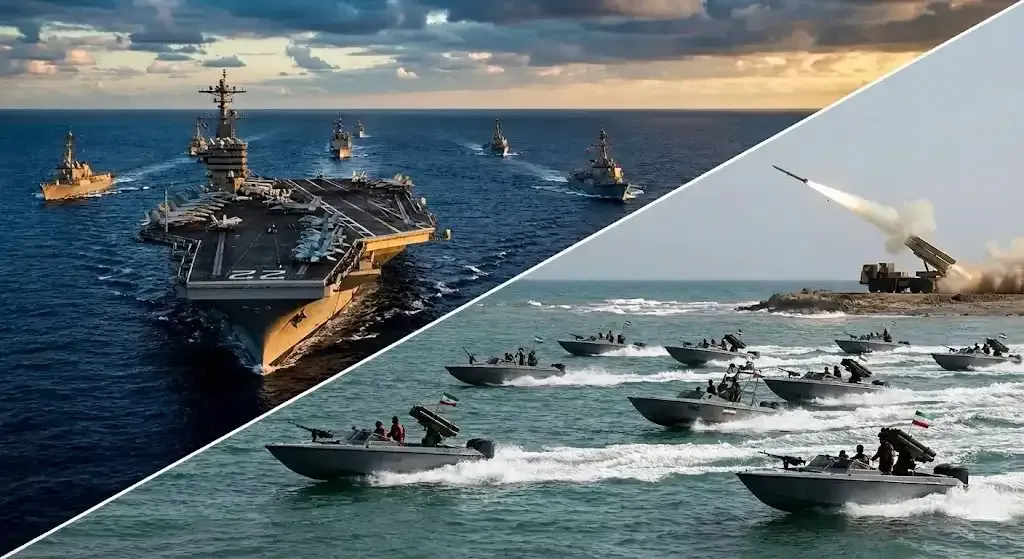
While the White House continues to frame diplomacy as its primary approach toward Iran, an unprecedented surge in U.S. military activity across the Middle East has raised serious questions about Washington’s true intentions. Are American officials genuinely pursuing a negotiated settlement, or is diplomacy being repackaged as a tactical layer atop a strategy rooted in pressure and deterrence?
Recent remarks by the White House spokesperson reiterating that diplomacy remains the president’s preferred course of action stand in stark contrast to developments on the ground. Reports from American media outlets detailing expanded military preparedness in the region suggest that what is described as diplomacy may function less as a strategic commitment and more as an instrument of psychological and political leverage.
Diplomacy Under the Shadow of “Maximum Pressure”
This apparent inconsistency is particularly consequential amid sensitive indirect negotiations in Geneva. From Tehran’s perspective, the U.S. posture indicates that the logic of “maximum pressure under a diplomatic cover” has not fundamentally changed.
In such an environment, expecting Iran to make unilateral concessions—while sanctions remain firmly in place and military threats intensify—appears neither realistic nor consistent with established diplomatic norms.
Iran’s distrust is shaped by its experience with the 2015 nuclear agreement and Washington’s subsequent unilateral withdrawal.
That episode continues to inform Tehran’s negotiating calculus. Iranian officials have repeatedly stressed that any future agreement must involve verifiable, durable, and tangible sanctions relief—not promises delivered alongside aircraft carriers and fighter jets deployed in surrounding waters.
Iran’s Show of Force in the Strait of Hormuz
Parallel to increased American military activity, Iran conducted military drills branded as “Smart Control of the Strait of Hormuz,” signaling deterrence to extra-regional actors. The exercise emphasized round-the-clock surveillance, rapid response capabilities, electronic warfare, and the deployment of advanced weapons systems.
The Strait of Hormuz, through which millions of barrels of oil transit daily, remains one of the world’s most strategically sensitive energy corridors. Iranian warnings about the potential disruption of this passage are framed domestically not as threats, but as reflections of geopolitical reality: global energy security, Tehran argues, cannot be sustained without factoring in Iran’s security and national interests.
Western reactions describing the drills as a “maritime warning” to Washington and Tel Aviv underscore the perceived impact of Iran’s deterrent messaging. By showcasing indigenous capabilities and intelligence oversight, Tehran appears intent on demonstrating that any military miscalculation would carry costs exceeding initial expectations.
Strategic Contradictions in Washington’s Calculations
Several Western analysts have labeled the current situation “highly dangerous,” a characterization that may reflect Washington’s strategic ambivalence. On one hand, the United States seeks significant concessions from Iran; on the other, it employs coercive instruments in ways that risk undermining the very diplomatic space needed for compromise.
Escalating the cost of military signaling, some observers argue, would require a major diplomatic achievement to justify it—an outcome that appears difficult given Iran’s stated red lines. Tehran has consistently declared that its missile program and its right to peaceful uranium enrichment are non-negotiable, framing them as core components of national defense and deterrence rather than bargaining chips.
Regional dynamics further complicate the equation. Pressure from influential regional actors—particularly Israel—plays a critical role in sustaining confrontation. From Tel Aviv’s perspective, a substantive U.S.-Iran agreement could enhance Tehran’s regional standing, a scenario that runs counter to Israel’s strategic calculations.
Energy Markets and the Risk of Strategic Miscalculation
Global energy markets are closely monitoring developments around Iran and the Strait of Hormuz. Recent oil price fluctuations reflect acute market sensitivity to any potential disruption in the region. Even the perception of limited instability in the strait can trigger significant shocks across the global economy.
From this vantage point, military escalation against Iran would not only represent a security gamble but also a profound economic miscalculation with worldwide repercussions. Iran, for its part, acknowledges that a large-scale war would serve no party’s interests. Yet it maintains that any act of aggression would be met with a response proportionate to the level of threat.
A Collision of Deterrence and Strategic Ambiguity
What emerges from the current U.S.-Iran dynamic is a confrontation between Tehran’s doctrine of active deterrence and Washington’s strategic ambiguity. If diplomacy is indeed America’s first option, its credibility will be measured not by official statements but by tangible actions—most notably meaningful sanctions relief.
Absent such steps, the continuation of this dual-track approach—negotiation alongside intimidation—risks pushing the region and the global economy into a phase of heightened instability, the costs of which may far exceed those of choosing political pragmatism today.