Leader: An Aircraft Carrier Is Dangerous, But What Can Sink It Is Even More Dangerous
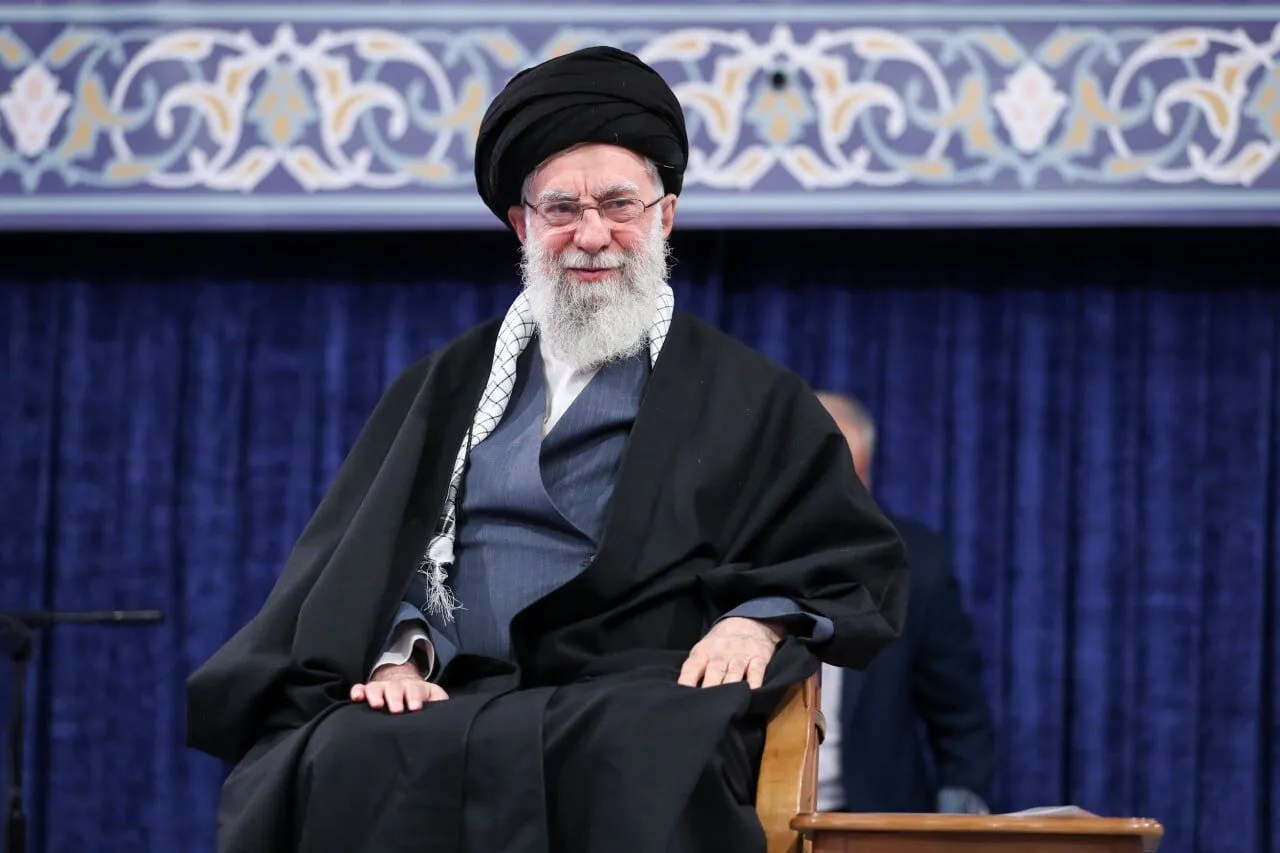
Speaking Tuesday before thousands of people from East Azarbaijan Province—on the eve of the anniversary of the 1978 uprising in Tabriz against the Shah—Ayatollah Khamenei responded sharply to remarks by former U.S. President Donald Trump about American military supremacy.
Khamenei noted that although Washington often portrays its armed forces as the most powerful in the world, even the strongest military can suffer a blow severe enough to cripple it.
He dismissed U.S. naval deployments and accompanying media rhetoric as ineffective intimidation tactics, asserting that Iran’s military and security institutions remain fully alert and prepared.
Referring to Trump’s acknowledgment that the United States has failed to topple the Islamic Republic over the past 47 years, Khamenei described the statement as an implicit admission of policy failure. He stressed that continued threats and pressure would not alter that reality.
The Leader characterized Washington’s tone as indicative of a broader ambition to exert dominance over Iran, adding that the Iranian nation, grounded in its religious and cultural values, understands how to respond to external pressure.
He reaffirmed that any attempt to destabilize the country would encounter decisive resistance, praising national unity and resilience in protecting sovereignty and security.
Khamenei also condemned what he described as U.S. interference in Iran’s defense and missile capabilities, as well as its peaceful nuclear program, calling such demands unjustified and irrational.
He criticized proposals for negotiations in which outcomes are predetermined, arguing that meaningful dialogue cannot proceed under imposed conditions and warning that such approaches are destined to fail.
On domestic matters, the Leader urged officials to intensify efforts to confront economic challenges, rein in inflation, and safeguard the value of the national currency. He emphasized that vigilance, preparedness, and cohesion are essential pillars of national strength.
Addressing the unrest that took place in January, Khamenei described the events as a foreign-backed plot designed to exploit segments of the youth population. He credited security forces, volunteer units, and ordinary citizens with preventing what he called an attempted coup orchestrated by hostile intelligence services.
Regarding casualties during the unrest, he categorized the victims into three groups. The first, which he described as “among the best martyrs,” included members of law enforcement, the Basij, the Islamic Revolutionary Guard Corps (IRGC), and civilians assisting them. The second group consisted of bystanders who lost their lives amid the turmoil. The third included individuals who were misled into participating in the unrest but later expressed regret.
Khamenei prayed for mercy and forgiveness for the victims, stating that—apart from those who led the unrest, accepted foreign funding, or took up arms—all others who were killed or injured should be regarded as children of the nation.
Concluding his remarks, the Leader pointed to the large turnout at February 11 rallies commemorating the Islamic Revolution as evidence of enduring public support and national determination to resist foreign pressure.