War, Politics, and Timing: How Iran Became a Domestic Power Play in Washington
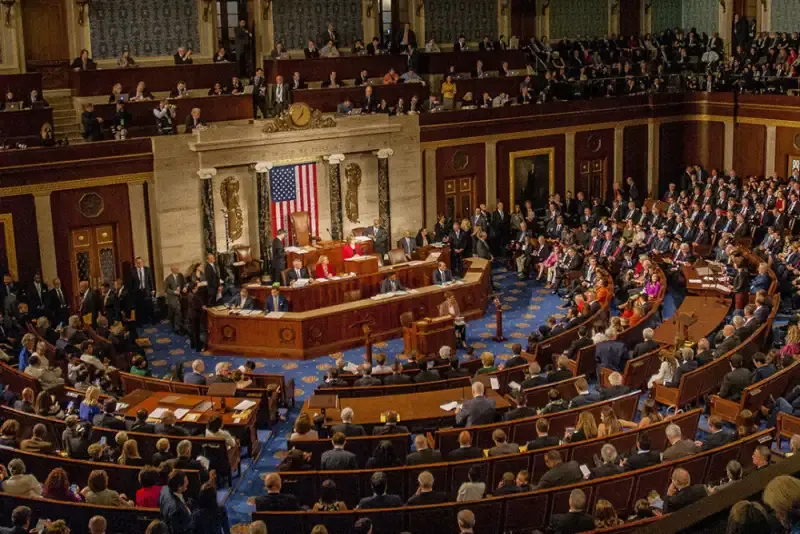
From the Democratic perspective, a potential war with Iran is not simply a national security issue—it is a self-inflicted political trap, one that Donald Trump is actively constructing. Democrats are neither attempting to halt this trajectory nor openly encouraging it. Instead, they appear willing to let it reach its peak, ensuring that the political and economic costs fall squarely on Trump and the Republican Party.
They understand that a conflict with Iran—unlike many limited U.S. military interventions—would likely be neither short, inexpensive, nor controllable. Escalation could drive up energy prices, intensify domestic economic pressures, erode public trust in government, and strain international alliances. From an electoral standpoint, these consequences could reshape the balance of power in upcoming congressional elections to the detriment of Republicans.
The Logic of Silence
Openly opposing the prospect of war carries two significant risks for Democrats. First, if war does not materialize, Trump could claim credit for “deterring the Iranian threat” and portray Democrats as weak. Second, if war does break out after strong Democratic resistance, the party could be blamed for obstructing decisive action or share in the fallout.
In this framework, tactical silence becomes the safer and more strategic choice—allowing Trump to proceed to the end of the path he initiated without political rescue from his rivals.
War as Opportunity, Not Objective
Crucially, Democrats do not appear to view war as a desired outcome. Rather, they see potential political opportunity in its consequences. A costly or unstable conflict could undermine Trump’s narrative of “decisive leadership,” highlight the volatility of personalized decision-making, and pave the way for Democrats to reclaim a congressional majority and strengthen oversight tools against the White House.
In blunt terms, if Trump is to stumble, Democrats prefer that he do so on ground of his own choosing—not through intervention that might ultimately shield him from accountability.
Polling Data and Erosion of Public Support
Public opinion data reinforce this calculation. Surveys indicate limited public backing for military action against Iran. A January poll by Harvard CAPS/Harris found that 71 percent of Americans opposed military action—even under a hypothetical scenario framed as a response to alleged repression of protesters. The data suggest that emotional or human-rights narratives have not significantly shifted public opinion toward war.
An Ipsos survey similarly indicated that a plurality of Americans do not believe the United States has a responsibility to provide military support to anti-government protesters in Iran. Together, these figures reflect a broader strategic reality: the U.S. president has struggled not only to build global consensus against Iran, but also to mobilize sustained domestic support.
After two decades of costly wars in Iraq and Afghanistan, American society shows little appetite for another crisis in West Asia—especially amid domestic economic strain, social polarization, and declining political trust. Reports placing Trump’s approval rating as low as 17 percent underscore the erosion of his political and social capital. In such an environment, a new war could accelerate that decline and deepen questions of legitimacy.
Israel’s Role: Alignment of Function, Not Unity of Goals
Israel—and particularly Prime Minister Benjamin Netanyahu—plays a critical role in this dynamic. Netanyahu has repeatedly and publicly argued that negotiations with Iran will fail and that demands should be set high enough to render any potential agreement effectively void from the outset.
While this stance contrasts with Trump’s occasional rhetorical openness to a deal, the divergence is more stylistic than functional. In practice, Netanyahu’s position narrows diplomatic space, placing Washington before a stark choice: accept a deal that may be branded a failure, or move toward military confrontation.
Yet the underlying objectives differ. Netanyahu seeks to prevent any agreement that would remove Iran from the status of an “immediate threat.” For him, the edge of conflict may be preferable to an imperfect peace. Democrats, by contrast, appear willing to let Trump struggle to maintain balance on that very edge.
Trump at the Intersection of Strategies
In this equation, Trump becomes the convergence point of two distinct strategies: for Israel, a vehicle to intensify pressure and close off diplomatic avenues; for Democrats, a political subject whose decisions may generate electoral consequences.
By raising demands and undermining the credibility of negotiations, Netanyahu places Trump in a precarious binary—either strike a deal quickly labeled as weak or move closer to military confrontation. Democrats, though not architects of this dilemma, are not rushing to dismantle it.
Their lack of forceful opposition to a potential war with Iran is therefore less a matter of irresponsibility than of cold political arithmetic. They view the trajectory as a trap of Trump’s own making and appear inclined to maximize its political consequences rather than neutralize it.
The result is a precarious landscape in which war may not be anyone’s explicit objective—yet all actors, knowingly or not, are edging toward it, each convinced that the ultimate political fall will benefit their own side.


















