Strategic Ambiguity as Policy: How Tehran and Washington Are Avoiding a Point of No Return
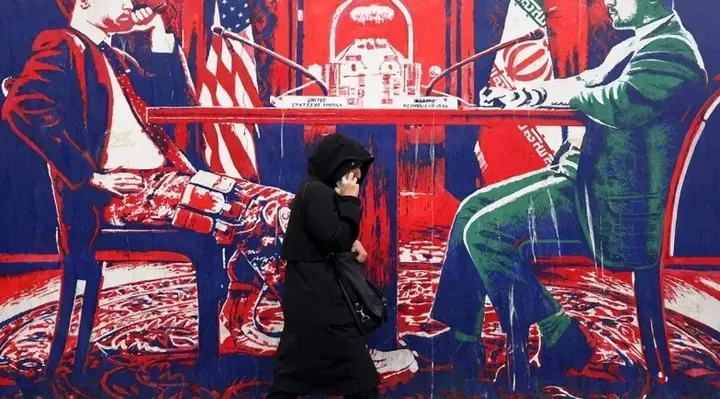
“Nothing can be taken as definitive.” This remark may best capture the essence of Iran’s current diplomatic posture, articulated by Foreign Ministry spokesperson Esmail Baghaei during a press briefing on Monday, January 26. His comments came amid a series of questions concerning the deployment of the U.S. aircraft carrier Abraham Lincoln to the region, including a query from China’s Phoenix television asking whether talks between Iran and the United States could reduce the likelihood of war.
At a time when Washington’s final decision has yet to crystallize—and Tehran, despite maintaining a high level of military readiness, continues to refrain from a pre-emptive posture—Baghaei’s response reflected a classic reliance on the “pendulum of probability.” While stressing uncertainty, he underscored that Iran remains alert yet restrained.
Baghaei was nonetheless explicit on one point: “You can only engage in dialogue and negotiations with a party that is not seeking war or confrontation.” Almost in the same breath, he reiterated Iran’s long-standing position that it has “never turned its back on diplomacy and negotiations.”
Baghaei was nonetheless explicit on one point: “You can only engage in dialogue and negotiations with a party that is not seeking war or confrontation.” Almost in the same breath, he reiterated Iran’s long-standing position that it has “never turned its back on diplomacy and negotiations.”
For Tehran, reliance on strategic uncertainty carries another advantage: preserving strategic ambiguity to avoid provoking the other side or opening the door to miscalculation. This logic is evident in Baghaei’s formulation—“We are serious about diplomacy, and we are serious about defense”—a statement ultimately reinforced by a stark warning: “If war is imposed, you will have no option but to stand firm.”
This stance delineates Iran’s strategic red lines. It rules out pre-emptive action while simultaneously rejecting retreat under pressure. The result is a composite approach—firm deterrence, tactical warning, and the preservation of diplomatic channels—designed to keep the opposing side locked in a complex and uncertain calculus.
War and Diplomacy from the U.S. Perspective
On the other side, Washington’s messaging also revolves around ambiguity and the pressure-negotiation nexus, albeit from a different angle. U.S. President Donald Trump, in an interview with Axios, claimed that Iran “really wants to reach a deal.” While merely an assertion, the statement suggests that despite visible military signaling, Washington has not yet crossed the threshold into a final decision for confrontation. Instead, it appears intent on managing the crisis through calibrated pressure while keeping negotiation options open.
Trump’s remark also serves a psychological purpose. Tehran has never declared opposition to an agreement; otherwise, it would not have engaged in five rounds of indirect talks via the Omani channel. Framing Iran as eager for a deal allows Washington to shape perceptions while sustaining leverage.
A Shared Framework, Different Angles
Beyond rhetoric, ideology, and psychological maneuvering, both Iran and the United States are grappling with the same complex, multi-layered reality—though they articulate it differently. Trump speaks at a perceptual level, emphasizing Iran’s supposed inclination toward diplomacy. Baghaei, by contrast, focuses on the strategic framework within which talks must occur.
Put simply, Washington seeks to retain military pressure as a bargaining tool, while Tehran insists that genuine negotiations can only proceed when pressure does not equate to forced submission. These perspectives neither fully converge nor directly clash; instead, they align loosely within a fluctuating space between threat and dialogue, governed by the pendulum of probability.
Between Negotiation and the “Negotiation Trap”
Assessment and Outlook
At present, neither war nor diplomacy appears inevitable. Tehran and Washington are operating within a zone of strategic ambiguity, maintaining a fragile equilibrium between pressure and engagement. Iran emphasizes defensive readiness and deterrence while preserving diplomacy from a position of strength, making negotiations conditional on the behavior of the opposing side. The United States, meanwhile, combines military signaling with an open door to talks, seeking to postpone a definitive decision on war.
In such an environment, the most serious risk does not stem from a deliberate choice for conflict, but from miscalculation. Military pressure on one side and political constraints on the other could interact in ways that trigger unintended escalation.
What is unfolding, therefore, is a high-tension suspension—a cautious strategic game aimed at buying time, consolidating deterrence, and preventing an abrupt crossing of the threshold into direct confrontation. Each side carefully sends signals, tests the other’s calculations, and preserves both deterrent and diplomatic pathways in an effort to avoid a hasty and irreversible decision.


















