Europe’s Double Standard on Terrorism Laid Bare
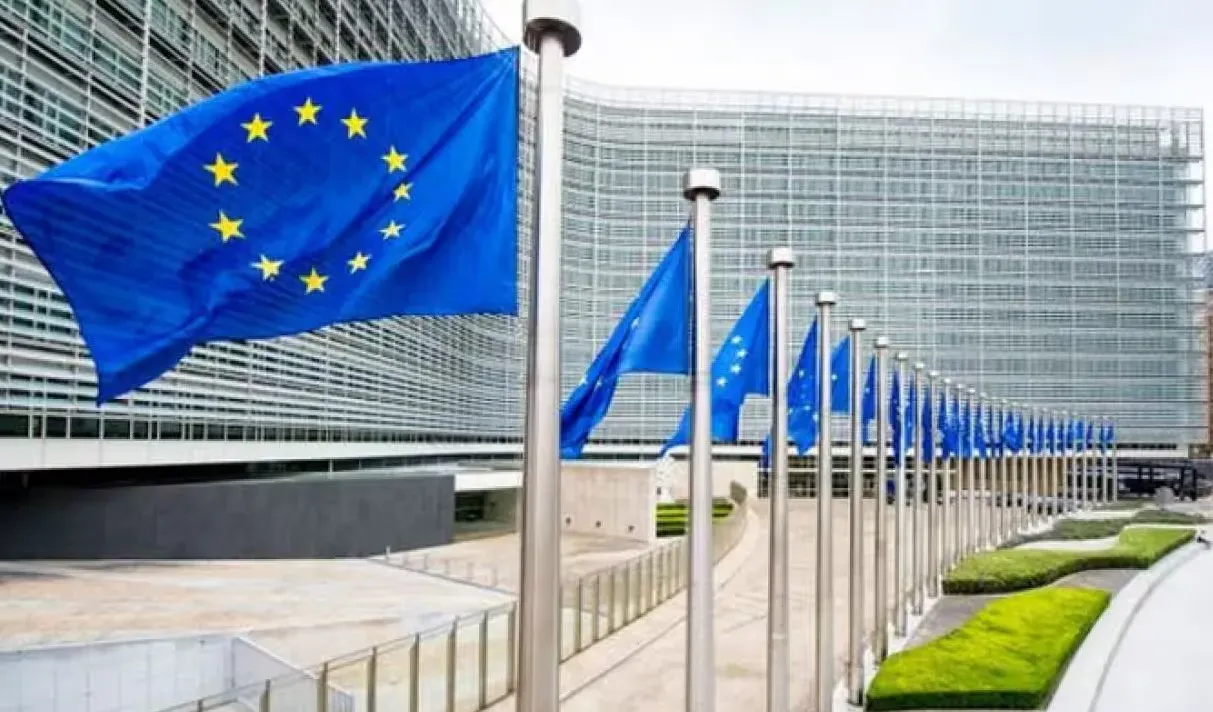
The EU’s recent decision to designate the IRGC as a terrorist organization is not merely a legal or procedural step; it reflects a deeper departure from pragmatic diplomacy toward risk-laden security policies. Acting under intense pressure from Zionist lobbying networks and U.S.
political influence, Europe has targeted an institution that has, in practice, served as one of the most significant barriers against takfiri terrorism in West Asia.
This analysis examines the roots of this hostility, highlighting Europe’s behavioral contradictions, its overt and covert support for violence in the region, and the political subservience that has reduced the EU to a junior partner of Washington and Tel Aviv.
The IRGC and the ISIS Paradox: Europe’s Gift to Takfiri Terrorism
Europe’s greatest analytical failure lies in its deliberate disregard for the realities on the ground over the past decade. Irrefutable evidence—and even admissions by Western officials between 2014 and 2017—demonstrate that without the advisory and field presence of the IRGC, and the battlefield leadership of General Qassem Soleimani, the political geography of the region would have been radically altered. Baghdad and Damascus could well have become capitals of the so-called ISIS caliphate.
Today, Europe brands the IRGC as terrorist while the security of Paris, Brussels, and Berlin owes much to the defeat of ISIS by the very same force. Weakening or sidelining the IRGC—long a pillar of regional stability and the most effective counterterrorism force in West Asia—amounts to providing “artificial respiration” to dormant cells of ISIS, al-Qaeda, and Jabhat al-Nusra. Whether inadvertently or in alignment with hidden interests, Europe’s move paves the way for renewed chaos, enabling extremist groups to expand their operational reach toward the Mediterranean and the Horn of Africa.
Revisiting Europe’s Dark Record: Trading in Blood in West Asia
The EU, now posturing as a moral arbiter, carries a deeply tarnished record of enabling violence and warfare in the region—one that strips its human rights rhetoric of credibility. The facts speak for themselves:
Arming the Perpetrators: Reports by international institutions such as SIPRI indicate that European states—including Germany, France, and the United Kingdom—have been major suppliers of advanced weapons and guided munitions used by Saudi Arabia and its allies against civilians in Yemen. Europe thus stands as a direct accomplice in the worst humanitarian catastrophe of the century.
Equipping Saddam Hussein: History has not forgotten that chemical weapons and military equipment used by Saddam Hussein against Iran and the civilians of Halabja were largely supplied by German and French companies.
The Syrian Project: By politically and logistically supporting groups labeled as “moderate opposition”—many of which later joined ISIS and al-Qaeda affiliates—Europe fueled Syria’s civil war, contributing to the deaths of hundreds of thousands and the displacement of millions across Syria and Iraq.
Gaza: The Moral Collapse of Europe
Events following Operation Al-Aqsa Flood and the blatant genocide in Gaza have stripped away Europe’s moral mask. As Israeli forces bombed hospitals, schools, and killed thousands of children, European leaders not only remained silent but rushed to Tel Aviv to reaffirm Israel’s so-called “right to self-defense.” This double standard marked the effective death of Europe’s human rights doctrine.
The same Europe that loudly champions Ukraine became, in Gaza, a political and logistical backer of Israel. This submission to international Zionism made clear that Europe’s criteria for labeling groups as “terrorist” are shaped not by actions or civilian casualties, but by Israeli interests.
Europe: From Independent Actor to U.S. Political Dependent
The roots of Europe’s growing hostility toward Iran lie in its lack of strategic autonomy. The Trump presidency marked the height of European humiliation: Washington’s unilateral withdrawal from the JCPOA rendered European signatures meaningless, while promised mechanisms such as INSTEX failed to produce even a single independent financial transaction.
From disputes over Greenland to public insults against NATO and EU leaders and economic extortion tactics, the pattern is clear: Europe lacks independent will in major security calculations. Labeling the IRGC as terrorist is simply a continuation of this subservience—Europe bears the security costs of a decision whose benefits flow directly to the United States and Israel. In doing so, Europeans have sacrificed their own energy security and border stability, particularly in the context of migration, to policies dictated from Washington.
The EU’s action against the IRGC represents a forward escape aimed at masking internal and external failures. Far from isolating Iran’s Revolutionary Guard, this decision weakens diplomatic and security channels and leaves Europe more exposed to future regional crises.
Iran has demonstrated that its security and defense capabilities are not contingent upon Western approval. Europe, however, should recognize that labeling the official military force of a UN member state as a terrorist organization sets a dangerous precedent—one whose repercussions will be felt most acutely by a continent whose security is deeply intertwined with stability in West Asia. By taking this step, Europe has effectively relinquished its role as a diplomatic actor and repositioned itself as a direct party to the conflict.