Columbia Scientists Make Gel from Yogurt to Heal Tissue
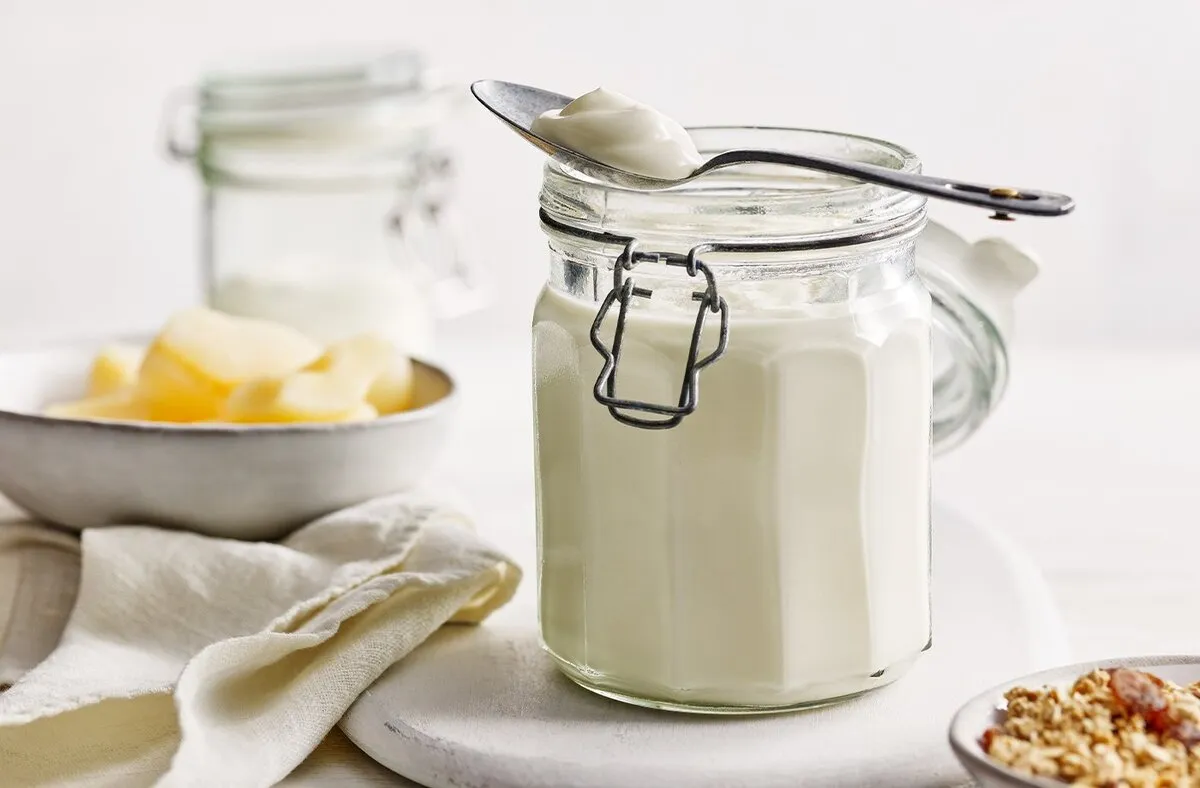
By harnessing extracellular vesicles (EVs) from milk, the team developed a soft material that mimics living tissue and promotes natural regeneration. This novel gel doesn’t just deliver therapeutic molecules; the EVs help build the structure of the gel itself. In mouse models, it boosted blood vessel formation and tissue repair—without added chemicals. The research hints at a future where food-derived biotechnology plays a powerful role in healing the body, the journal Matter reported.
Researchers at Columbia Engineering have developed a new approach to creating bioactive, injectable hydrogels designed for tissue repair and regenerative medicine, using naturally occurring particles called extracellular vesicles (EVs).
In a study, Santiago Correa, an assistant professor of biomedical engineering at Columbia Engineering, and his research team introduced a hydrogel system that incorporates EVs extracted from milk. These tiny particles, which are naturally released by cells, carry biological instructions such as proteins and genetic material. Because of this, they support complex cellular communication that traditional synthetic materials often fail to achieve.
In their design, the EVs serve two critical functions. Not only do they act as carriers for therapeutic signals, but they also help form the structure of the gel itself by crosslinking with biocompatible polymers. To address common limitations in EV availability, the team used EVs sourced from yogurt. This creative solution helped them produce the gel in greater quantities while maintaining its biological activity. The result was a soft material that both resembles living tissue and interacts with nearby cells to stimulate healing, all without the use of extra chemical agents.
“This project started as a basic question about how to build EV-based hydrogels. Yogurt EVs gave us a practical tool for that, but they turned out to be more than a model,” said Correa, who led the study with Artemis Margaronis, an NSF graduate research fellow in the Correa lab. “We found that they have inherent regenerative potential, which opens the door to new, accessible therapeutic materials.”
Correa directs the Nanoscale Immunoengineering Lab at Columbia University, where his research focuses on drug delivery and immunoengineering. He is also a member of the Herbert Irving Comprehensive Cancer Center and collaborated on this project with Kam Leong, a fellow Columbia Engineering faculty member. The study was further strengthened through international collaboration with researchers from the University of Padova, including Elisa Cimetta (Department of Industrial Engineering) and graduate student Caterina Piunti. By combining Padova team’s expertise in agricultural EV sourcing with the Correa lab’s experience in nanomaterials and polymer-based hydrogels, the team demonstrated the power of cross-disciplinary, global partnerships in advancing biomaterials innovation.
By using yogurt-derived EVs, the team defined a design space for generating hydrogels that incorporate EVs as both structural and biological elements. They further validated the approach using EVs derived from mammalian cells and bacteria, demonstrating that the platform is modular and compatible with diverse vesicle sources. This could open the door to advanced applications in wound healing and regenerative medicine, where current treatments often fall short in promoting long-term tissue repair. By integrating EVs directly into the hydrogel structure, the material enables sustained delivery of their bioactive signals. Because the hydrogel is injectable, it can also be delivered locally to damaged tissue.
Early experiments show that yogurt EV hydrogels are biocompatible and drive potent angiogenic activity within one week in immunocompetent mice, demonstrating that agricultural EVs not only enable fundamental biomaterials research but also hold therapeutic potential as a next-generation biotechnology. In mice, the material showed no signs of adverse reaction and instead promoted the formation of new blood vessels, a key step in effective tissue regeneration. Correa’s team also observed that the hydrogel creates a unique immune environment enriched in anti-inflammatory cell types, which may contribute to the observed tissue repair processes. The team is now exploring how this immune response could help guide tissue regeneration.
“Being able to design a material that closely mimics the body’s natural environment while also speeding up the healing process opens a new world of possibilities for regenerative medicine,” said Margaronis. “Moments like these remind me why the research field in biomedical engineering is always on the cusp of something exciting.”
4155/v