Nuclear Accusations Against China: Managing Risk or Manufacturing Threats?
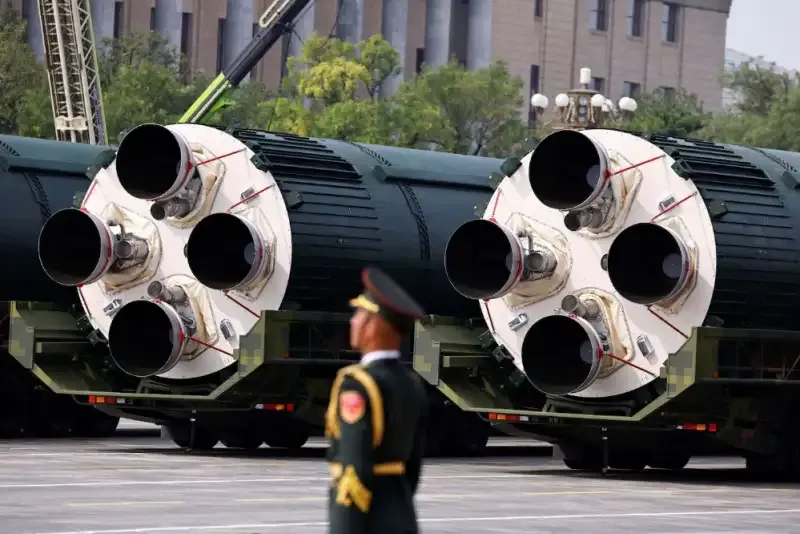
American claims that China has conducted covert nuclear tests are being advanced at a moment when Washington itself is openly reconsidering a return to nuclear testing. Policy directives issued during the Trump administration to resume nuclear weapons tests—along with efforts to normalize such behavior—underscore a critical contradiction: accusations against Beijing appear less rooted in genuine concern for global security than in an attempt to legitimize increasingly risky U.S. nuclear postures.
Within this framework, the parallel advancement of nuclear allegations against Iran, Russia, and China suggests a deliberate effort to shape public perception. Rather than isolated cases, these accusations function collectively as part of a broader narrative designed to create a “strategic buffer zone” for Washington—one that shields U.S. actions from scrutiny while reframing competitors as systemic threats.
The Treaty Trap: Arms Control Without Commitment
The effective erosion of the New START treaty, accompanied by official U.S. statements questioning its relevance, reveals the contours of a new American approach to arms control. Washington now appears intent on rewriting the rules of the nuclear order without honoring its previous obligations. While calling for new agreements aligned with its own standards, the United States simultaneously seeks to draw China into regulatory frameworks to which it does not itself adhere. This strategy is less about arms reduction than about geopolitical containment—using treaty mechanisms to constrain both Russia and China.
Confronting the Emerging Multipolar Order
Nuclear accusations against China must be understood within a wider strategic context. U.S. policies targeting Venezuela, escalating trade pressure on China and Russia, efforts to shape a Ukraine settlement aimed at separating Moscow from Beijing, and unconditional support for Israel as a tool for destabilizing West Asia all point to a coherent objective: weakening China-centered economic corridors and resisting the consolidation of a multipolar international system.
The timing is particularly telling. These nuclear allegations coincide with stalled arms control talks with Russia and ongoing nuclear negotiations with Iran, indicating a coordinated strategy that extends beyond individual disputes to challenge the foundations of an emerging global nuclear order.
A Crisis of Legitimacy for International Institutions
From a legal perspective, U.S. accusations against China lack institutional standing. The authority responsible for verifying states’ nuclear activities is the International Atomic Energy Agency (IAEA), not Washington. Yet the Agency’s persistent silence regarding the disarmament obligations of nuclear-armed states—combined with its selective and politicized approach toward countries such as Iran—has significantly eroded its credibility.
This double standard not only undermines global nuclear governance but also accelerates the erosion of trust among states. As confidence in international oversight mechanisms declines, the risk grows that countries will disengage from multilateral frameworks altogether—a trajectory that could ultimately lead to the collapse of the existing nuclear monitoring regime.