A Button in Washington, Consequences in the Middle East
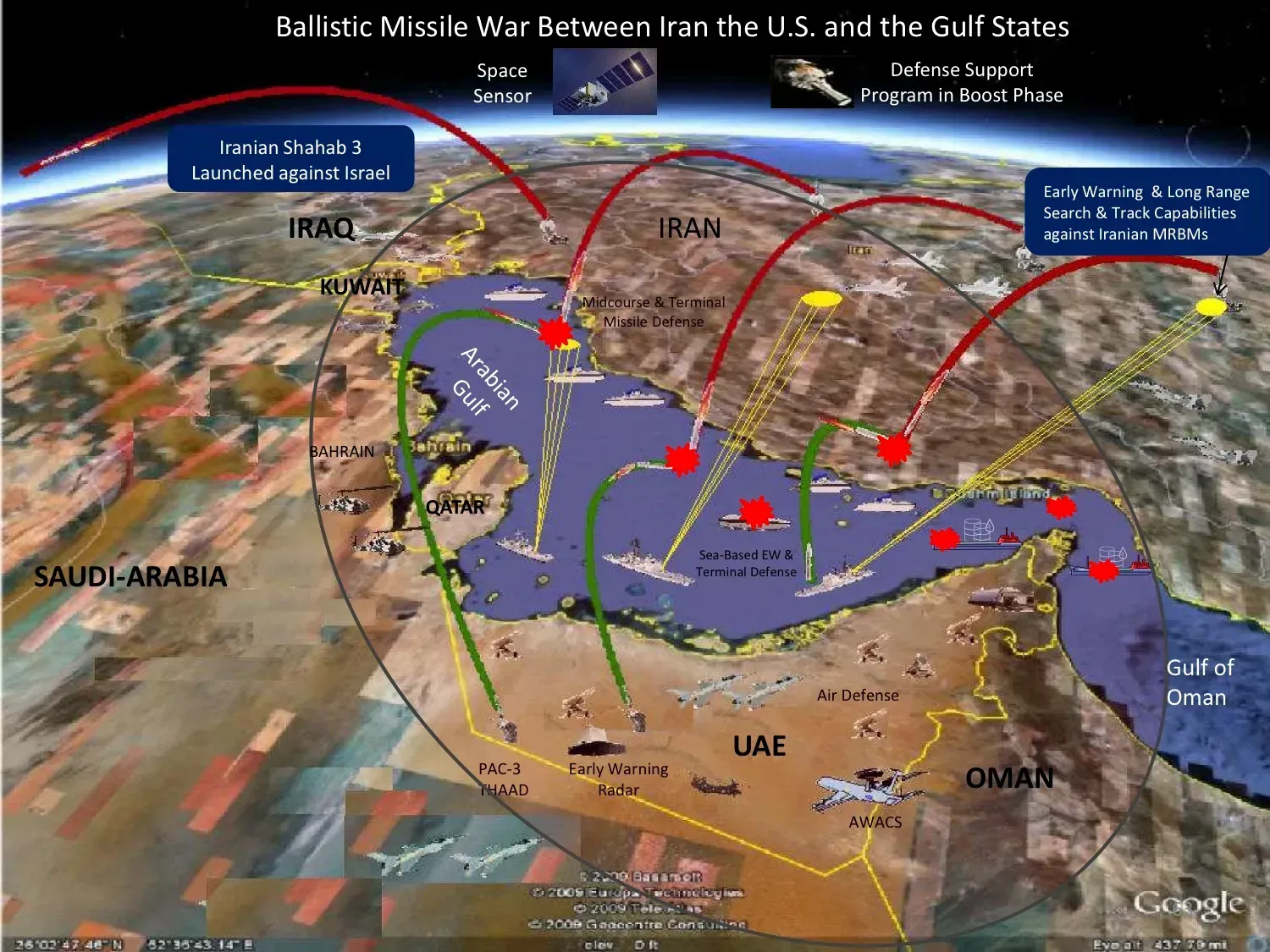
The Middle East today stands not on the threshold of lasting peace, but on the edge of razor-sharp decisions whose consequences could spill far beyond the borders of any single state. While dialogue and diplomacy dominate the surface narrative, the shadow of military confrontation continues to loom over the region—a threat that places the heaviest burden on countries hosting U.S. interests and military facilities, exposing them to unintended and potentially severe costs.
The reality is that the regional security equation is no longer one-sided. The era of immunity for foreign bases and extra-regional interests has come to an end. Any country that has turned its territory into a platform for the deployment of foreign forces has, willingly or not, entered the equation of confrontation. This choice is not merely a defense agreement or political partnership; it entails the partial surrender of sovereignty and the acceptance of consequences stemming from actions that may be launched from that very soil against others.
In this context, the quiet yet profound anxiety felt by some Arab states is understandable. They are well aware that any military adventurism against Iran would not remain a contained conflict, but would instead trigger a chain of reactions—whose first links would be U.S. bases and interests across the region. These installations are often located near population centers, critical infrastructure, and the economic lifelines of host countries.
From “Security Asset” to “Legitimate Target”
When a country allows the United States—or any foreign power—to establish a military base on its territory, it effectively signals that its land may serve as a launching point for operations against a third country. This is a well-established principle in strategic logic: a launch platform is itself part of the battlefield. As such, a host country cannot credibly claim neutrality or absolute immunity during times of crisis.
Iran has repeatedly and explicitly stated that if it is targeted from any base, its response will not be confined to the geography of the direct attacker. Any facility involved in such an action—even if located in a neighboring or friendly country—would be considered a legitimate counter-target under the right of self-defense. This position is not an emotional threat, but a clear deterrence doctrine designed to prevent war by raising its costs.
Past experiences in the region, including incidents involving sensitive U.S. bases in the Persian Gulf, have demonstrated this reality in practice: political borders do not necessarily function as security boundaries during conflict. For this reason, regional states more than any other actors should be concerned about escalation scenarios—scenarios that could jeopardize their economies, internal stability, and international standing.
The Illusion of a Limited War and the Reality of Spillover
One of the most dangerous miscalculations in Washington and some regional capitals is the belief in the possibility of a “limited war” against Iran. This assumption rests on the flawed premise that a strike can be delivered without provoking a meaningful response. Yet the reality of West Asia is a dense network of interests, military facilities, and energy corridors, where any tremor in one point reverberates across the entire structure.
By virtue of its geopolitical position, strategic depth, and deterrent capabilities, Iran is not an actor that can be contained through a short, low-cost scenario. Any military action would inevitably affect the whole region—from the security of maritime chokepoints and energy routes to financial markets and the political stability of U.S.-aligned governments.
Against this backdrop, the caution expressed by some Arab states regarding escalation reflects a sober understanding of these realities. They know that the price of war would not be paid in Washington, but in regional capitals. Pressure to preserve diplomatic pathways, therefore, is less a gesture of sympathy toward Iran than a realistic calculation of their own national interests.
Imported Security, Domestic Insecurity
Security built on foreign military presence turns into domestic insecurity at the moment of crisis. Countries that have transformed their territory into arms depots and operational hubs for others must accept that they will not remain outside the circle of consequences if conflict erupts. This is not a warning—it is a historically tested fact.
From Iran’s perspective, red lines are clear and publicly declared. Any response to aggression will not be limited, symbolic, or easily containable. Any location involved in such aggression—whether a military base or an economic or strategic interest—will factor into calculations of legitimate self-defense. This approach, Tehran argues, is intended not to expand war, but to prevent it.
If lasting stability is to take shape in the region, it must be built on mutual respect, non-threatening conduct, and an end to the instrumentalization of other countries’ territory for geopolitical score-settling. Otherwise, any spark could ignite a fire whose reach would spare no one.