Beyond Hormuz: Why Any Conflict with Iran Is Inherently Global
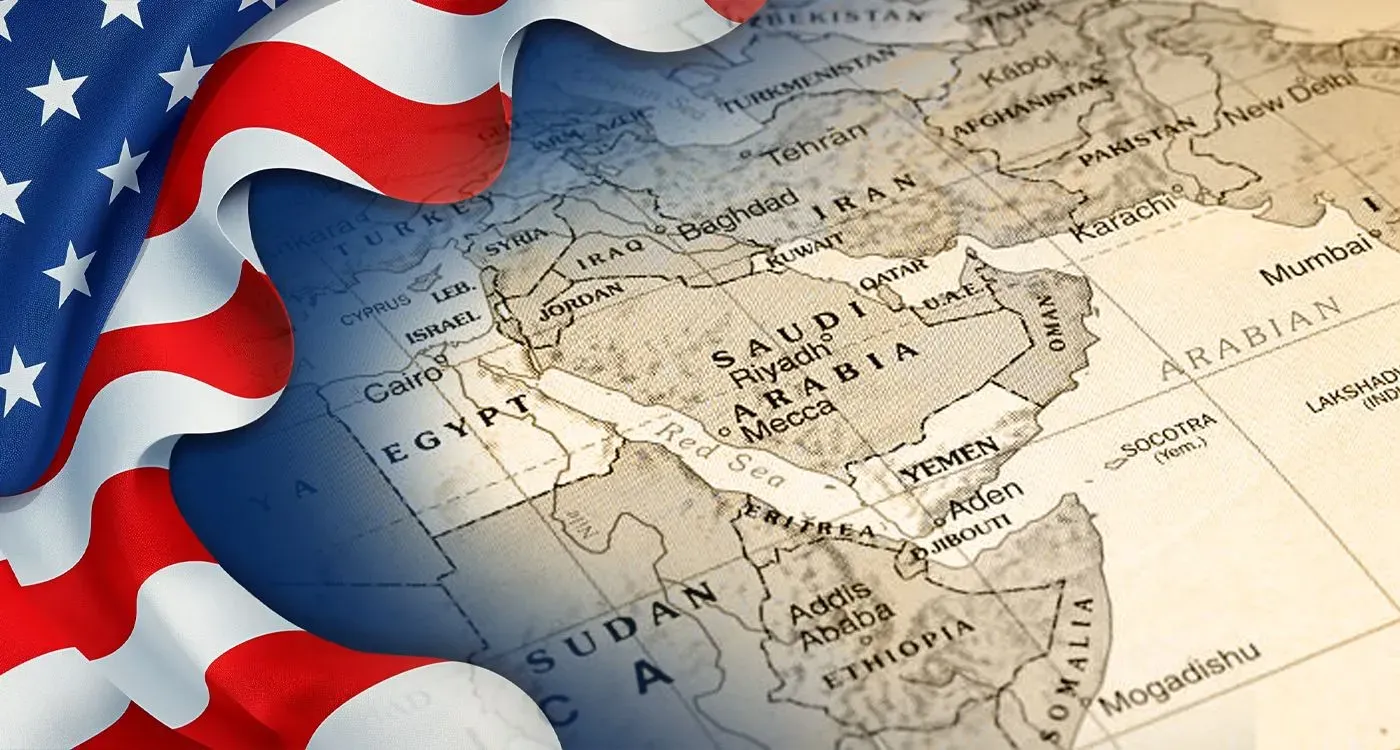
The prevailing media portrayal of a potential war between Iran and the United States is often simplistic and narrowly framed: a handful of bases, several military targets, and limited retaliatory strikes. Yet the strategic reality of the region extends far beyond these surface-level scenarios. The U.S. presence in the Middle East resembles a complex spider web, whose threads stretch not only across military bases but also through energy corridors, economic contracts, and the domestic politics of regional states. In the event of a confrontation, Iran’s objective would not be limited to targeting bases alone; rather, it would seek to penetrate this intricate web and disrupt it at every level.
U.S. interests in the region can be broadly divided into four core pillars: security, energy, the economy, and geopolitical influence. From controlling the flow of oil and gas to maintaining a sustained regional presence, these interests represent assets that could be undermined virtually overnight.
At the same time, the U.S. economy is deeply intertwined with arms contracts, investments, and the structural dependence of oil-producing regional economies—investments that also include those of influential individuals, among them Donald Trump, Jared Kushner, and others. On the geopolitical front, Washington faces the challenges of competing with Russia and China, managing regional allies, and preserving its preferred order in the Middle East.
From Limited Strikes to Networked Warfare:
Iran, drawing on its historical experience and its military and political capabilities, understands well that a strategy focused solely on attacking U.S. bases would amount to a small and temporary game. By leveraging its regional influence, missile capabilities, and control over the Strait of Hormuz, Tehran can generate widespread disruption across energy routes, regional economies, and security structures.
Even a limited strike on a single U.S. base would resemble a stone thrown into a vast lake—its ripples shaking neighboring countries and economic flows alike. In this sense, a war with Iran would transcend direct military confrontation; it would constitute a strategic contest aimed at significantly increasing the cost of America’s regional presence.
Historical experience further suggests that an exclusive focus on military targets—without accounting for the broader economic and political network underpinning U.S. power—can prove counterproductive. Iran is capable of managing regional pressure in ways that trigger chain reactions, driving up costs for the United States and for countries hosting American forces and military infrastructure.
This network extends across Iraq, Kuwait, Bahrain, Saudi Arabia, the United Arab Emirates, Qatar, Lebanon, and even Syria. Accordingly, from Tehran’s perspective, any military action would be expansive and multi-layered rather than limited or localized.
Energy and the High-Stakes Game in the Strait of Hormuz:
One of the most sensitive pressure points in U.S. regional interests lies in energy routes and the stability of global oil and gas markets. More than one-fifth of the world’s oil supply passes daily through the Strait of Hormuz, and nearly all major economies depend on its security.
Any military action against Iran would severely destabilize this vital artery, forcing the United States to mobilize resources not only to protect its bases but also to ensure the uninterrupted flow of energy. Iran, through its strategic tools in the strait, has the capacity to sharply raise the costs of U.S. presence and adventurism, shifting the balance in its own favor.
These realities underscore a fundamental point: a war with Iran cannot be limited. Even a narrowly defined action would have far-reaching consequences for energy markets, regional economies, and global security. From this perspective, Tehran could intensify economic and political pressure on the United States at both regional and international levels, pushing the confrontation well beyond the framework of a “limited war.” This represents a strategic advantage that the media narrative of a so-called “limited strike” is incapable of capturing or conveying.