Starved Worms Reveal Hidden Switch for Cellular Aging
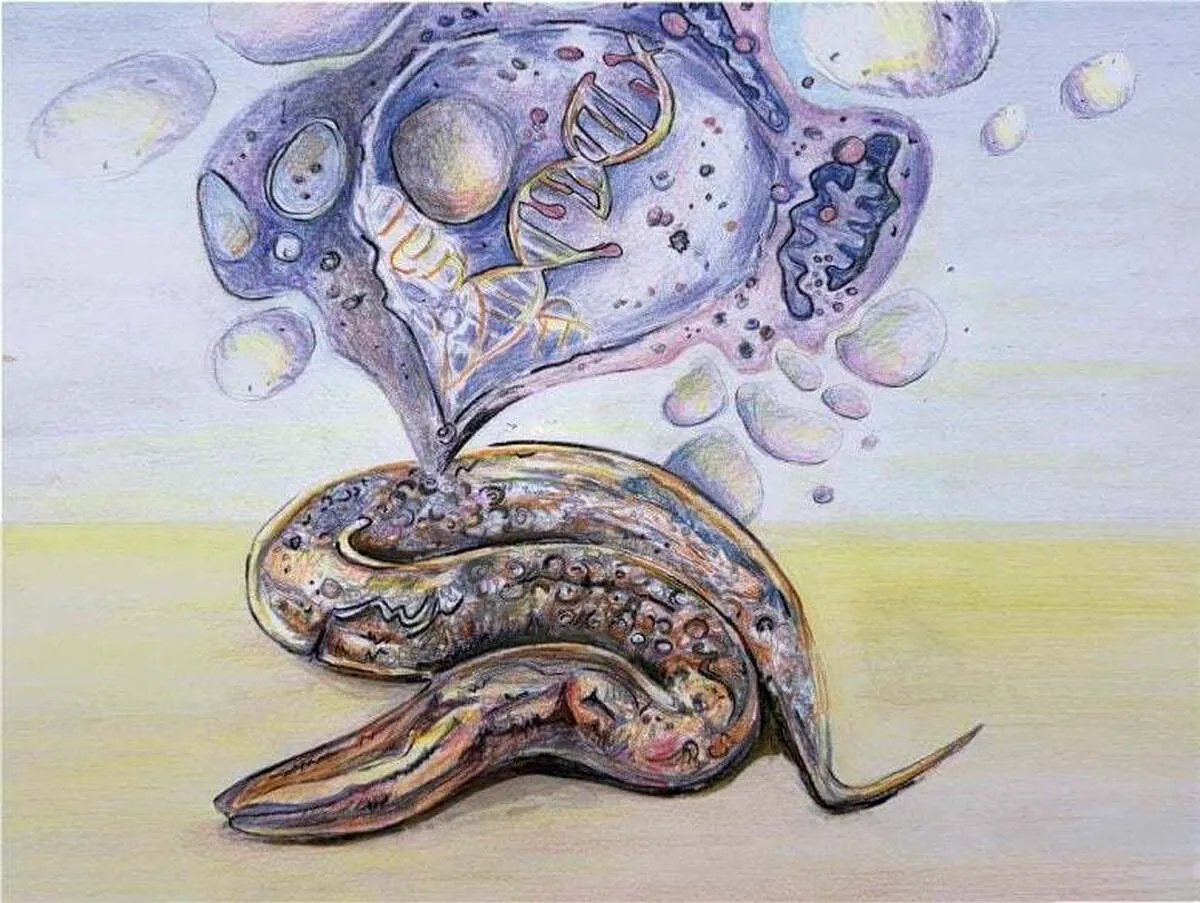
Researchers triggered a senescent-like state in worms by altering the activity of the transcription factor TFEB. Typically, when worms go through an extended period of fasting and are then reintroduced to food, they regenerate and show signs of rejuvenation, the journal Nature Aging reported.
But without TFEB, the worms’ stem cells are unable to recover after fasting. Instead, they enter a state resembling cellular senescence. This condition is marked by several indicators, including DNA damage, enlargement of the nucleolus, increased production of mitochondrial reactive oxygen species (ROS), and the activation of inflammatory signals. These features closely mirror those seen in aging cells in mammals.
“We present a model for studying senescence at the level of the entire organism. It provides a tool to explore how senescence can be triggered and overcome,” explains Adam Antebi, head of the study and director at the Max Planck Institute for Biology of Aging.
TFEB is a transcription factor involved in cellular responses to nutrient availability. It plays a crucial role in responding to fasting by regulating gene expression. In its absence, worms attempt to initiate growth programs without sufficient nutrients, leading to senescence.
“With our new model, we conducted genetic screens to identify mutations that can circumvent senescence. We identified growth factors, including insulin and transforming growth factor beta (TGFbeta), as the key signaling molecules that are dysregulated upon TFEB loss,” Antebi explains.
The TFEB-TGFbeta signaling axis is also regulated during cancer diapause, a state in which cancer cells remain in a dormant, non-dividing condition to survive chemotherapy. In the future, the researchers want to test whether their worm model can be used to find new treatments targeting senescent cells during aging as well as cancer dormancy.
4155/v