Iranian Researchers Develop Nanohydrogel to Detect Fish Freshness
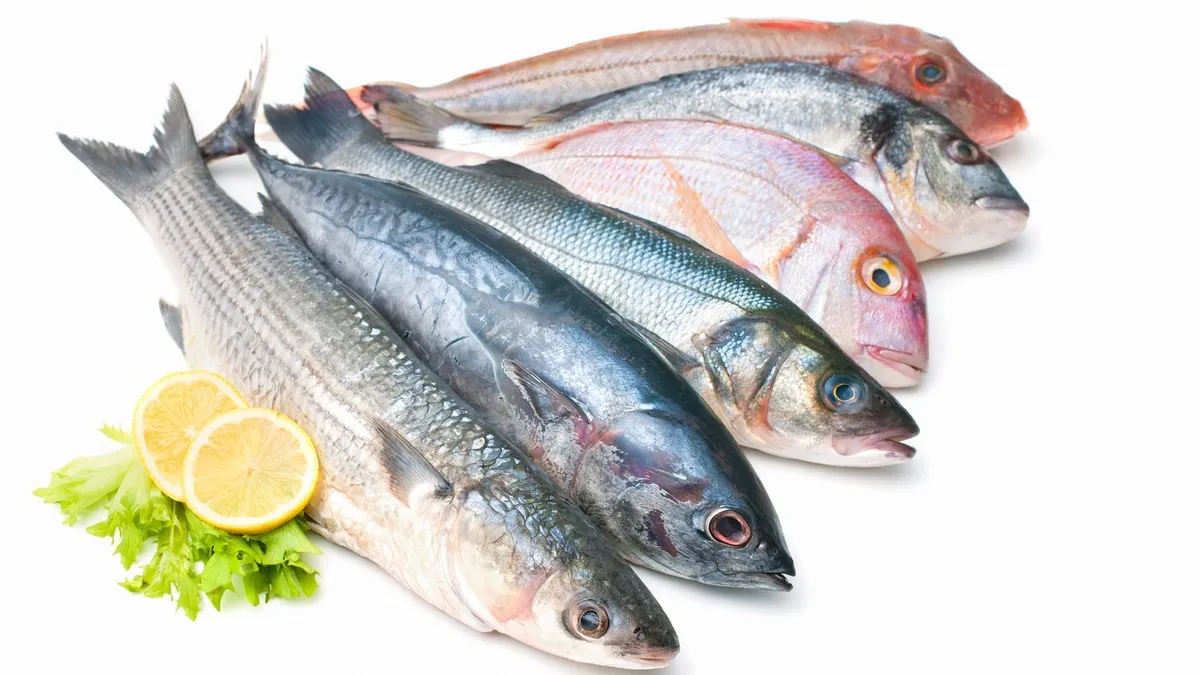
A research team consisting of Sepideh Lohrasbinejad and Hajar Shekarchizadeh at Isfahan University of Technology succeeded in designing a simple, low-cost, and highly sensitive colorimetric indicator.
In this method, copper nanoparticles and nitrogen-doped carbon quantum dots were placed in an agar hydrogel substrate to react to hydrogen sulfide gas, one of the most important indicators of fish spoilage. Hydrogen sulfide is a gas that is produced when sulfur compounds decompose in the process of protein spoilage.
The high sensitivity of this nano-indicator to H₂S makes changes in fish freshness visible to the consumer as a clear color change.
The results of the study showed that the CuNPs/NCQDs solution loses its fluorescence property in contact with H₂S gas, and this change is the basis of the indicator's performance. Also, based on the local surface plasmon resonance mechanism, the prepared colorimetric indicator was able to provide an irreversible response to hydrogen sulfide, and this feature enabled accurate detection at low concentrations.
Microscopic studies also showed that the agar hydrogel film containing CuNPs/NCQDs has a uniform structure.
Meantime, the results of X-ray photoelectron spectroscopy and Fourier transform infrared spectroscopy confirmed the formation of C–S bonds in the indicator exposed to fish spoilage. One of the strengths of this technology is the favorable stability of the indicator. Experiments showed that its performance is not affected by changes in pH or the presence of other volatile compounds. Also, a strong correlation was observed between the color change of the indicator and common parameters for measuring fish freshness, including pH, total basic nitrogen compounds, and total microbial count.
In a relevant development in August, a knowledge-based company in Iran had also used nanobunbbles with a diameter of 200 nanometers to improve the productivity of agriculture, fisheries, water purification and other industries.
Nanobubbles enjoy unique features in increasing the efficiency of resource consumption, reducing pollutants and improving the quality of products.
Experts of the knowledge-based company believe that nanobubbles technology is a strategic solution, because nanobubbles with a diameter of less than 200 nanometers, unlike large bubbles that quickly rise to the surface of the water and explode, can remain suspended in the water for a long time and gradually increase dissolved oxygen.
The achievements of the company show that the use of nanobubble technology not only leads to a significant increase in dissolved oxygen, but can also be effective in reducing microbial load, decomposing organic compounds and improving water clarity. This is a fundamental change in Iranian fish farms, which often face water resource constraints and water quality challenges.
The application of nanobubbles in Iran’s fish farms has two key effects, one of which is to increase stocking density by increasing dissolved oxygen levels, and the other is to enhance food security. Also, nanobubble technology leads to improved quality of final products by reducing antibiotic use and improving environmental conditions which is particularly important for accessing export markets.
4155/v