Top News of Last Week with ANA
Azad News Agency (ANA) published a number of scientific and technological news during the past week whose top ones are as follows:
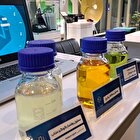
Iran-Made Nano-Based Alkyd Paint Fights Corrosion in Oil, Shipbuilding Industries
An Iranian company used nanomaterials to produce an alkyd paint to increase corrosion resistance of metal structures.
The product, which has successfully passed the international standard tests, can be used as a sustainable and cost-effective coating in various industries from construction and petrochemicals to shipbuilding and automotive.
A salt spray test was conducted based on the ASTM B117 standard on samples painted with this product. In this test, the control sample, which had no color, blistered and showed signs of corrosion after only 48 hours, while the samples painted with nano-paint did not show any blistering even after 240 hours.
Also, the corrosion intensity in the unpainted samples was much higher than the samples coated with nano-alkyd paint.
The results showed that the product of Nano Arisa Poshesh company has been able to provide very good anti-corrosion performance. Other features of this paint include high resistance to corrosion, good adhesion to various surfaces, and stability against harsh environmental conditions.
Such technical characteristics have made this product suitable not only for the construction industry, but also for strategic industrial areas. Using this paint in petrochemical and oil refineries, shipbuilding and marine industries, automotive and even pipelines transporting metal materials can significantly reduce the costs of corrosion.
Iran to Launch Zafar-2, Paya Satellites Soon
Head of the Iranian Space Agency Hassan Salariyeh announced plans to launch the home-made Zafar-2 and Paya satellites into the orbit in the coming months using a foreign launcher.
Salariyeh said that Zafar-2 and Paya remote-sensing satellites will be launched in the coming months on the back of a foreign launch vehicle.
He added that Nahid-2 will be launched aboard Iran’s Simorq rocket, while additional test launches are planned for satellites in the Shahid Soleimani constellation project.
Stressing the importance of international cooperation in space science, Salariyeh said Iran has joined China’s Chang’e-8 lunar program, with the design phase completed and engineering model development set to begin.
He also stated that talks are underway with other spacefaring nations to participate in future space station projects.
Regarding research and development progress, Salariyeh announced Iran's advancements in the design of a new generation of reentry capsules and experimental research platforms capable of conducting suborbital and orbital life science tests, including studies on radiation, temperature, and pressure effects on living organisms.
Iranian Researchers Make Reaction Wheels for Zafar-2 Satellite
A set of four reaction wheels for the home-made Zafar 2 sensing satellite was successfully delivered to the Iran University of Science and Technology by the Space Propulsion Research Institute after designing, manufacturing, and successfully performing all standard space tests.
Reaction wheels, as one of the most vital satellite subsystems, play a fundamental role in stabilizing, changing, and correcting the satellite's position in the orbit, and four of these modules are typically used in each satellite.
Zafar 2 satellite was designed and built as a sensing satellite with the aim of imaging the Earth's surface and monitoring natural resources. The satellite is equipped with a multispectral (color) imaging payload and is capable of providing valuable data for various scientific and applied fields in Iran.
A reaction wheel (RW) is an electric motor attached to a flywheel, which, when its rotation speed is changed, causes a counter-rotation proportionately through conservation of angular momentum.
A reaction wheel can rotate only around its center of mass; it is not capable of moving from one place to another (translational force).
Reaction wheels are used primarily by spacecraft for three-axis fine attitude control, but can also be used for fast detumbling.
Agreement for Designing SAR-RAD 2 Satellite Subsystem Signed in Iranian Space Research Center
An agreement for designing, construction and testing of the engineering prototype of the ‘Antenna Structure and Mechanism’ subsystem of the SAR-RAD 2 satellite project was signed between the Institute of Mechanics and the Institute of Space Propulsion of the Iranian Space Research Center.
The agreement was concluded in line with the achievement of the major goals of the Iranian Space Research Center, and the development of synthetic aperture radar (SAR) Rad-2 satellite with 20-meter imaging capability.
Based on the agreement, the Institute of Mechanics and the Institute of Space Propulsion will implement the design, construction and standard space tests of this subsystem, utilizing their scientific and specialized capabilities.
The main goal of this cooperation is to promote new technologies in the space field, indigenize technical know-how related to complex satellite structures and mechanisms, and ultimately meet the country's strategic needs in the field of critical subsystems for space projects.
Iranian Scientists Develop Technology to Detect Fraud in Tallow
The Biotechnology Research Center of the Islamic Azad University’s Kermanshah branch has focused on addressing the specialized deficiencies of Kermanshah province, especially in the field of high-tech laboratories for detecting fraud in tallow.
“The application of high-tech devices helped us to obtain the 17025 standard in the areas needed by Kermanshah province, specially in the field of tallow, where specialized laboratories were scarce in Kermanshah province,” Shima Alayee, the head of the Biotechnology Research Center of the Islamic Azad University’s Kermanshah branch, told ANA.
She added that in the field of sugar, honey, animal fat, licorice, toxic residue or even tests like ochratoxin are required for export to Europe.
“For instance, ochratoxin testing is required for licorice export. As a result, from the first day, we tried to take steps in line with the needs of Kermanshah province, so that the Biotechnology Research Center of the Islamic Azad University’s Kermanshah branch succeeded in obtaining international standards for 47 data-x-items and also obtained the ISO 17025 standard certificate,” Alayee said.
Russia Interested in Cooperation with Iran in Construction of New Orbital Service Station
Dmitry Bakanov, the head of the Russian space agency Roscosmos, announced his country’s interest in cooperation with the Iranian specialists in building a new orbital service station.
Bakanov announced the start of implementation of the project to build an international orbital station, which has been joined by 13 countries so far, and expressed interest in the Iranian engineers and researchers’ collaboration in the project.
“We are working on construction of a new Russian orbital station and will be happy to welcome our foreign partners who wish to join this project. Russia is ready to provide equal conditions for all participants, both for the equipment module and for conducting experiments on the station,” he noted.
“Of course, we will be happy to see our Iranian friends in this project. We have already started appropriate negotiations with the Iranian Space Agency,” Bakanov said.
Iranian Scientists Simulate Lunar Soil
Iranian researchers at the University of Science and Technology, in collaboration with the Faculty of Physics, succeeded in simulating lunar soil based on the compositions of the Apollo 14 mission sample.
“The simulation of lunar soil was carried out for the first time in Iran by the University of Science and Technology in collaboration with the Faculty of Physics. The compositions of this soil were compared with the real sample of the Apollo 14 mission, and the results showed that the percentages of elements are very close,” said Mehdi Nasiri Sarvari, an assistant professor at the department of Satellite Technology Engineering.
He added that based on the NASA research, the growth conditions of plants in the simulated soil are almost similar to the real lunar soil.
“To cultivate plants in lunar soil, a special chamber is required, which was designed and built by a member of the university team and internationally registered. The first experimental cultivation was also carried out using the simulated soil and the chamber,” Nasiri Sarvari said.
Official: Iran's Heavy Bio-Space Capsule Ready for Tests
Head of the Iranian Space Agency (ISA) Hassan Salariyeh announced that the country’s heavy bio-space capsule is ready for the necessary tests.
“Iran's new bio-space capsule is being designed and built. Since two years ago, after the launch of the first sample, which weighed 500 kilograms, a heavier sample with higher capabilities is now being prepared,” Salariyeh said.
In addition to the guidance and control systems, the capsule is considered as an orbital laboratory for us, and its construction process has been underway for a while,” he explained.
“Part of the subsystems of this project are at present under construction, and testing of its subsystems will start this year. The full program for building and launching the advanced bio-capsule will be implemented in the coming years,” Salariyeh underlined.
Iran-Made Refractory Bricks Prevent Damage in Power Plants
An Iranian knowledge-based company managed to produce special refractory bricks that pulverize when thrown and prevent damage to gas turbine blades.
“We acquired the technical know-how of making bricks by reverse engineering foreign samples. While bricks are usually produced in a kiln, we produce these bricks in a freezer at a very low temperature of about minus 70 degrees Celsius, and liquid nitrogen (minus 196 degrees Celsius) is also used in the process. This unique method gives the bricks special properties,” said Mohammad Hosseinzadeh, the managing director of the knowledge-based company.
“The bricks are pulverized upon impact. This feature prevents the thrown brick fragments from causing damage to the turbine blades,” he added.
Hosseinzadeh explained that the turbine blades that produce nearly 60 megawatts of power can become dislodged if they are hit by a thrown fragment, which could affect the power grid, adding, “There are nearly 240 such turbines in Iran, and over 35,000 megawatts of the country’s power grid is supplied by gas turbines.”
Iran to Participate in Int’l ‘Brain Bee’ Scientific Competition in US
Mahsa Alizadeh has qualified as Iran’s representative to the international ‘Brain Bee’ school students neuroscience competition in the US in 2025.
The ‘Brain Bee’ national school students competition is held every year across the country with the support of the Cognitive Science and Technology Development Headquarters of Iran.
In the 11th National Student Brain Science Competition, which was held in March, thousands of students from different provinces of Iran participated in the theory test. In the first stage of the competition, dozens of students qualified for the final stage.
The second and final stage of the competition was recently held in person at the Iran University of Medical Sciences, and finally, Mahsa Alizadeh from Tehran province won the first place in the country and qualified as Iran's representative for the International Brain Bee 2025 in the US.
Iranian Researchers Find Innovative AI Model for Precise Prediction of Sea Wave Height
Iranian researchers at Amirkabir University of Technology succeeded in developing an innovative machine learning-based model that can predict the height of an index wave with an accuracy of between 93% and 97%.
The model is designed in the form of an intelligent graphical user interface based on artificial intelligence (AI) so that engineers and planners in the field of renewable energy can easily use it to predict sea conditions. The main goal of this achievement is to support the operation and planning of wave energy converters and facilitate decision-making in projects related to marine energy.
“One of the most important obstacles on this path is the strong need of conventional machine learning models for a huge amount of historical data; data that is not only costly and time-consuming to collect in marine environments, but is also practically impossible in many coastal areas of the world, specially in developing countries,” said Amir Hossein Shahbazbegian, an undergraduate student in marine engineering.
“Our research was a direct response to this challenge. In this project, an optimized machine learning model was developed; an advanced and intelligent model based on marine artificial intelligence that has a special ability to learn from small and sparse data,” he added.
“We trained the model with data from four marine buoys located in different parts of the Australian coast, different areas that were deliberately chosen to cover a wide range of climatic conditions and wave patterns,” Shahbazbegian explained, adding, “The model could predict waves with an accuracy of between 93% and 97%, outperforming many conventional machine learning algorithms.”
Iranian Scientists Gain New Achievement in Tissue Engineering, Treatment of Spinal Cord Injuries
Iranian researchers at Tehran University of Medical Sciences gained a valuable achievement in the treatment of spinal cord injuries by implementing an innovative project in the field of neuroscience and tissue engineering.
The research project titled ‘investigating the anti-inflammatory effects of scaffolds containing quercetin nanoparticles in a unilateral spinal cord injury model in male rats’ was carried out by Gholamreza Hassanzadeh, the professor of the department of Anatomical Sciences and the director of the Department of Neuroscience and Addiction at Tehran University of Medical Sciences.
The research was conducted with the aim of developing new strategies for the treatment of spinal cord injuries and was able to reveal new horizons in the treatment of spinal cord injuries by investigating the role of sustained secretion of quercetin in reducing inflammation.
“The results of the study showed that continuous secretion of quercetin can help improve the recovery of patients with spinal cord injuries and be of interest to researchers and physicians as a new approach,” Hassanzadeh said.
“This achievement can encourage researchers in preclinical and clinical fields to utilize scaffolds containing quercetin nanoparticles. Also, if the effectiveness of this method is confirmed in more advanced studies, it will pave the way for its introduction as a new treatment protocol for spinal cord injury patients,” he added.
Iranian Scientists Succeed in Rapid Diagnosis of Pullorum Disease in Poultry
Iranian researchers at the University of Tehran, in collaboration with researchers at the SANA Institute of Health and Diseases, succeeded in creating a colored Salmonella Pullorum antigen for use in a rapid slide agglutination test.
This important achievement in the field of veterinary medicine is the result of research conducted as part of the thesis of Maryam Khaleqi, a PhD student in general veterinary medicine at the University of Tehran, under the guidance of Jamshid Razmyar, an associate professor at the Faculty of Tehran’s Veterinary Medicine University, and in collaboration with Abbas Barin, a senior professor of microbiology at the University of Tehran.
“The rapid slide agglutination test has gained a special place due to its speed, low cost, and ease of implementation. This test is based on the agglutination reaction of antibodies produced in the body of infected birds with a suspension of Salmonella antigens,” Razmyar said.
He added that agglutination indicates the presence of circulating antibodies, and agglutination reactions are stained to improve visualization.
Noting that domestic production of the strategic product reduces dependence on imports, Razmyar said, "The development of this color antigen, in addition to reducing dependence on imports, is an effective step in improving the health of poultry flocks and the national economy, and is a reliable and cost-effective diagnostic tool in the country's poultry industry."
Iran Overhauls 29 Gas Platforms in Southern Waters
Pars Oil & Gas Company (POGC) has completed overhauls of 29 offshore gas platforms in the South Pars Field in Southern Iran, the head of the company said.
Alireza Sarmadi announced completion of overhaul operation of 29 offshore gas platforms in the South Pars field, adding that maintenance work on the remaining six platforms will be finished in the coming days, ahead of the country’s peak gas consumption season.
Sarmadi said South Pars includes a total of 39 platforms, of which 37 ones are production platforms and two others serve as support units. He noted that 35 of the 37 production platforms were scheduled for major overhauls in 2025 to ensure stable gas output during the winter months.
4155/v