Iran to Launch Zafar-2, Paya Satellites Soon
Salariyeh said that Zafar-2 and Paya remote-sensing satellites will be launched in the coming months on the back of a foreign launch vehicle.
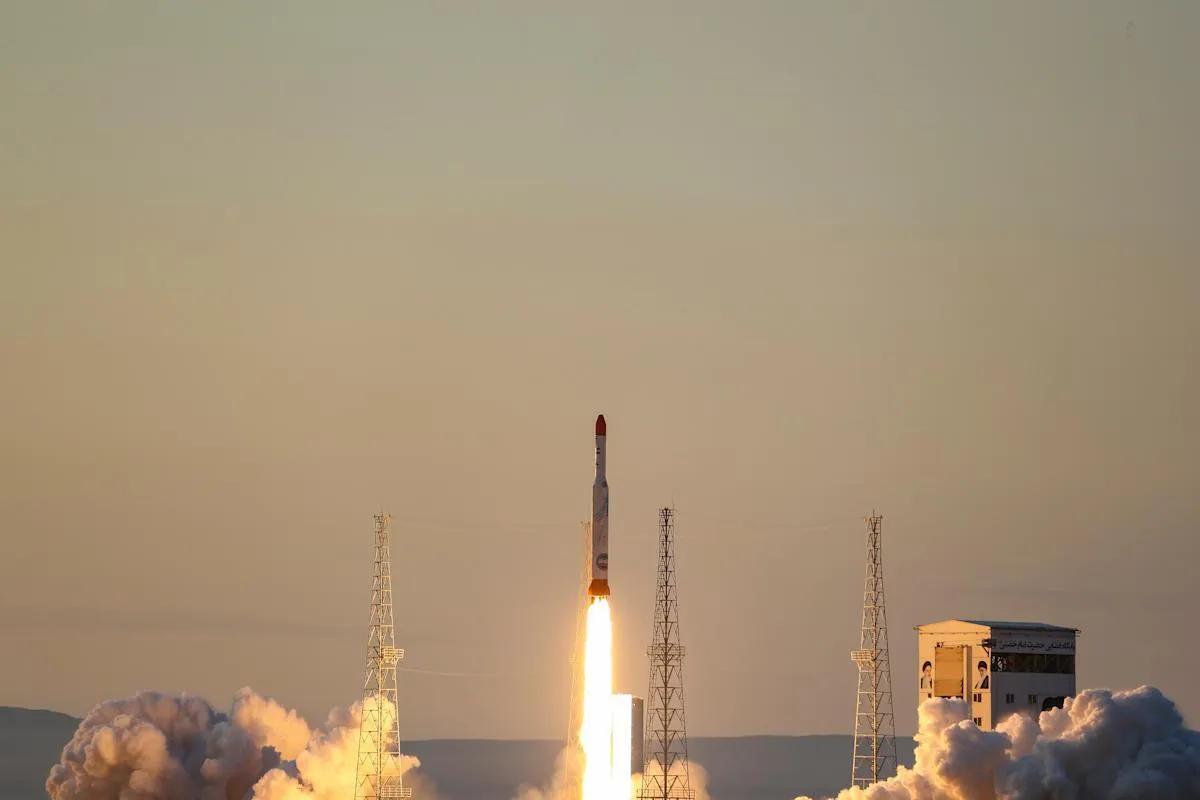
He added that Nahid-2 will be launched aboard Iran’s Simorq rocket, while additional test launches are planned for satellites in the Shahid Soleimani constellation project.
Stressing the importance of international cooperation in space science, Salariyeh said Iran has joined China’s Chang’e-8 lunar program, with the design phase completed and engineering model development set to begin.
He also stated that talks are underway with other spacefaring nations to participate in future space station projects.
Regarding research and development progress, Salariyeh announced Iran's advancements in the design of a new generation of reentry capsules and experimental research platforms capable of conducting suborbital and orbital life science tests, including studies on radiation, temperature, and pressure effects on living organisms.
Following the successful launch of a 500-kilogram reentry capsule in 2023, new prototypes are now under development, with subsystem testing scheduled to begin soon, he said.
Salariyeh also mentioned Iran's progress in advancing the next generation of remote-sensing and communications satellites, including Pars-3 with sub-meter imaging resolution, Radar SAR (Rad-2) satellite with 20-meter imaging capability, Nahid-3, a high-bandwidth communications satellite, and Pars-2, which is undergoing final tests before launch.
He also announced completion of the first phase of the Chabahar spaceport for solid-fuel launchers located in southeastern Iran, saying preparations are currently underway for its inaugural launch.
Salariyeh also noted that the second phase of this base, designed for liquid-fueled rockets capable of heavier payloads and multiple launches, is currently in the design stage.
“With its privileged geographical location, the Chabahar base provides access to orbits with an inclination of 40 to 100 degrees, which is essential for satellite constellations,” he said.
The official added that the Kowsar-2 satellite, developed by Iran’s private sector and offering four-meter imaging resolution, is also ready for launch after improvements to its initial version.
Two domestically-manufactured Iranian satellites were successfully launched into space in November in a debut entrance by the country’s private sector in the space industry.
Kowsar and Hodhod were launched into orbit from the Vostochny spaceport in eastern Russia in November, using a Russian Soyuz satellite launcher.
The development marked the first triumphant attempt by the Islamic Republic’s private sector towards production of satellites and their placement into orbit and was, therefore, deemed as an important and unprecedented step in the country’s space industry.
Kowsar is a remote-sensing satellite with the capability to capture high-resolution imagery for various purposes across the agricultural, natural resources, environmental, and crisis management fields among other areas.
Hodhod has, meanwhile, been described as a small-sized satellite with communication applications, including creation of communication networks and contributions to the Internet of Things (IoT).
The latter could be used towards provision of communication services in remote and inaccessible areas, where land communication networks are not available.
4155/v