Iranian Experts Manufacture Nano-Based Parts by Freeze-Casting Method
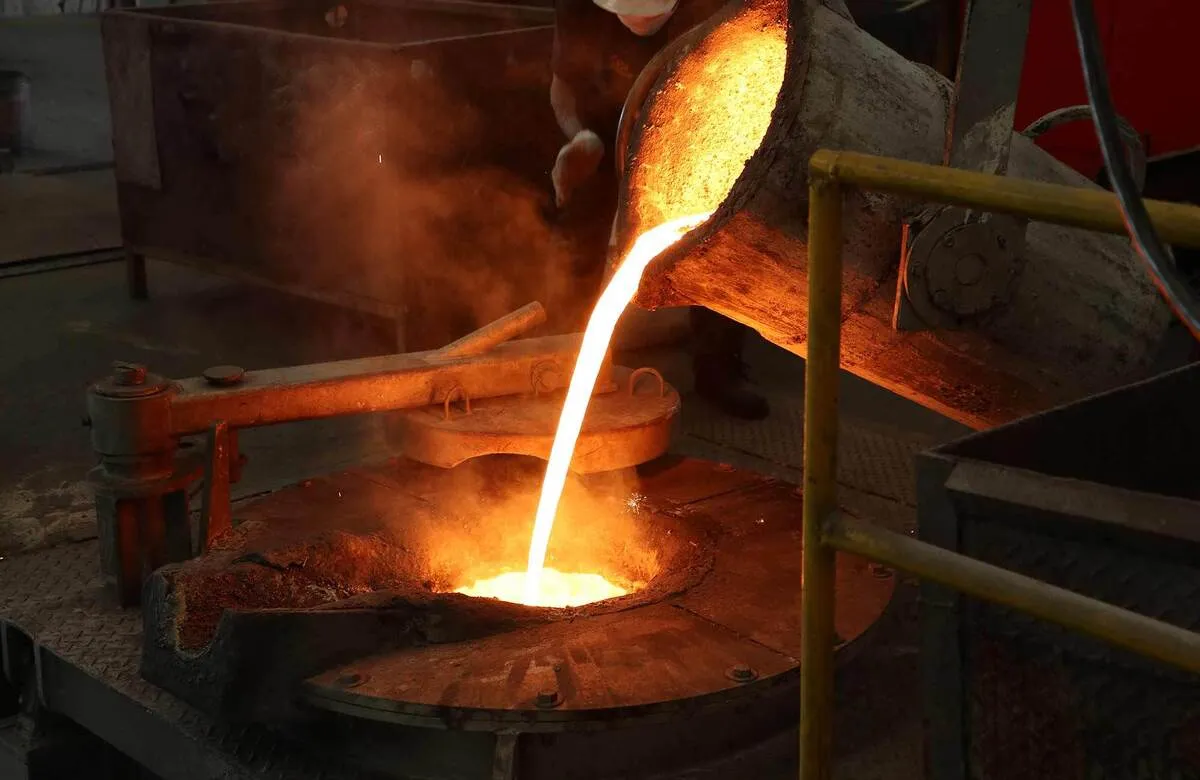
The method uniforms the physical properties throughout the part, increases resistance to cracking and thermal shock, and improves the safety and durability of equipment in the country’s steel and copper industries.
“The production method of these parts, using nanotechnology and the freeze-casting process, creates uniform physical properties throughout the part,” said Zahra Minayee, the research and development expert of the company.
She explained that in conventional production methods, such as simple pressing, the physical properties of the part differ greatly from the surface to the center, so that the pressure applied to the surface is greater than the internal parts of the part, adding, “However, by using nanomaterials and the freeze-casting process, uniform pressure and pressing are created throughout the ceramic, and the properties of the part will be the same at all points.”
“This unique method causes the cracks created in the part to not have a specific growth path and pass through small cracks, thus increasing the resistance of the part to failure. Also, the produced parts have the characteristic of being crushed and pulverized, similar to tempered glass, which crumbles if broken, and the risks of failure are minimized,” Minayee said.
“The features resulting from nanotechnology and the freeze-casting method increase the safety, durability and optimal performance of refractory parts in the country’s steel and copper industries,” she underlined.
In a relevant development in October, an Iranian knowledge-based company had also managed to produce special refractory bricks that pulverize when thrown and prevent damage to gas turbine blades.
“We acquired the technical know-how of making bricks by reverse engineering foreign samples. While bricks are usually produced in a kiln, we produce these bricks in a freezer at a very low temperature of about minus 70 degrees Celsius, and liquid nitrogen (minus 196 degrees Celsius) is also used in the process. This unique method gives the bricks special properties,” said Mohammad Hosseinzadeh, the managing director of the knowledge-based company.
“The bricks are pulverized upon impact. This feature prevents the thrown brick fragments from causing damage to the turbine blades,” he added.
Hosseinzadeh explained that the turbine blades that produce nearly 60 megawatts of power can become dislodged if they are hit by a thrown fragment, which could affect the power grid, adding, “There are nearly 240 such turbines in Iran, and over 35,000 megawatts of the country’s power grid is supplied by gas turbines.”
4155/v