This Simple Trick Could Help Older Adults Stay Fit
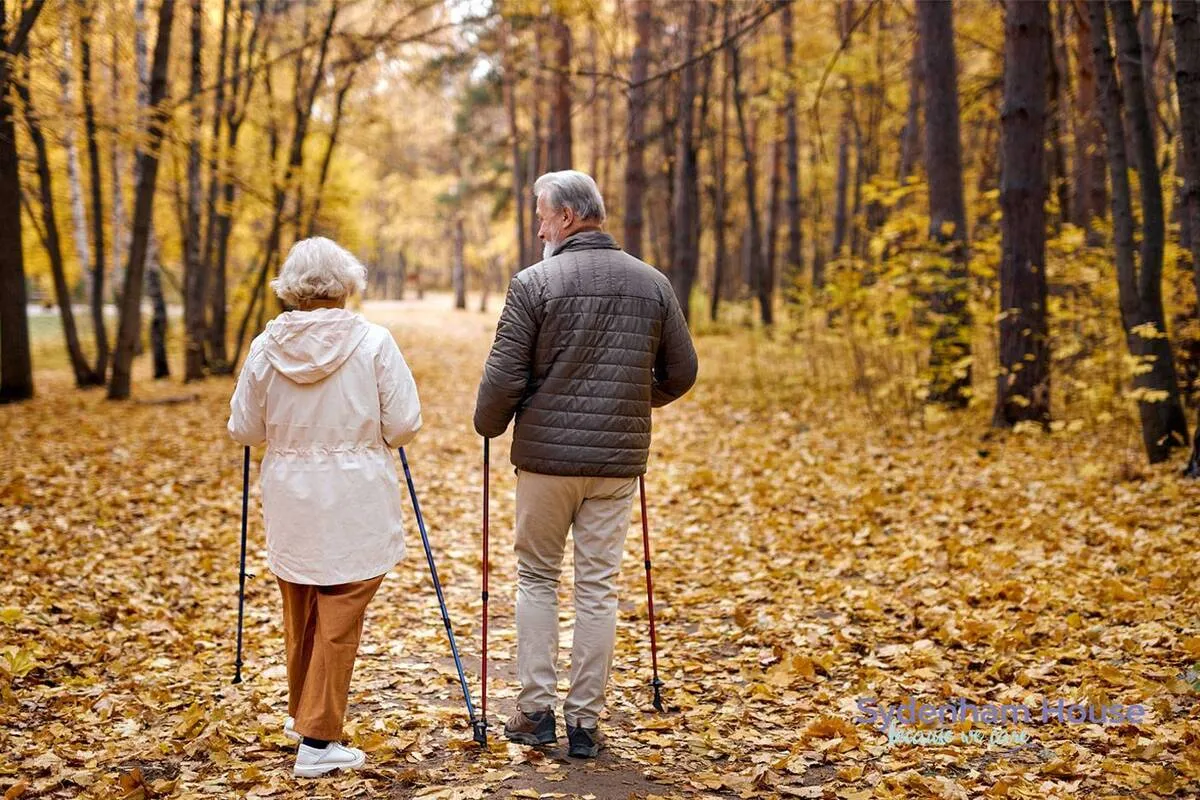
Frailty is a clinical condition that affects many older adults, making them more susceptible to everyday challenges. This increased sensitivity can raise the likelihood of falls, hospital visits, and the loss of independence. Common indicators of frailty include unintentional weight loss, slower movement, general weakness, constant fatigue and reduced physical activity, the journal Digital Biomakers reported.
Since most of these signs are directly tied to physical activity, walking has emerged as one of the most effective ways for older adults to enhance their well-being and preserve independence.
Still, one key question often comes up: what walking pace actually leads to meaningful health improvements? In the past, experts have recommended the “talk test” as a guide, suggesting individuals walk at a speed where talking is easy but singing becomes difficult. Yet this advice is based on personal judgment, which makes it hard to follow consistently.
To offer a more precise approach, researchers from the University of Chicago Medicine conducted a study that showed walking just a bit faster, specifically, 14 steps per minute more than a person’s usual speed, can lead to notable gains in physical function for older adults who are frail or nearing frailty. In a follow-up study, the same team introduced a smartphone app that accurately tracks walking pace, making it simpler for individuals to turn this strategy into a part of their everyday routine.
Walking cadence — the number of steps taken per minute — is an intuitive and pragmatic way to measure walking intensity. Daniel Rubin, MD, an anesthesiologist at UChicago Medicine, became interested in cadence because of his clinical experience evaluating older patients preparing for surgery.
“Older adults have a high risk of complications associated with surgery,” he said. “Traditionally, surgical teams have relied on physical function questionnaires to risk stratify patients, but I thought there must be a way to develop more objective metrics.”
In a secondary analysis of a randomized controlled trial, Rubin and his colleagues studied older adults classified as frail or prefrail. Participants were enrolled in structured walking programs within their retirement communities, guided and assessed by clinical research staff, and cadence was measured by a device fitted to their thigh. One group was encouraged to walk “as fast as safely possible,” while another group walked at their usual comfortable pace.
The study’s results showed clear benefits: those who increased their cadence by at least 14 steps per minute above their usual pace (to roughly 100 steps per minute) experienced substantial improvements in their functional capacity, demonstrated by their ability to walk longer distances in a standardized test.
“People who haven’t experienced frailty can’t imagine how big a difference it makes to be able to not get tired going to the grocery store or not need to sit down while they’re out,” Rubin said.
Building on these findings, Rubin’s team created a smartphone app called “Walk Test,” which they designed specifically for measuring walking cadence accurately.
“We didn’t necessarily trust smartphones’ built-in analytics,” Rubin said. “Instead, we built an app that uses a novel open-source method to analyze the data measured by the phone and lets us actively engage users in brief, deliberate walking tests, ensuring accurate measurement.”
Validation testing showed that the app counts steps per minute with exceptional accuracy, closely matching specialized, research-grade accelerometers. Rubin noted that Walk Test was designed for accessibility and user-friendliness in addition to accuracy.
“We wanted to make it as low-barrier as possible so it’s easy for older adults to use without additional equipment,” he said. “The people who need the most help are usually the least well-equipped to get s tarted.”
The research highlights walking as a widely accessible exercise with substantial health benefits.
“Even casual walking had positive effects on our study participants,” Rubin said. But for those who are able, increasing their walking pace judiciously can yield even greater results.
To use cadence to guide your walking intensity, start by measuring your usual walking pace in steps per minute to establish a baseline. From there, try increasing your pace slightly to find a level that still feels comfortable but brisker.
To maintain a steady and elevated cadence, Rubin recommends using a metronome app to match your steps to a consistent beat. While the Walk Test app developed by the research team is not yet available to the public, metronome apps are a simple alternative that can help walkers stay on pace and track progress over time.
These methods can help integrate faster-paced walking into daily routines, offering a simple yet effective strategy to people who want to stay healthier and more independent as they age.
4155/v


















