Iranian Firm Uses Nanostructures to Make Heat Sink
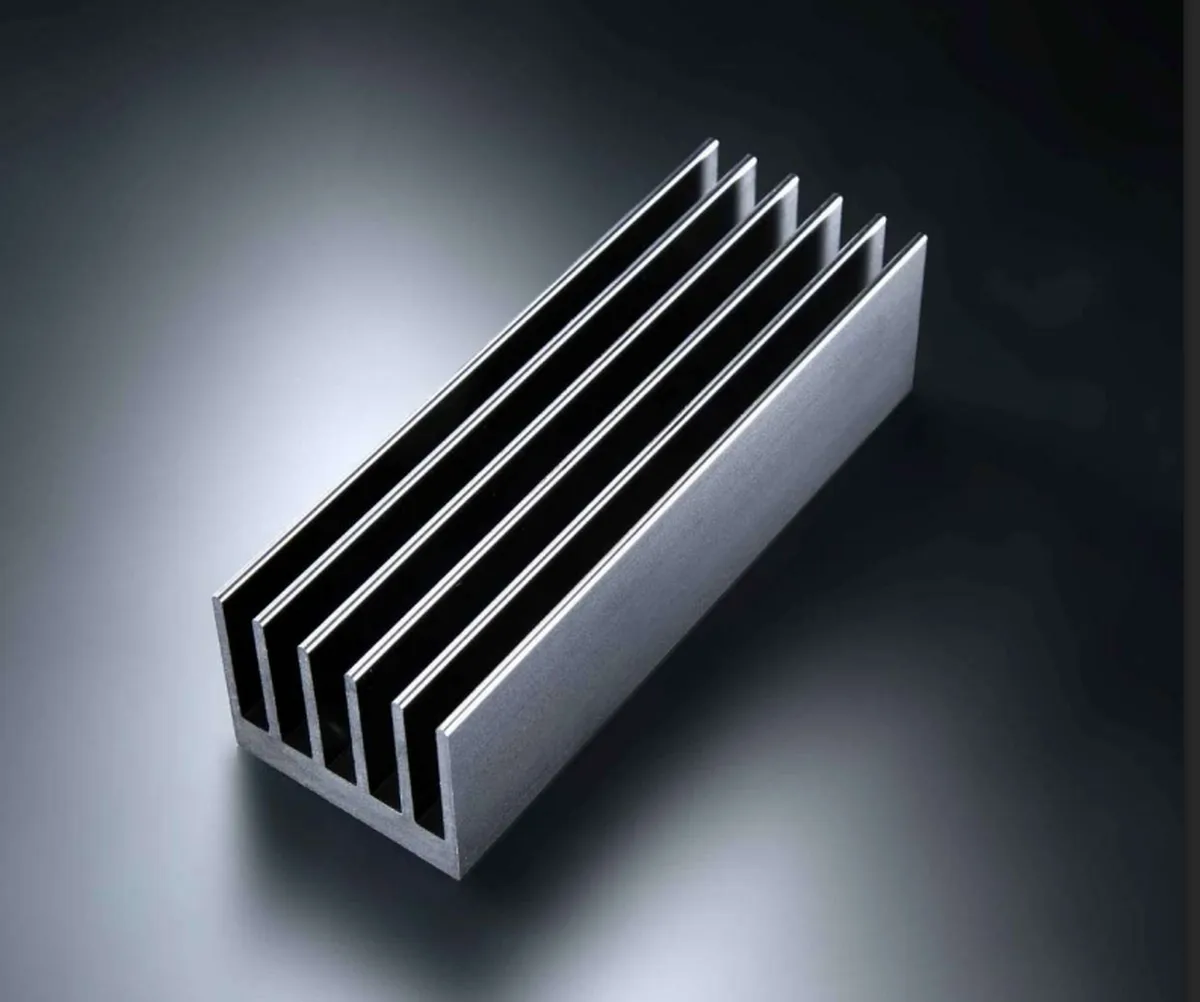
The product made by ‘Nano Abkar Isatis’ is a heat sink whose surfaces are covered by thin layer of nanoporous alumina through anodizing.
It benefits a better corrosion resistance and heat transfer kinetics.
Anodizing exterior surfaces of the heat sink and forming a thin layer of nanoporous alumina leads to increased corrosion resistance, better heat transfer owing to high surface area-to-volume ratio, improved thermal emission coefficient
The product can be applied for cooling microprocessors, light-emitting diode lamps and solders.
A heat sink (also commonly spelled heatsink) is a passive heat exchanger that transfers the heat generated by an electronic or a mechanical device to a fluid medium, often air or a liquid coolant, where it is dissipated away from the device, thereby allowing regulation of the device's temperature. In computers, heat sinks are used to cool CPUs, GPUs, and some chipsets and RAM modules.
Heat sinks are used with other high-power semiconductor devices such as power transistors and optoelectronics such as lasers and light-emitting diodes (LEDs), where the heat dissipation ability of the component itself is insufficient to moderate its temperature.
4155/v