University of Tehran Researchers Develop Intelligent Dental Image Analysis System
The research, which was published in an international journal in the form of an article from Mahdieh Dehqani's doctoral thesis and supervised by Reza Aqayeezadeh Zoroufi, a professor at the Faculty of Electrical and Computer Engineering, shows that this model is able to automatically identify the exact location of lesions and abnormalities in the image.
“A diagnostic system based on artificial intelligence has been designed, which is an advanced neural network architecture called YOLOv11, that was trained on a public dataset. This model is able to automatically identify the exact location of lesions and abnormalities in the image and also announce the probability of correct diagnosis,” Aqayeezadeh Zoroufi said.
Noting that one of the strengths of the research is its usability, he said, “This model has been implemented in the form of a web application so that dentists and radiologists can easily use it. By specifying the exact location of problems, this system helps the doctor prioritize and make decisions faster.”
Aqayeezadeh Zoroufi described the increase in speed and confidence in clinical decision-making as other advantages of using this system in diagnosing dental problems, saying, “According to experts, the use of such systems not only increases the speed of the report writing process, but also, as a second observer, can improve the accuracy of the final diagnosis by reducing errors caused by fatigue or high workload and play an effective complementary role for maxillofacial specialists.”
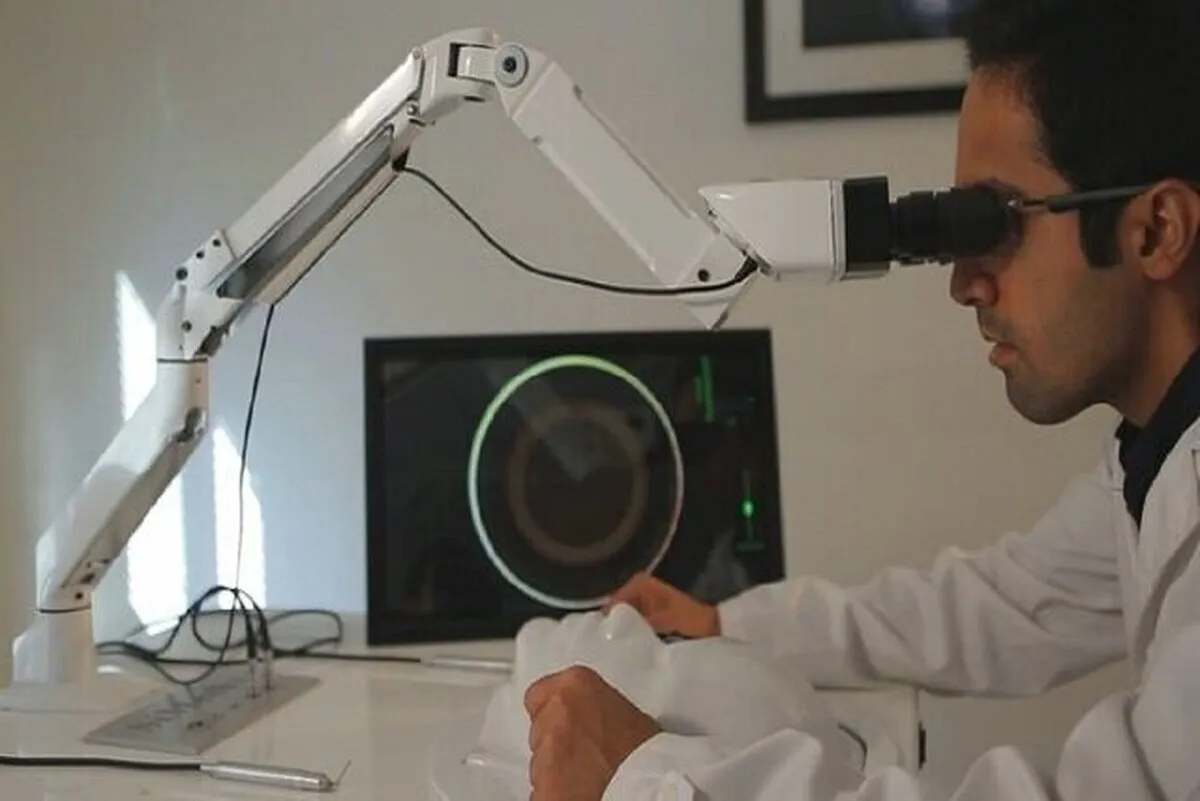
In a relevant development in 2024, a knowledge-based company in Iran had manufactured a medical dental surgery training simulator which can decrease human errors.
“Before the medical student enters the actual surgical stage on the patient, he/she can practice his/her skills on this device to prevent possible errors,” said Fatemeh Goudarzi Moqaddam, the marketing expert of the knowledge-based company.
“This device has been designed to simulate the clinical space for residents and students can realistically experience all surgical steps on the platform of this simulator,” she said.
Noting that all the necessary tools for dental surgery, including turbines, mirrors, and pedals, have been simulated in this device, Goudarzi Moqaddam said, “This device provides universities with the opportunity to complete surgical training courses, in such a way that at the end of the course, this system gives students a score and the students become aware of their errors.”
4155/v


















