Aluminum-20, Self-Destructing Atom Scientists Never Saw Coming
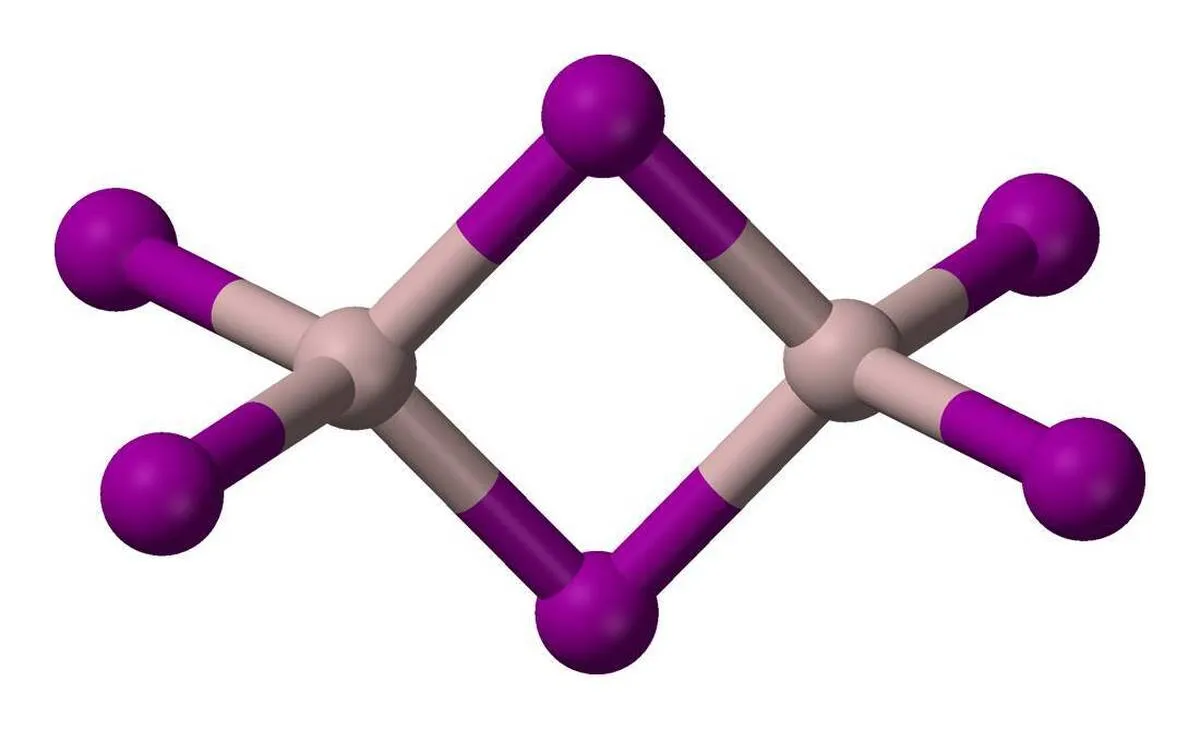
This rare and unstable isotope doesn’t just decay, it unravels through a dramatic sequence of proton emissions that challenge long-held assumptions about nuclear structure. The finding marks the first known case of a “triple-proton decay chain,” and it may even hint at a break in the fundamental symmetry of atomic particles, opening a new frontier at the edge of nuclear stability, the journal Physical Review Letters reported.
Radioactive decay is a natural process that occurs when unstable atomic nuclei release energy in the form of radiation. Scientists study how these atoms break down to better understand the behavior and structure of atomic nuclei. Among the more unusual types of decay is proton emission, which allows researchers to investigate rare and unstable nuclei that lie far from the so-called “valley of stability,” the part of the nuclear chart where stable atoms are found.
In a study published on July 10 in Physical Review Letters, a team of physicists from the Institute of Modern Physics (IMP) at the Chinese Academy of Sciences (CAS), along with international collaborators, announced the first-ever detection and analysis of aluminum-20. This previously unknown isotope is highly unstable and decays through an especially rare event known as three-proton emission.
“Aluminum-20 is the lightest aluminum isotope that has been discovered so far. Located beyond the proton drip line, it has seven fewer neutrons than the stable aluminum isotope,” said Associate Prof. Xiaodong Xu from IMP, first author of the study.
To detect this elusive isotope, the team used an in-flight decay method at the Fragment Separator facility at the GSI Helmholtz Centre for Heavy Ion Research in Darmstadt, Germany. By measuring the angular patterns of particles emitted during the decay, they were able to confirm the existence of aluminum-20 and observe its unique breakdown process.
Through detailed analysis of angular correlations, the researchers found that the aluminum-20 ground state first decays by emitting one proton to the intermediate ground state of magnesium-19, followed by subsequent decay of magnesium-19 ground state via simultaneous two-proton emission. Aluminum-20 is the first observed three-proton emitter where its one-proton decay daughter nucleus is a two-proton radioactive nucleus.
The researchers also found that the decay energy of the aluminum-20 ground state is significantly smaller than the predictions inferred from the isospin symmetry, indicating a possible isospin symmetry breaking in aluminum-20 and its mirror partner neon-20.
This finding is supported by state-of-the-art theoretical calculations that predict that the spin-parity of the aluminum-20 ground state differs from the spin-parity of the neon-20 ground state.
“This study advances our understanding of the proton-emission phenomena, and provides insights into the structure and decay of nuclei beyond the proton drip line,” said Xu.
To date, scientists have discovered over 3,300 nuclides, yet fewer than 300 are stable and exist naturally. The remainder are unstable nuclides that undergo radioactive decay. Common decay modes, such as α decay, β– decay, β+ decay, electron capture, γ radiation, and fission, were discovered by the mid-20th century.
Over the past several decades, owing to the tremendous development in nuclear physics experimental facilities and detection technologies, scientists discovered several exotic decay modes in the study of nuclei far from stability, particularly in neutron-deficient nuclei.
In the 1970s, scientists discovered single-proton radioactivity, where nuclei decay by emitting a proton. After entering the 21st century, two-proton radioactivity was found in the decays of some extremely neutron-deficient nuclei. In recent years, even rarer decay phenomena such as three-, four-, and five-proton emission were observed.
4155/v