Iranian Scientists Develop Light Therapy Glasses for Alzheimer's Patients

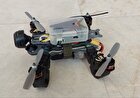
The team of scientists stationed at Amirkabir University of Technology conducted a research entitled ‘Making a prototype of 40 Hz light therapy glasses to help improve cognitive performance in the early stages of Alzheimer's’.
“In this project, the mechanism of the effect of 40 Hz light on the brain, specially the activation of the gamma rhythm and its role in clearing pathological deposits of Alzheimer's, was first reviewed. Then, the research team designed an electronic circuit and an optical algorithm capable of producing precise 40 Hz pulses,” said Danial Nejad Massoum, one of the researchers.
In addition to the electronic design, the ergonomic design of the glasses and optical safety tests were also carried out. The prototype is currently in the basic performance testing phase and will be prepared for the next stages, including human and clinical tests,” he added.
Also Seyed Saeed Al-e Hashemi, another researcher of the project, described the creation of the prototype of this product as the technological achievement of this research, and said, “The built version is actually a minimum viable prototype that allows for technical review and conceptual testing of the technology.”
Several research studies have looked at using light therapy to treat dementia and its symptoms.
Different types of light therapy exist, including bright light therapy and photobiomodulation. These therapies work in different ways.
In dementia, the circadian rhythm can be disrupted, which can result in sleep disorders and disruptive behaviour during the night.
Bright light therapy has been found to be beneficial as a treatment for these sleep disturbances. It is believed to work by helping to regulate the circadian rhythm.
In bright light therapy, a person sits in front of a light box that provides about 30 times more light than the average office light, for a set amount of time each day.
4155/v