Iranian Scientists Equip Nano-Device with AI
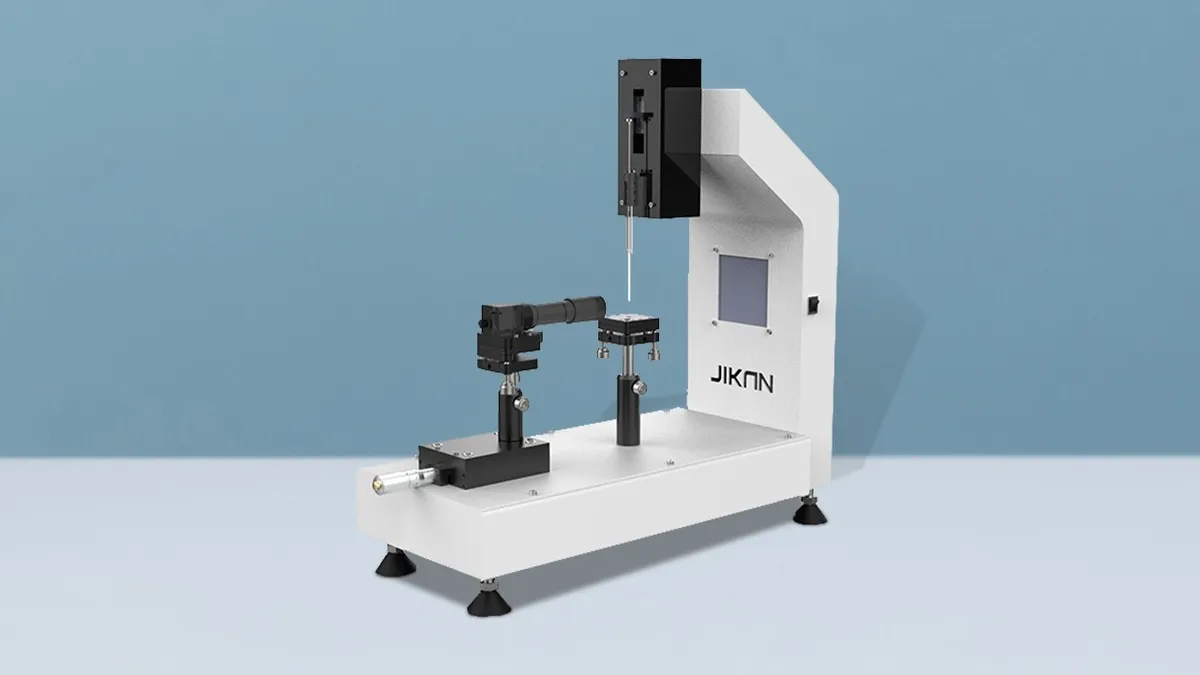
The company's researchers used deep learning algorithms, which is the first step in using artificial intelligence in nano-equipment in Iran. The process of detecting and calculating contact angle and surface tension is transformed from manual to a fully automated system that calculates and displays accurate values without user intervention and only through photos or videos.
In addition to increasing the accuracy and speed of measurement, this technology eliminates human errors and paves the way for the complete automation of nano-laboratories and also the use of this device in industries.
The system is a combination of an intelligent software module and a precise imaging device. In this system, after recording an image or video of a liquid droplet on the sample surface, the software identifies the droplet boundary, contact angle, and surface parameters based on the convolutional neural network automatically.
Therefore, the parameters that were previously determined manually by the user are now analyzed automatically and with high accuracy by the algorithm. This technology is not only applicable in the static contact angle measurement mode, but also in the calculation of surface energy by simultaneously measuring two different drops on the same surface.
The developed system is able to operate fully in two modes of device-connected mode that is when the artificial intelligence system is connected to the measuring device, the software, performs the analysis without user intervention after receiving an image or video of the sample and then automatically displays the results related to the contact angle and surface tension. The second mode is device-independent mode in which the user only uploads a sample photo or video to the software and the system automatically and accurately extracts contact angle and surface tension data.
This capability makes the software a powerful tool for secondary data analysis and also allows for reprocessing of past test results.
In a relevant development in August, a knowledge-based company in Iran had designed and manufactured two laboratory and industrial nanosynthesis devices, used to produce high-quality lipid and polymer nanoparticles with drug encapsulation capabilities.
This technology facilitates the research and development of new drugs and the production of vaccines and chemotherapy drugs.
“Our device is actually designed for the production of microfluidic technology and can produce a wide range of drug nanocarriers or nanoparticles,” said Seyed Ali Mousavi Sha’eq, the managing director of the knowledge-based company.
“The device is available in both desktop and industrial classes and is used to produce various types of drug-containing nanoparticles or nutrients for applications in production of vaccines, chemical drugs, food supplements and skin care products,” he added.
“This device operates on the basis of highly rapid mixing of the solutions required for the production of nanocarriers. The two solutions are quickly mixed inside a microfluidic chip, forming drug-containing nanoparticles. The particle size produced by this device is very suitable, eliminating the need to use size reduction methods to reduce the particle size,” Moussavi Sha’eq said.
4155/v
Azra Varasteh