Iran-Made Nano Products Boost Lifespan, Wear Resistance of Car's Brake Pads
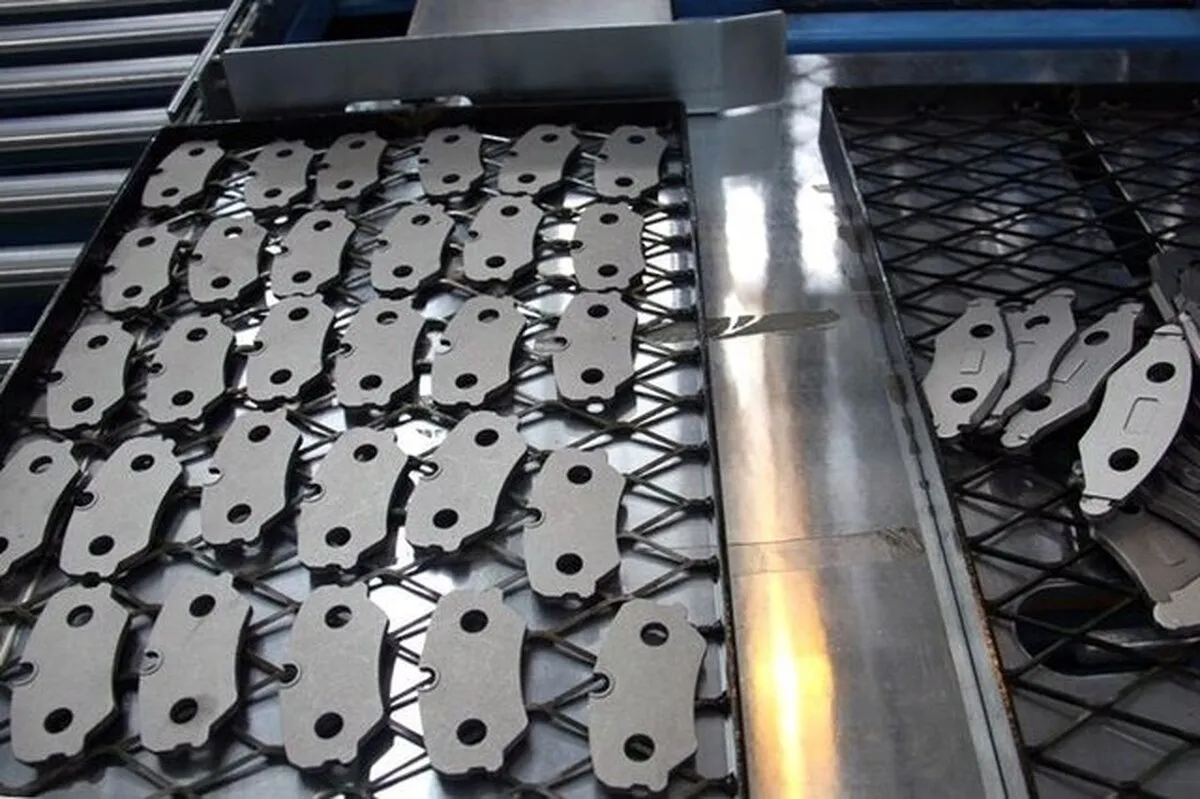
“These two technologies include nanocoating of the brake pad surface and nanostructured compounds in the friction material, which have reached the industrial production and final preparation stages, respectively,” said Mohammad Hassan Akhoundian, the marketing and sales manager of the company.
“The nano paint technology increases corrosion resistance and reduces the cost of the production process, and nanostructured compound technology increases the stability of braking performance at high temperatures,” he added.
Akhoundian explained that the companies’ specialists used reinforcing nanoparticles in the formulation of the new brake pads which increase the stability of braking performance in high temperature conditions, improve wear resistance and extend the product's lifespan.
“Also, the nano-structured paint and coating of the brake pad surface, in addition to greater resistance to corrosion and peeling, has reduced the final cost of painting due to better adhesion and lower consumption of raw materials,” he added.
In a relevant development in 2023, Iranian researchers at a nanotechnology company had also managed to produce strong vehicle break pad adhesive which shows high thermal resistance.
‘Polymer Pishrafteh Amirkabir’ company has succeeded in producing the brake pad adhesive in which nanoparticles are used to improve quality.
"Pad adhesive is used in the production line of brake pads for light and heavy vehicles whose task is to connect the two lower parts and the upper layer of the pad to each other,” said Mohammad Alizadeh, one of the founders of the company.
“We used nanoparticles to improve the thermal properties of this adhesive. The pad is a piece which is constantly subjected to friction and high temperature,” he added.
Noting that the addition of nanoparticles to the adhesive increased the thermal resistance of the pad so that it shows more resistance than normal pads in the hot shear test, Alizadeh said, “At present, the adhesive is being produced on an industrial scale of one ton per month.”
4155/v
Azra Varasteh