NDI Technology Reduces Overhaul Time at South Pars Gas Field in Southern Iran
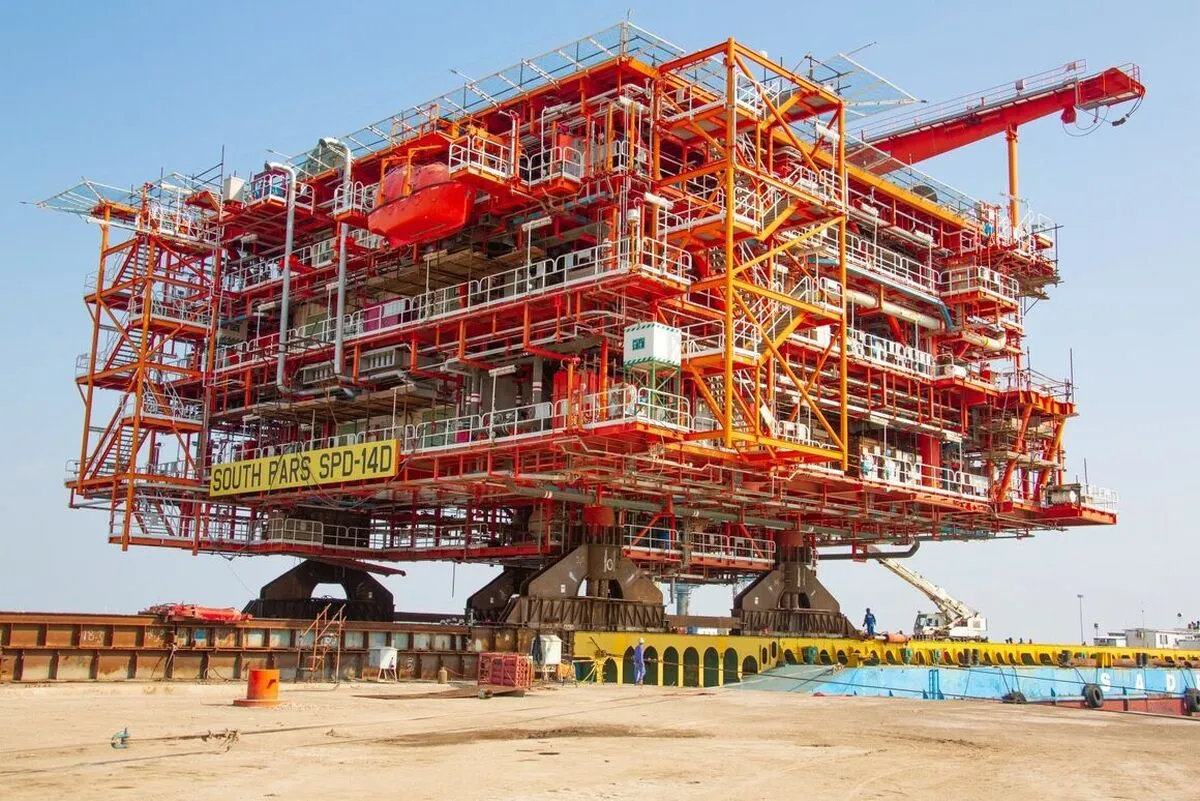
“In the first half of this year, the time for major repairs has been significantly reduced by using new NDI inspection methods and implementing continuous monitoring programs,” Alireza Barzegar said.
“This development plays a key role in maintaining the health of equipment and safe natural gas production. Non-destructive inspection allows for the accurate identification of equipment defects without stopping or damaging them, helping to reduce operational risks and increase the safety of employees and the environment,” he explained.
Noting that during this period, several technologies, including eddy current (ET), magnetic field testing (MFL), phased array and TOFD techniques, rope access thickness measurement, and gamma scanning, have been used to inspect key equipment, Barzegar said that the use of modern non-destructive inspection technologies is an effective step in ensuring the safety and continuity of the country's gas production.
"Inspections are carried out with careful planning, selection of appropriate techniques, and data analysis based on international standards, which helps in better service and smart planning for future repairs," he underlined.
Nondestructive testing (NDT) or nondestructive inspection (NDI) is any of a wide group of analysis techniques used in science and technology industry to evaluate the properties of a material, component or system without causing damage. The terms nondestructive examination (NDE), nondestructive inspection (NDI), and nondestructive evaluation (NDE) are also commonly used to describe this technology.
Because NDT does not permanently alter the article being inspected, it is a highly valuable technique that can save both money and time in product evaluation, troubleshooting, and research. The six most frequently used NDT methods are eddy-current, magnetic-particle, liquid penetrant, radiographic, ultrasonic, and visual testing. NDT is commonly used in forensic engineering, mechanical engineering, petroleum engineering, electrical engineering, civil engineering, systems engineering, aeronautical engineering, medicine, and art.
4155/v