Iranian Scientist Wins Mustafa Prize 2025
Mehmet Toner, professor of biomedical engineering at Harvard University from Turkey and Mohammad K. Nazeeruddin, professor of chemistry at the EPFL, Sion Campus, from India, were the other winners of the prestigious prize.
The Mustafa Prize, a top science and technology award, is granted biennially to the top researchers and scientists of the Islamic world in three categories: “Life and Medical Science and Technology”, “Information and Communication Science and Technology”, and “Basic and Engineering Sciences”.
The Prize is granted to works deemed to have improved human life, have made tangible and cutting-edge innovations on the boundaries of science, or have presented new scientific methodology.
The laureates in each category will be awarded USD 500,000/- which is financed through the endowments made to the Prize. The laureates will also be adorned with a special Medal and a certificate.
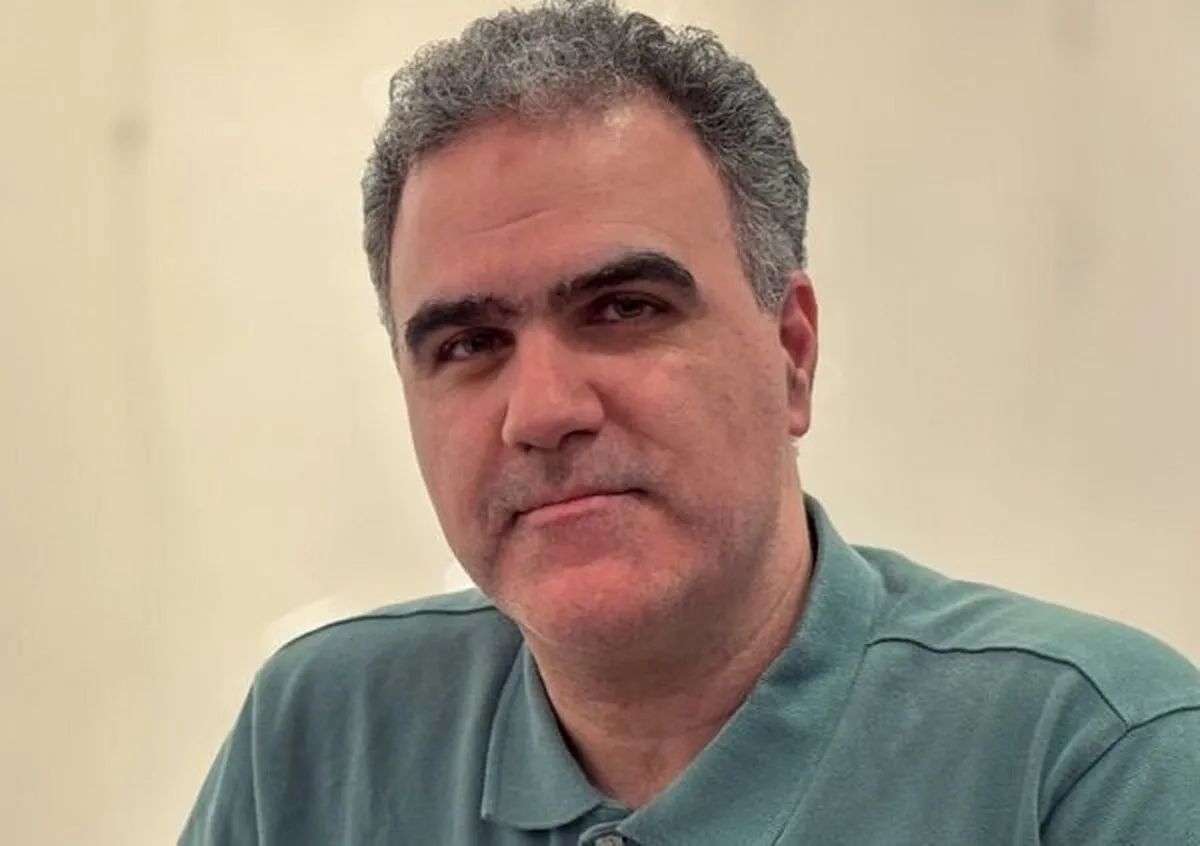
Born in 1979 in Iran, Mirrokni was recognized for his leadership in information and communication technologies. His research focuses on algorithms, market optimization, large-scale graph analysis, and scalable optimization techniques.
His scientific journey from school classrooms to university and industrial research has always been intertwined with discovery and challenges. At Karaj’s School for the Gifted, he spent hours grappling with the toughest questions in high school. Olympiads and global RoboCup competitions were his first arenas of growth, where he learned that confidence and teamwork form the foundation of any great success. He still recalls the day his team won first place in Europe. For him, the experience of collaboration and self-belief was more valuable than the medals.
Entering university set his path apart from conventional education, leading him to Sharif University of Technology, where projects, programming competitions, and robotics deepened his passion for algorithms. These experiences introduced him to creative solutions for complex problems. This approach later became a consistent pattern in his research: breaking down problems into smaller parts, analyzing them meticulously, and reconstructing them in novel ways. It was at this university that he realized that his future lay in theoretical computer science—a choice that, brought him to MIT in Boston in 2005. Surrounded by brilliant minds, he immersed himself in the world of theoretical computer science, an environment that not only taught him to think more deeply but also showed him that science is most valuable when it connects to real life.
A Path To Global Innovation
After graduating from MIT, Mirrokni worked at Amazon and Microsoft Research where he transformed theoretical algorithms into solutions that impact millions of users daily. However, his true destination was Google Research, where he has been active in large-scale projects for more than a decade. Here, he works with interconnected data on a scale that is sometimes as vast as the global population. This experience reminds him that science is meaningful only when it extracts practical solutions from theoretical foundations. He currently leads algorithm research groups in New York, with projects spanning large-scale market algorithms, optimization, graph mining, and next-generation AI initiatives such as Gemini AI.
4155/v