100 Years of Data Shatter 'Creative Lefty' Myth
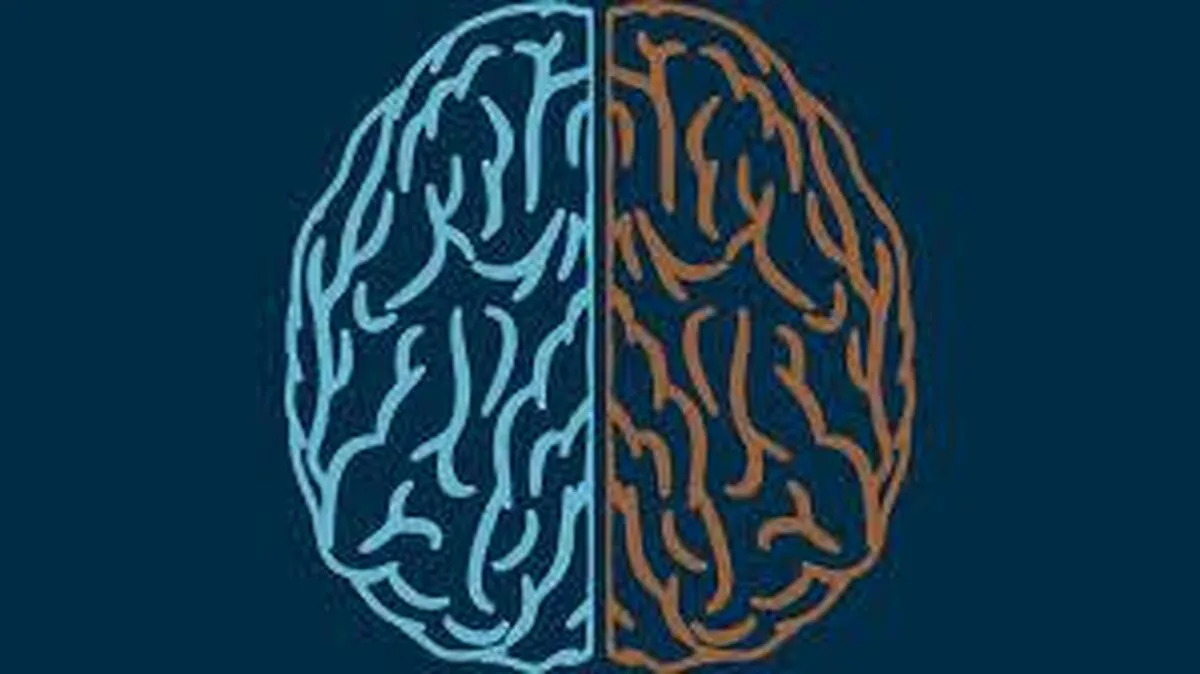
Cornell psychologists sifted through nearly a thousand studies, ultimately finding no consistent advantage for lefties on standard divergent-thinking tests, and even a slight edge for right-handers in some, the journal Psychonomic Bulletin and Review reported.
After examining more than a hundred years of research on the relationship between handedness and creativity, a new Cornell University study has concluded that the common belief that left-handed people are more creative is not supported by evidence.
“The data do not support any advantage in creative thinking for lefties,” said Daniel Casasanto, associate professor of psychology. “In fact, there is some evidence that righties are more creative in some laboratory tests, and strong evidence that righties are overrepresented in professions that require the greatest creativity.”
Casasanto is the senior author of “Handedness and Creativity: Facts and Fictions”.
Casasanto noted that there are scientific reasons why left-handed individuals, who make up roughly 10% of the population, might be expected to excel creatively. Divergent thinking, which involves rapidly generating multiple solutions and making unexpected connections, is primarily supported by the brain’s right hemisphere.
The research team carried out a meta-analysis, reviewing nearly 1,000 relevant scientific papers published since 1900. Most were excluded because they either lacked standardized data or studied only right-handed participants (a common approach when aiming for uniform samples). In the end, 17 studies remained, representing nearly 50 measured effect sizes.
Results showed that handedness had little to no impact on performance in the three most widely used lab tests of divergent thinking. In some cases, right-handed participants even had a slight edge.
“If you look at the literature on the whole,” Casasanto said, “this claim of left-handed creativity is simply not supported.”
What has sustained belief in left-handers’ special creativity? One factor, the authors speculate, is left-handed exceptionalism: the idea that it’s rare to be a lefty and rare to be a creative genius, so perhaps one explains the other. Another is the popular perception that creative genius is linked to mental illness. It turns out lefties, who are more likely to be artists, experience higher rates of depression and schizophrenia.
“This idea that left-handedness, art and mental illness go together – what we call the ‘myth of the tortured artist’ – could contribute to the appeal and the staying power of the lefty creativity myth,” Casasanto said.
Finally, Casasanto said, the urban legend is a case study in statistical cherry-picking – frequent citing over the years of a small number of studies with small or biased samples.
“The focus on these two creative professions where lefties are overrepresented, art and music, is a really common and tempting statistical error that humans make all the time,” Casasanto said. “People generalized that there all these left-handed artists and musicians, so lefties must be more creative. But if you do an unbiased survey of lots of professions, then this apparent lefty superiority disappears.”
4155/v