Top News of Last Week with ANA

Azad News Agency (ANA) published a number of scientific and technological news during the past week whose top ones are as follows:
University of Tehran Iran’s Top University in QS 2026 Ranking
The University of Tehran ranked first nationally and 322nd in the world in the latest world university ranking released by the Quikrley Symonds (QS).
In the latest QS ranking, the University of Tehran ranked first in Iran by moving up 46 places and achieving 322nd place internationally.
In this list, Sharif University of Technology, Amirkabir University of Technology, Iran University of Science and Technology, and Isfahan University of Technology were ranked second to fifth, respectively.
This global ranking is published annually by the London-based Quikrley Symonds (QS) Institute according to indicators like academic reputation, employment reputation, citations per capita, “h” index, and international research network.
In the QS 2026 ranking, the performance of 1,501 universities from around the world, including 11 Iranian universities, was assessed.
Iranian Knowledge-Based Firm Produces Polyurethane Foam for Wound Exudate
A knowledge-based company in Iran managed to produce polyurethane foam with specialized use in wound exudate management.
The technologists of the knowledge-based company took an important step towards the country's self-sufficiency in the field of medical equipment by producing polyurethane foam and were able to market a competitive and high-quality product at the international level.
Previously, the country's medical centers imported wound foams from other countries, which not only increased treatment costs but also limited patients' access to these vital products. But now, with the domestic production of the product, we will witness a significant reduction in costs and improved access for patients across Iran, specially chronic patients and those facing complex wounds.
At present, the company's products are exported to the regional states, including Iraq, Oman, Pakistan, and Afghanistan, and the Eurasian countries like Russia.
Iranian Company Manufactures Electric Motorcycles with Repairable Battery
An Iranian knowledge-based company succeeded in making electric motorcycles with anti-theft system, repairable battery, powerful motor and built-in GPS.
“Our batteries are advanced with a smart management system (BMS) to prevent risks like overheating or explosion. Also, unlike many companies that completely replace the battery after failure, we have the technology to repair and rebuild the battery; sometimes even without charging the customer,” said Akbar Akbari, the deputy managing director of the knowledge-based company.
“We installed a GPS and online tracking system on our motorcycles from the beginning. In case of theft, if the application is installed, the exact location of the engine can be seen on a map,” he added.
We produce most of the main components inside the country. Only some common parts like flaps are obtained from domestic suppliers or, if economically viable, from foreign countries. But everything that has technological added value is in our own hands,” Akbari said.
“The central brain of the engine, the Vehicle Control Unit (VCU) and its command software, are also designed and programmed by us. This level of technical know-how allows us to develop the system, update it, and add various modules to it as needed,” he added.
Technology Assistant Project in Iranian University Makes Bridge between University, Industry
The Technology Assistant Project, which was implemented at Shahid Beheshti University with the aim of increasing students' skills training and employability, has been able to provide valuable opportunities for interaction between university and industry.
“The Technology Assistant Project plays a key role in bringing the university closer to the industry and students' real understanding of job environments,” said Farnoush A’alami, a faculty member of Shahid Beheshti University and the head of the university's Incubator Center.
“By strengthening the executive structure, providing financial and supervisory support, the capacities of this project can be properly utilized to develop specialized human resources,” she added.
Based on the findings of this research, solutions like increasing the duration of the project, increasing the amount of fees, holding workshops, providing insurance and student incentives, and updating the information recording system have been presented as key suggestions for improving the implementation of this project.
Iran-Made Nanofilter Capable of Removing Unpleasant Sewage Odor
A knowledge-based company in Iran has succeeded in designing a nanofilter for removing sewage odor with an efficiency of 98% and low operating costs.
Relying on the power of Iranian engineers and nanotechnology, the knowledge-based company has succeeded in designing and producing a nanofilter package for removing odors from sewage valves; a simple, low-cost, renewable and long-lasting product that absorbs up to 98% of unpleasant odors and prevents toxic gases from entering the surrounding environment.
By using absorbent nanomaterials, this product can effectively absorb like hydrogen sulfide and sulfur-containing compounds. This gas, which is often known for its rotten egg odor, causes respiratory irritation even at low concentrations, and at higher levels it can lead to headaches, itching, nausea, eye damage, dysfunction of the nervous system, unconsciousness and ultimately death.
On the other hand, the high corrosiveness of this gas is also a serious threat to metal equipment in treatment plants, transmission lines and other technical infrastructure, and greatly increases maintenance and replacement costs.
Iran-Developed Technologies Deal with Dust Phenomena
In Iran, due to an increase in dust phenomena, specially in provinces like Khuzestan, Sistan and Balouchestan, Ilam, Kermanshah, Tehran and Yazd, some indigenous and scientific technologies and methods have been developed to combat fine dust, a report revealed.
The report says that the technologies are often in the research or experimental stage and require financial support and continuity for national effectiveness.
These technologies include development of non-petroleum and eco-friendly mulches, nano and polymer mulches, indigenous early warning systems, air pollution warning applications, revitalization of water resources and wetlands with new technologies, green belt plan around Tehran and industrial cities and urban air purifiers.
Iranian Company Produces Electrical Panel Sockets for Petrochemical Industry
Iranian researchers at a knowledge-based company succeeded in producing electrical panel sockets as used in petrochemical industry.
Alireza Elhami, the managing director of the knowledge-based company and a faculty member of the Mechanical Engineering Department of Islamic Azad University’s Rasht branch, attended Asr-e Omid event in Tabriz in Northwestern Iran with a product made of heaters and thermal elements.
"We have had numerous contracts with petrochemical companies so far, and for the first time, we have been able to reverse engineer heaters that were previously manufactured by Italian companies and delivered to petrochemical companies, and we have made them explosion-proof,” he told ANA.
"We have recently succeeded in producing electrical panel sockets, products that were previously manufactured by Italian companies. The university negotiated with the Iranian petrochemical companies and we succeeded in signing a very large contract with the managers of a company to supply 400 pieces of these sockets," Elhami said.
Iranian Company Produces High-Power Drives with Industrial Application
An Iranian technological company managed to design and make high-power drives which can be used in industry to control the speed and torque of electromotors.
“Our company specializes in designing high-power drives, which are usually made from 100 kW and above. These drives are used in industry to control the speed and torque of electromotors and has applications in the mining and rolling industries and is also used in the fan section of air conditioning systems,” Mir Hossein Kimiayee Assadi, the managing director of the company, told ANA on the sidelines of Asr-e Omid event in the Northwestern city of Tabriz.
“Similar models of high-power drives which are domestically produced are very few, and we hope that we can have a greater share of the Iranian market with the products we have and we can also think about exporting in the future,” he added.
Iranian Firm Designs Oil Dosing System for Refinery’s ISOMAX Unit
A knowledge-based company in Iran designed and developed a very high-precision oil dosing equipment with a working pressure of 550 bars for the vital ISOMAX refinery unit.
The equipment, which plays a vital role in refineries, specially in the ISOMAX unit, is designed with a high precision and on a drop scale and is capable of controlling oil droplets in a very precise dosing and adjustable manner with an injection rate of up to 30 drops per minute and for each pump separately.
The injection pressure of this oil into the system is very high and reaches about 550 bars. Previously, only four foreign companies were able to manufacture such equipment, but now the Iranian company has made the country the fifth company to possess this equipment.
The design and prototyping of this device was carried out by the company within 8 months. At present, the equipment is being operated in the heart of Tabriz refinery and is completely designed and engineered by the Iranians.
This equipment is mostly used in the oil industry and some large industries like rubber manufacturing, and it can be used in all industries that have pumps, motors, compressors or high-pressure oxygen generators.
The ISOMAX process is a hydrocracking process used in oil refineries to convert heavy petroleum fractions into lighter, more valuable products like naphtha, kerosene, and ultra-low sulfur diesel.
Iran-Made Fast Autoclave Device Sterilizes Medical Equipment in 15 Minutes
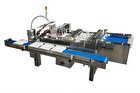
Iranian researchers at a knowledge-based company succeeded in producing and supplying a fast autoclave device with a sterilization time of 15 minutes.
“Our company's newest product is the fast autoclave, which is capable of performing the sterilization process in about 15 minutes,” said Meysam Kaheh, the sales expert of the knowledge-based company.
“In terms of quality, the experience of users in hospitals shows that our device is comparable in performance to foreign models. Of course, due to the difference in raw materials, such as those used in Italian-made devices, the price of our Iranian product is much lower and is economical,” he added.
“At present, our autoclave device is installed and used in most hospitals of Iran and we have so far exported to Armenia, Tajikistan, Afghanistan, and Iraq,” Kaheh said.
Iranian Company Makes Nano Heater without Element to Prevent Steaming in Mirrors
Iranian technologists at a nanotechnology company designed an anti-steam mirror heating pad which produces uniform and effective heat without an element and by using a nano-conductive paste.
This heating pad operates without the use of electrical elements. Its structure uses a conductive paste containing nanoparticles that, after printing on a polymer sheet and passing current, produces mild heat and transfers it to the mirror surface and therefore, water vapor evaporates from the mirror and the user's vision remains clear.
The use of nanotechnology in this product has significantly improved its conductivity. A comparison of laboratory samples shows that the electrical resistance of the printed circuit with conventional pastes was about 467 ohms per square, while this number has been reduced to 19 ohms per square in nano-pastes; in other words, conductivity is increased, and as a result, more heat is produced with less electricity consumption.
Practical tests have also shown that the temperature of the mirror equipped with this pad has increased from 23 to 44 degrees Celsius, which is quite effective in preventing fogging. This product is designed as a sticker with a small thickness that can be easily installed behind mirrors of various sizes and can even be used for mirrors in bathrooms, saunas, swimming pools and car side mirrors.
Iranian Firm Makes Smart Ultrasonic Homogenizer
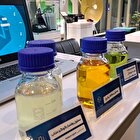
A knowledge-based company in Iran has succeeded in building a smart ultrasonic homogenizer that can reduce the time of industrial and laboratory processes by utilizing ultrasound technology and artificial intelligence.
“The device we have presented to the market is a smart ultrasonic homogenizer designed for mixing and homogenizing materials in various industries,” said Vahid Mosaddeq, a technical expert at the knowledge-based company.
Noting that the device automatically maintains optimal working conditions by utilizing digital technology and artificial intelligence, he said, “The operating frequency of the device is controlled in real time so that the device’s performance remains optimal and its energy consumption and depreciation are reduced.”
“This homogenizer activates the cavitation process in the liquid by sending ultrasound waves through a piece to the solution. This phenomenon causes the particles in the solution to break and combine evenly,” Mosaddeq said.
“The main application of this device is in medical, metallurgical and materials laboratories, and on an industrial scale it can also be used in petrochemical, refinery and pharmaceutical processes,” he added.
Iran Indigenizes over 900,000 Parts of Thermal Power Plants
Domestic development of over 900,000 power plants' parts, an 80 percent reduction in water consumption in some units, and the use of wastewater instead of raw water are among the important measures to deal with the power imbalance and resource crisis in Iran.
Simultaneously with the intensification of the electricity imbalance and the shortage of water resources in the country, the thermal power industry has taken effective steps to improve the sustainability of power plants by focusing on indigenization of equipment and developing technologies that reduce water consumption and pollution.
In the past eight years, over 922,000 power plant units worth 45 trillion rials have been indigenized in the country which plays an important role in increasing the sustainability of electricity production, reducing foreign exchange dependence, and supporting the Iranian companies.
Simultaneously with these measures, the installation of online pollutant monitoring equipment, modeling the distribution of pollution in fuel oil-fired power plants, managing industrial waste contaminated with PCBs, and implementing MRV projects to monitor greenhouse gas emissions are among other steps taken towards this goal.
Iranian Company Exports High-Quality Medical Consumables to Neighboring States
An Iranian company succeeded in producing high-quality medical consumables and exporting them to Iraq and Afghanistan.
“Our company operates in the field of producing various types of surgical and laboratory gloves, safety boxes, and blood collection and sampling tubes and containers,” said Maryam Saberi, the marketing manager of the company.
“In the field of gloves, our ability is in fast and high quality supply. In the case of safety boxes, the specialized opening door design and durable structure are among the distinguishing features. Also, in blood collection tubes, high temperature resistance, unbreakability and grooved design in the lower part, which maintains the quality of the sample and ease of movement, are among the strong points of our product,” she added.
Saberi also said that the company's products are exported to Iraq and Afghanistan.
4155/v