Iranian, Chinese Scientists Use Nanotechnology to Develop 2D Biosensors for Medical Applications
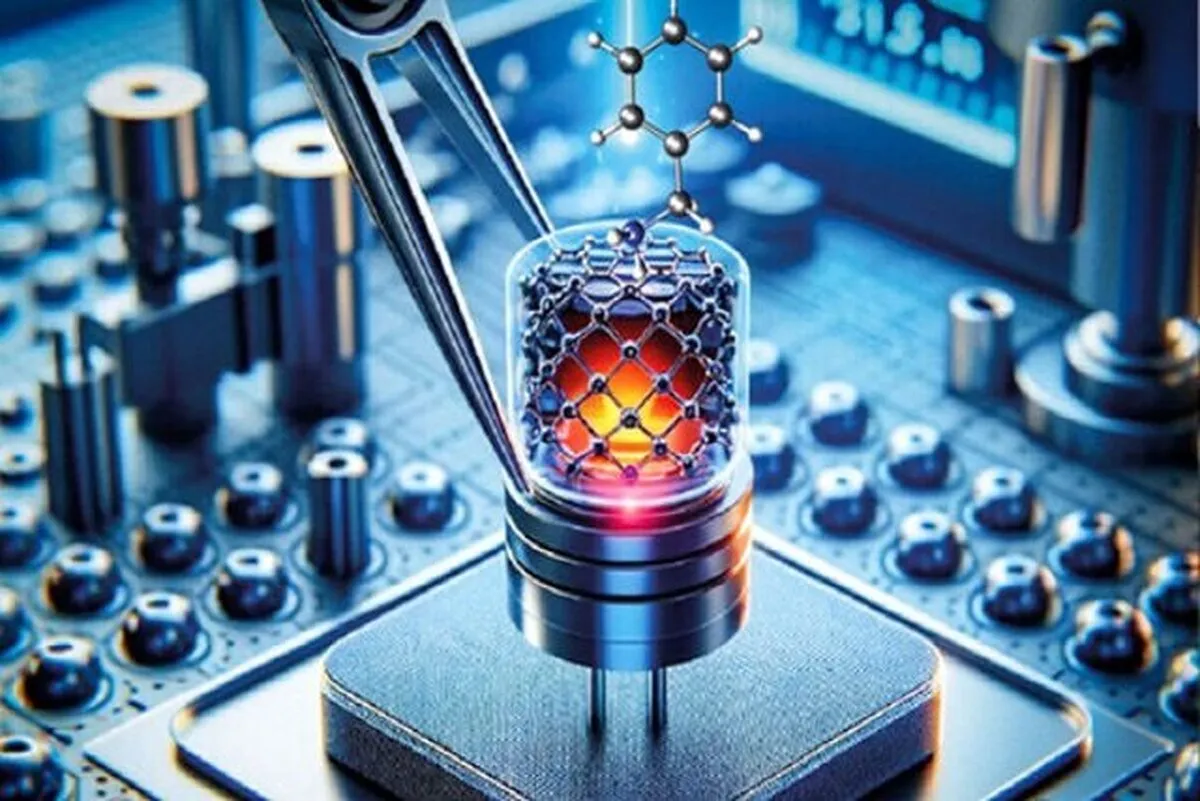
In a recent research, researchers at the University of Tehran and the University of Science and Technology of China employed a series of novel methods for synthesizing and modifying the surface of MXenes to create nanostructures that act both as a substrate for stabilizing biomolecules and as signaling units.
By designing MXene-based nanocomposites, the team was able to significantly increase the intensity of ECL signals and enhance the performance of the sensors to a level beyond conventional standards.
One of the key achievements of this project is the use of MXenes as co-reactant accelerators. This feature not only increases the intensity of the emitted light in the ECL process, but also allows for more accurate and rapid detection of target molecules. Also, the use of MXenes as precursors for the synthesis of new ECL emitters has expanded the scope of applications of these nanostructures in the design of biosensors. Despite significant progress, MXenes also face challenges. Current synthesis processes often rely on strong corrosive agents such as HF, which raises environmental concerns. Also, precise control over the surface functionalization of MXenes is still a major technical problem, since different types of functional groups (–F, –OH, –O) can provide different sensing performance. Researchers at the University of Tehran and Chinese colleagues are focusing on improving these limitations, seeking to improve the stability, biocompatibility, and performance of MXenes.
MXene is an emerging 2D material with rare combination of properties like electric and metallic conductivity, hydrophilicity, biocompatibility, large surface area, size tunability, rich surface chemistry, flexibility, layered structure. Since the discovery of first member of the family, MXene (Ti3C2Tx) in 2011, MXene has drawn the attention and left the prodigious impact on the scientific community and opens the avenue for the plethora of applications.
Due to the versatile properties; MXene is considered as the building block of the future materials and devices.
4155/v


















