Iranian Scientists, Czech Colleagues Develop Nano-Based Tool to Diagnose Parkinson Disease

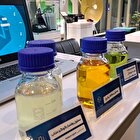
The developed sensor is based on an array of three types of carbon quantum dots (CQDs) with different surface functional groups. Each of these quantum dots exhibits a distinct fluorescence response when exposed to a target molecule. These changes include an increase or decrease in fluorescence intensity or a change in the emission wavelength. Collectively, these changes create a specific pattern or optical fingerprint for the target molecule.
In this study, three types of carbon quantum dots were used, including NH₂-CQD, L-Trp-CQD, and D-Trp-CQD. The combination of these three elements allowed the creation of a three-component sensor array that was able to distinguish α-Syn oligomers well from its other forms (single-molecule or fibrillar) as well as from other common proteins like insulin, lysozyme, and bovine albumin.
The fluorescence responses obtained from the sensor array were analyzed using the NPLS-DA statistical method. The results showed that the system was able to distinguish all the tested protein species with high accuracy. In addition, the sensor was able to detect the presence of α-Syn oligomers in a concentration range of 0.5 to 32 μg/mL. The limit of detection (LOD) of this system reached 0.5 μg/mL in an aqueous medium and 0.3 μg/mL in a saliva medium.
The cross-validation accuracy of the system also reached about 92% in an aqueous medium, indicating the high sensitivity and specificity of this technology. Remarkably, the sensor was able to perform reliably even in the complex conditions of human saliva, making it a viable option for clinical applications. One of the outstanding features of this system is that it operates without the need for labeling or the use of additional chemicals.
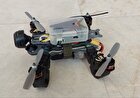
In a relevant development in January, Iranian researchers at a knowledge-based company had also succeeded in making a smart spoon which helps the Parkinson's patients by reducing their hand tremors.
“Our company is active in making rehabilitation equipment for Parkinson's patients and has manufactured different products so far, the most important of which is the smart spoon that we have produced for people with hand tremors, such as the elderly and Parkinson's patients,” Seydeh Fatemeh Hosseini, the managing director of the knowledge-based company, told ANA.
She explained that the spoon neutralizes hand tremors, preventing hand tremors from being transmitted to the head of the spoon, adding, “It directs the vibrations so that food does not fall off the spoon and the person can eat without the need for help from others.”
“The spoon is equipped with electromechanical systems and a series of sensors that measure the amount of hand tremor. The processors inside this spoon calculate the vibrations and separate them from the voluntary movements. Then, based on the commands they give, the spoon head is moved and controlled so that the food does not spill,” Hosseini said.
4155/v