Iranian Researchers Find New Solution for Construction of Quake-Resistant Buildings
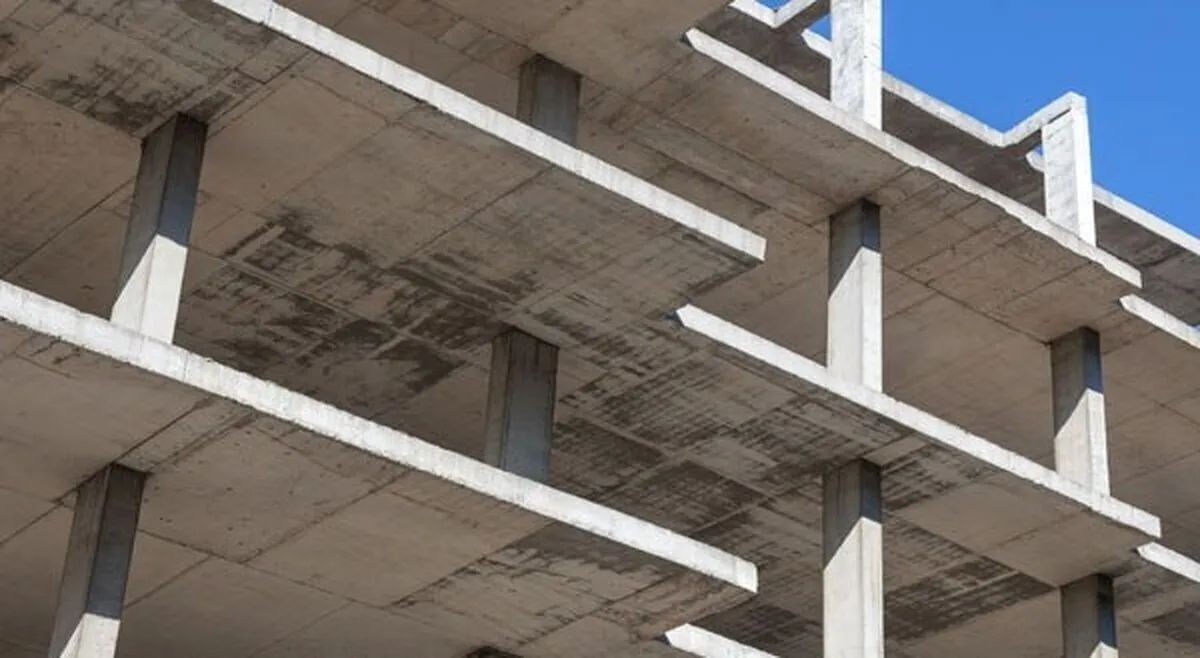
Due to concerns about earthquake damage in urban structures, researchers at Amirkabir University of Technology succeeded in presenting a new model for the analysis and optimal design of regular and irregular steel structures with an approach to reducing life cycle costs; a model that, by simultaneously utilizing the capacities of Building Information Modeling (BIM) and Life Cycle Cost Analysis (LCC), can open new horizons in the robust and economical design of structures, specially in seismic areas.
“The research was aimed at highlighting the impact of irregularity on the life cycle cost of structures, to create an integrated framework based on optimizing seismic design of structures using life cycle cost capacities and building information modeling,” said Sajjad Taheri Jebelli, a PhD student at Amirkabir University of Technology.
“In seismically prone areas, a small change in the design stage can lead to excessive costs or, conversely, to prevent the loss of social capital,” he added.
“Based on the results of numerical studies, design based on the design earthquake of the code does not provide the minimum LCC for the structure. Instead, models designed for higher earthquake loads will be able to provide a much lower LCC than design based on the design earthquake, which can raise important questions for the topic of seismic design; this was specially evident in the case of irregular high-rise structures,” Taheri Jebelli said.
In a relevant development in May, researchers of an Iranian knowledge-based company had also succeeded in designing and manufacturing prefabricated concrete parts which are eco-friendly and resistant to earthquake and reduce energy consumption.
“One of the products of our company is GRS precast concrete parts. These pieces have a cement base and their thickness is 2-3 cm and they are produced in dimensions of 30cm*30cm to 3m*3m,” Hamed Anahid, a member of the board of directors and the managing-director of the knowledge-based company, told ANA.
“It has suitable mechanical properties like compressive and fracture resistance, tensile strength, wear resistance, resistance to weather conditions (melting and freezing), resistance to corrosive and acidic substances (caused by rain) and having integrity when broken,” he added.
Noting that another product of the company is called microcement, Anahid said, “This cement-based product consists of mineral, organic and polymer materials and can be applied on horizontal and vertical surfaces due to its high adhesion.”
“Microcement concrete is 30 mm thick and is used for indoor and outdoor environments and can be used on wood, glass, and stone surfaces to create a surface without seams, cracks, and discoloration and it can last up to 15 years,” he noted.
Anahid described resistance to live load, impact, scratches and chemicals, easy cleaning, waterproofness, fast execution without destruction, use of natural and environmentally friendly materials as the most important advantages of using the product, saying, “This product is now exported to different countries, including the UAE, Oman, Iraq, Azerbaijan and Spain, due to competitive advantages compared to similar foreign samples like good quality and reasonable price.”
4155/v