Int’l Research Team Builds World’s Most Efficient Organic Solar Cell
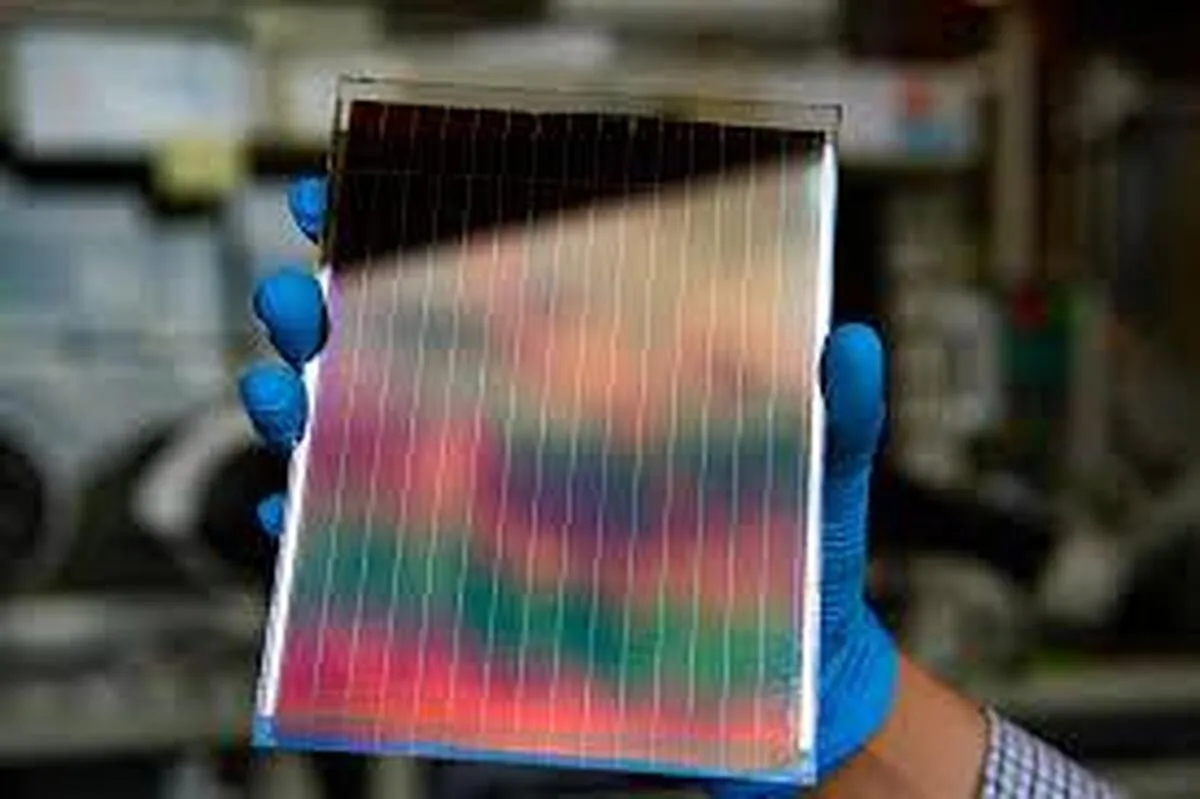
As global initiatives to mitigate climate change accelerate, the demand for solar energy continues to rise. However, conventional silicon-based solar panels, which currently dominate the market, contain a variety of hazardous substances. These materials pose significant environmental challenges when the panels reach the end of their life cycle, as their disposal or recycling involves high costs and environmental risks, the journal Advanced Functional Materials reported.
Similar concerns apply to emerging film-type solar technologies, such as perovskite solar cells. Although promising in performance, these next-generation cells also incorporate potentially toxic components, including lead compounds and metal oxides, raising further concerns about long-term sustainability and safe disposal.
To address these issues, researchers have been developing film-type solar cells made entirely from carbon-based, organic materials, known as all-organic solar cells. Unlike their metal-containing counterparts, these organic cells do not involve toxic heavy metals and can be safely incinerated like standard plastics. This makes them a far more environmentally friendly option in terms of both disposal and lifecycle cost.
Despite their environmental advantages, all-organic solar cells currently suffer from low power conversion efficiency (PCE), reaching only about 4%—significantly lower than the >27% efficiency of silicon solar cells and the >26% achieved by advanced perovskite cells. As a result, there is a strong push within the scientific community to advance the technology and improve the performance of all-organic solar cells to make them a viable alternative in the renewable energy landscape.
Masahiro Nakano, Associate Professor from Institute of Science and Engineering, Faculty of Chemistry, Kanazawa University, has collaborated with scientists from REIKO Co., Ltd. (Junichi Iwai, President) and Queen’s University at Kingston, Canada, and now successfully developed all-organic solar cells with the world’s highest efficiency.
While the performance of previous all-organic solar cells was limited to about 4% PCE, the newly developed cells achieve more than twice efficiency than that of previous ones.
Two major problems had previously hindered the performance of all-organic solar cells. First, the availability of highly conductive organic transparent electrode materials suitable for film-type solar cells is limited. Some high-conductivity organic materials had been reported, but their preparation required strong acids, bases, or high-temperature annealing (>150°C), which could damage organic substrate films and organic semiconducting layers.
To overcome this, the research team developed a transparent electrode based on conductive polymer PEDOT:PSS. The PEDOT:PSS-based electrode can be fabricated at a lower temperature (80°C) without using acids or bases, and it demonstrates sufficient conductivity (sheet resistance: <70 Ω/sq.) for film-type solar cells.
The second challenge lies in stacking multiple layers within the film-type solar cell device without harming the layers beneath. In solution-based processes, the ink used for the upper layers can damage the underlying ones. To address this issue, the researchers developed a lamination method using a carbon nanotube electrode, which allows for the addition of layers without compromising the integrity of those below.
This technique involves forming electrodes separately on the barrier films of solar cells and then attaching them to the device, avoiding damages to the bottom organic films during electrode fabrication. By combining the new organic transparent electrode and fabrication method, the research team successfully developed all-organic solar cells with more than twice the power conversion efficiency (8.7%) of previous models (4.0%). This advancement represents a crucial step toward the practical application of high-performance all-organic solar cells.
Looking ahead, all-organic solar cells hold great promise for applications in environmentally sensitive areas, such as farmland and wearable devices. Their lightweight and flexible nature also allows for installation in locations where conventional solar panels would be impractical. The research team aims to further enhance performance by improving the conductivity of the organic electrodes.
4155/v