Scientists Uncover a Hidden Language of the Brain
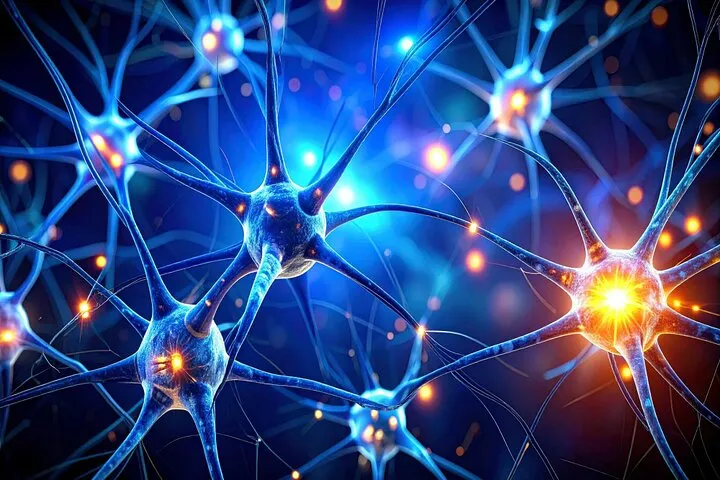
Scientists have developed a protein capable of detecting faint chemical signals that neurons receive from other brain cells—rather than only the signals they send. By tracking glutamate in real time, researchers can now observe how neurons integrate incoming information before passing signals onward.
This breakthrough reveals a missing layer of brain communication that has long remained hidden and could fundamentally transform the study of learning, memory, and neurological disease.
According to ScienceDaily, the newly developed protein records chemical messages received by brain cells, capturing input signals generated when neurons release glutamate. Glutamate is a neurotransmitter that plays a central role in brain communication and is essential for processes such as learning and memory.
Despite its importance, glutamate activity has been notoriously difficult to measure because these signals are extremely weak and occur over very short timescales.The new tool makes it possible to detect these subtle chemical messages at the moment they arrive, granting researchers access to a long-hidden aspect of neural communication.
Why This Discovery Matters
The ability to observe incoming signals allows scientists to examine how neurons process information. Each neuron receives thousands of inputs, and the way these signals are combined determines whether the neuron produces an output. This integration process is thought to underlie decision-making, thoughts, and memories. Directly studying it may help explain how the brain performs complex computations.
The advance also opens new avenues for disease research. Disruptions in glutamate signaling have been linked to conditions such as Alzheimer’s disease, schizophrenia, autism, epilepsy, and other neurological disorders. By measuring these signals more precisely, researchers may be able to identify the biological roots of such conditions.
Drug development could likewise benefit. Pharmaceutical companies may use these sensors to observe how experimental treatments affect real synaptic activity, potentially accelerating the search for more effective therapies.
Introducing a Powerful Glutamate Sensor
The protein was engineered by researchers at the Allen Institute and the Janelia Research Campus of the Howard Hughes Medical Institute (HHMI). Known as “iGluSnFR4,” or informally as a “glutamate sniffer,” the tool functions as a molecular indicator of glutamate. Its exceptional sensitivity allows it to detect even the weakest incoming signals exchanged between neurons.
By revealing when and where glutamate is released, the sensor provides a new way to interpret complex patterns of brain activity that support learning, memory, and emotions. It enables scientists to observe neuronal communication within the brain in real time. The findings have been published recently and could significantly reshape how neural activity is measured and analyzed in neuroscience.
How Do Brain Cells Communicate?
To appreciate the significance of this advance, it helps to understand how neurons interact. The brain contains billions of neurons that communicate by sending electrical signals along branch-like structures called axons. When an electrical signal reaches the end of an axon, it cannot cross the tiny gap between two neurons—known as a synapse.
Instead, the signal triggers the release of neurotransmitters into the synapse. Glutamate, the most common of these chemical messengers, plays a crucial role in memory, learning, and emotion. When glutamate reaches the next neuron, it can cause that cell to fire, allowing the communication chain to continue.
This process is often compared to falling dominoes, but in reality it is far more complex. Each neuron receives inputs from thousands of others, and only specific combinations and patterns of activity lead to activation. With this new protein sensor, scientists can now identify which input patterns produce those responses.
Until now, observing these incoming signals in living brain tissue was nearly impossible. Previous technologies were either too slow or lacked the sensitivity needed to measure activity at individual synapses. As a result, researchers could see only parts of the communication process, not the full exchange of information. The new approach allows them to capture the entire conversation.
Before protein-based sensors like the “glutamate sniffer” became available, scientists could measure only the output signals of neurons. This created a major gap in understanding, as input signals were too fast and too weak to detect.
A New Window into Brain Function
This discovery removes one of the major limitations of modern neuroscience by enabling direct observation of how neurons receive information. With the introduction of iGluSnFR4, researchers now have a powerful new tool to explore brain function in unprecedented detail. As the technology becomes more widely used, it may help answer some of the most enduring questions about how the human brain works.