Innovations of 2025: A Panorama of Smart Technology Achievements
The most notable innovations of 2025 did not promise to change the world overnight. Instead, they aimed—practically and incrementally—to redefine the relationship between humans and tools. This report examines key technological advances of the year and what they truly mean, focusing on usability rather than mere novelty.
AI-Powered Smart Devices: Learning Our Habits
Artificial intelligence became an invisible layer in everyday devices, from thermostats to lighting and security systems. In 2025, “smartness” was no longer an added feature—it was the foundation of design. Unlike previous iterations, devices now learn user behavior, adjusting automatically rather than merely responding to commands. Tools like Amazon Echo and Google Nest became household coordination hubs, analyzing usage patterns, optimizing consumption, and creating semi-automated routines. However, AI depends on conscious management. Its success comes not from being “intelligent,” but from being deliberately guided.
Home Robots: The Journey, Not the Destination
Figure 03, a humanoid robot, captured attention for its incomplete but promising capabilities. It can fold clothes and load dishwashers but requires ongoing human intervention. This is by design: learning through real-world data. Using the Helix neural network, Figure AI aims to replicate digital AI’s evolution in the physical world. The 2025 approach does not offer a fully ready robot—it offers a long-term promise of growth and learning within the home.
Wearable Technology: From Fitness to Preventive Health
Wearables made a leap forward, particularly in healthcare. Smartwatches evolved into early diagnostic platforms, tracking blood pressure, glucose, and heart activity from the wrist. Their value lies not in data collection alone, but in timing—early alerts can transform healthcare. Success depends on integration with medical systems rather than independent operation.
Augmented Reality Glasses: Screens Beyond Frames
AR glasses approached mainstream usability. Devices like Xreal One Pro expanded field of view, reduced visual strain, and functioned as portable displays. Collaborations such as Xreal and Google’s Aura project hint at a future where glasses act as AI interfaces rather than simple screens. The challenge remains: presenting information without overwhelming users.
Smart Kitchens: When Food Becomes Data
Kitchens became AI micro-labs: ovens recognize ingredients, fridges track expiration, and apps suggest recipes based on inventory. The technology reduces waste and improves food safety, but success depends on user trust—partial delegation of decision-making remains a barrier.
UV 3D Printing: Manufacturing Leaves the Factory
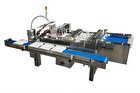
The EufyMake E1 brought industrial-scale printing to desktop size, enabling printing on wood, metal, acrylic, and fabric. Its impact lies not in the machine itself, but in the people using it—hobbyists, small entrepreneurs, and creators—turning ideas into localized production.
Smart Motion Cameras: Documentation Without Distraction
The HOVERAir X1 PROMAX addresses continuous documentation without intrusion. Using AI, it tracks users and records in 8K, with collision avoidance. The real question is human: when to stop documenting and live the moment.
Unitree R1 Humanoid Robot: Affordable Intelligence
At $5,900, Unitree R1 lowers barriers to robotic experimentation. Intended for researchers and developers, its lightweight body and 26 joints provide a platform for testing motion AI. Its importance lies not in immediate utility but in enabling exploration.
Smart Sustainability: Efficiency as Behavior
Energy management systems, solar integration, and repairable, upgradeable devices matured in 2025. AI aids better decision-making without claiming to “save the planet,” while sustainability became a design criterion rather than a slogan.
AI Hype: The Silent Warning
Despite enthusiasm, 95% of organizations saw limited returns on AI investments—not due to technology failure, but misuse. 2025 was not the year of explosive breakthroughs, but of conscious slowing, preparing for 2026 when focus shifts from tools to skills, from noise to understanding.
True Innovation Is Used, Not Displayed
The most successful innovations of 2025 quietly integrated into daily life. They succeed not because they are smart, but because they are used intelligently. Perhaps the year’s greatest achievement was restoring humans to the center of the technological equation after years of fascination with devices alone.