Iranian, Austrian Researchers Presents New Theory for Managing Natural Hazards
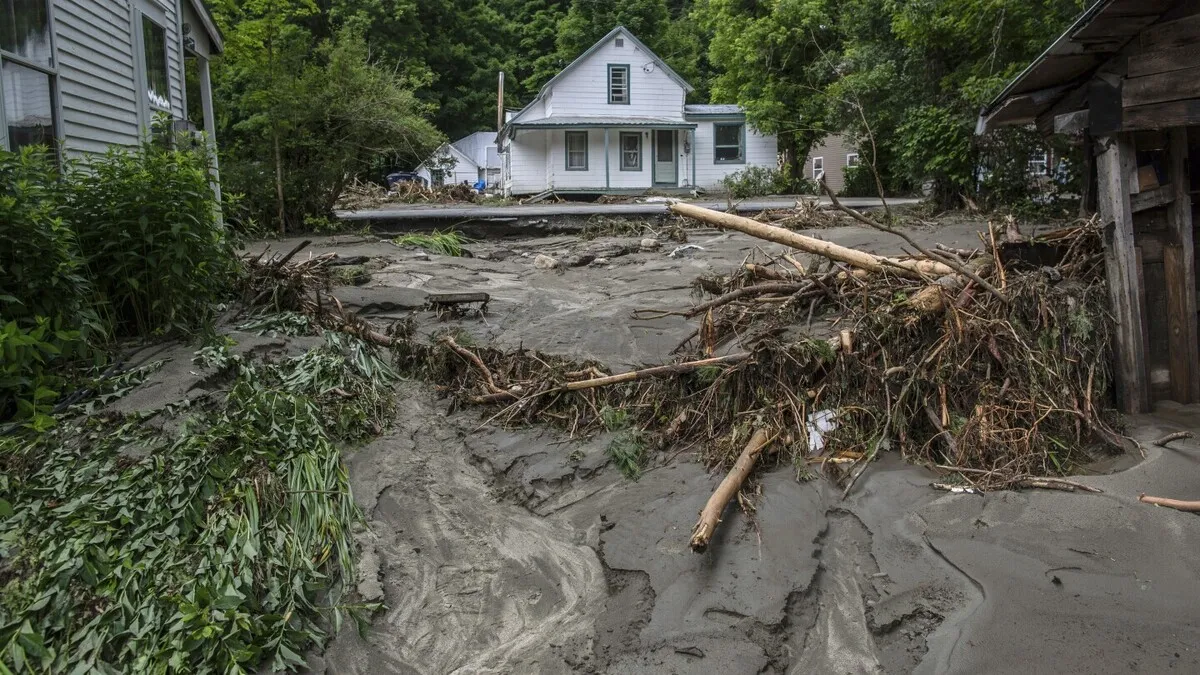
The research, conducted by Ebrahim Moqimi, a professor at the Faculty of Geography at the University of Tehran, and Professor Thomas Glad, a professor at the University of Vienna, shows through a comparative study of the two basins of the Danube in Europe and the Tigris-Euphrates in the Middle East that international cooperation and establishing peace leave a direct impact on reducing the effects of natural hazards like drought, dust storms, and floods.
Based on the findings of the researchers in the study, many natural hazards, from dust and drought to floods, are regional in nature and are not stopped by political borders. The authors believe that regional understanding and management of these events is not possible without cooperation and peace among the neighboring states. Therefore, regional peace is not only a political value, but also a scientific and environmental necessity.
The study examines two study regions, the Tigris-Euphrates basin in Southwest Asia and the Danube basin in Europe, which both face natural hazards but in different political contexts. In the Tigris-Euphrates basin, political rivalries, dam construction, and long-term wars have increased drought, soil erosion, and dust production. In contrast, in the Danube basin, cooperation among the European countries and the formation of the European Union are examples of the relative realization of regional peace based on the joint management of natural resources. This difference shows that sustainable peace itself is an effective tool for reducing natural hazards and increasing social and environmental resilience.
By matching the scope of political forces with the scope of natural hazards, the authors of this scientific paper have shown that wherever political cooperation and coexistence have increased, the intensity and frequency of natural disasters have also decreased. Conversely, in areas affected by war and hostilities, the environment has become significantly more vulnerable.
In a relevant development in 2023, Iranian researchers had conducted research on the impact of anti-moss used in ship hulls and have found their destructive effects on the maritime environment while the damaging impact in Iran waters is lower than the global level.
Studies show that the toxic level of some anti-moss compounds is so high that the global using of tin metal moss killer in ship and submarine hulls has been completely banned since January 1, 2008.
The Iranian researchers have found out that while consumption of two types of moss killers in Iran is lower than the global average, they must conduct further studies on other anti-moss compounds.
Anti-moss controls moss, lichen and algae, in the meantime, it safely removes deposits from walls, driveways, brick pavers, and greenhouses.
Homeira Agah, a fellow researcher at the Iranian National Institute for Oceanography and Atmospheric Science (INIOAS) told Iranian media that she recently conducted a study titled "Biofouling and the necessity of controlling the accumulation of toxic anti-moss compounds (anti-fouling)" used in marine industry in coastal areas.
She said that biofouling or biological fouling is the accumulation of microorganisms, plants, algae, or small animals where it is not wanted on surfaces such as ship hulls, devices such as water inlets, pipework, grates, ponds, and rivers that cause degradation to the primary purpose of that item.
4155/v