Iranian Refineries Using Home-Made Nano-Based Silica Slurry
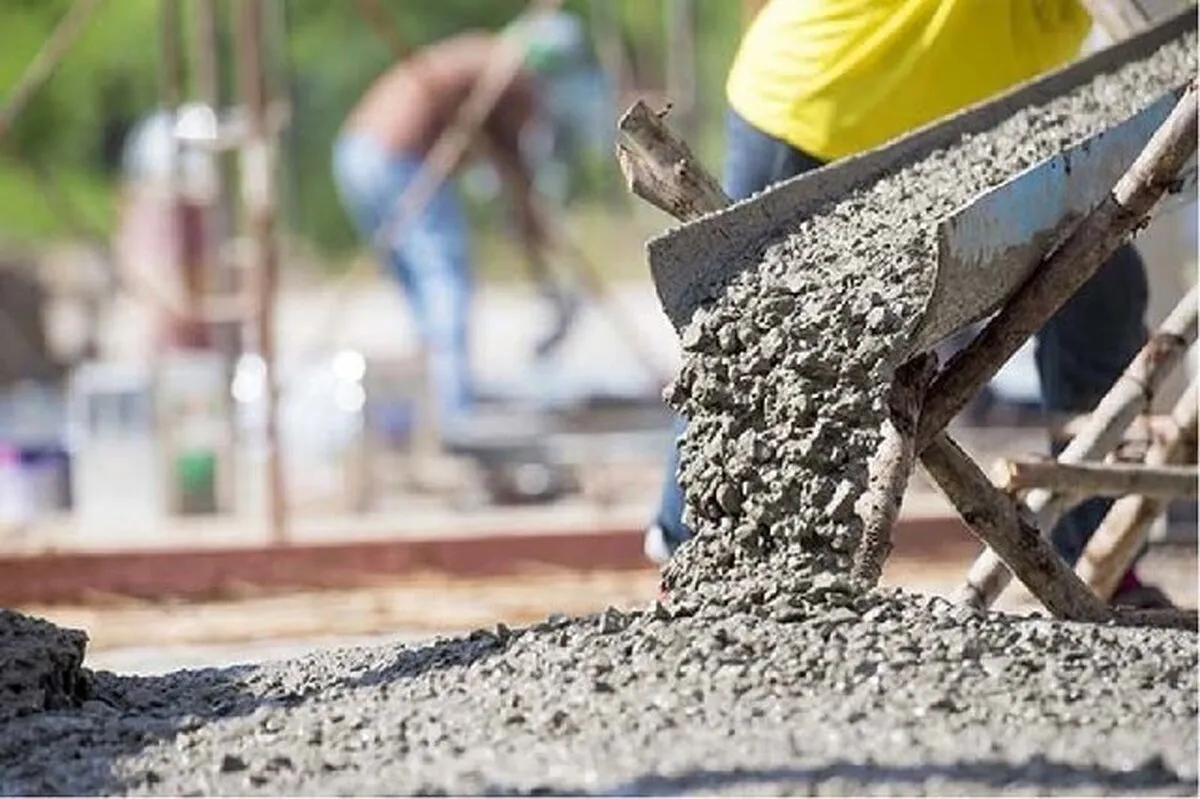
The company’s technologists say that incorporating nano-silica particles into the concrete structure not only prevents the penetration of water and corrosive ions, but also increases the durability of the structure in harsh environmental conditions by improving cohesion and density.
Reza Qa’emi, the chairman of the Board of Directors of the company, described nano-silica slurry one of the important achievements of research and development (R&D) department, and said, “In projects where concrete is exposed to chlorine ions, sulfate or freeze-thaw cycles, the durability of concrete is always a vital issue. In these circumstances, the use of microsilica as a pozzolanic additive has been common, but its powdered form has problems such as environmental pollution, respiratory hazards, and difficulty in uniform distribution, and nanosilica slurry has been able to overcome these challenges.”
Stressing that the nanosilica slurry produced in his company enjoys high fluidity and homogeneity and is easy to pump, he said, “This product, while preventing sedimentation and two-phase formation, is quickly combined with concrete and increases compressive, flexural, and chemical resistance. Also, due to factory production and precise control of parameters, this product does not pollute the environment and is more economical than similar additives.”
“The use of silica nanoparticles in concrete fills the empty spaces between fine and coarse grains. This increases the density and adhesion of the concrete structure, reduces the permeability of water and corrosive salts, and as a result, increases the long-term resistance of the structure to corrosion and erosion,” Qa’emi said.
Noting that in projects like the Shiraz and Abadan refineries, specific concrete admixtures and nano-silica slurry were used to increase durability, he said, “Also, in Bandar Abbas desalination project, the special design of nano-silica slurry and super-reducer water allowed the successful sealing of a 40,000 cubic meter reservoir while maintaining high slump.”
In a relevant development in 2023, a nanotechnology company in Iran had also produced a new type of casting powder with a special formulation in which silica nanoparticles were used to improve performance and quality.
‘Mavad Gostar Roham’ company used silica nanoparticles in its special casting powder to improve the fluidity of slurry so that it can cover the entire surface of the wax sample well and take and maintain the elegance and precision of the sample’s dimensions.
Also, it prevents the sedimentation of slurry until the end of the plaster’s drying, which, as a result, maintains the better integrity of the plaster mold.
The slurry dries in such a way that it can be used by people who make metal artifacts without a machine in addition to those who work in equipped casting workshops. On the other hand, application of silica particles with nano dimensions leads to better integrity and higher resistance in the gypsum mold in thermal tensions.
Among the advantages of the product are high strength against the thermal tensions of melting without cracking and breaking, high quality approved by gold and jewelry casting workshops, and cost-effectiveness compared to foreign samples.
4155/v