Top News of Last Week with ANA

Azad News Agency (ANA) published a number of scientific and technological news during the past week whose top ones are as follows:
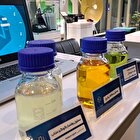
Tehran’s Academic Center for Education, Culture, Research Unveils 2 Technological Chemical Products
Tehran’s Academic Center for Education, Culture and Research unveiled two knowledge-based technological chemical products with industrial applications.
These products were developed by researchers from the Center's Chemical Process Design Research Group and include a scale inhibitor for the sugar industry and a scale remover for diesel power plants.
“These two products are designed to address one of the important challenges facing the country's industries, namely controlling and removing scale in heat transfer equipment, and achieving the technical know-how to produce them is an effective step on the path to industrial self-sufficiency,” said Zohreh Taherkhani, the deputy director of Research and Technology at Tehran’s Academic Center for Education, Culture and Research.
She explained that the scale inhibitor was designed at the request of one of the country's sugar factories to prevent scale formation in evaporators and has shown remarkable performance in operational tests, adding, “This material has been able to meet the needs of the sugar industry well by complying with the requirements of the food industry without damaging the equipment.”
“The second product, a special descaler for diesel engine intercoolers, was also produced at the request of one of the country's power plants and, in performance tests, succeeded in completely removing the internal deposits of the intercooler. This achievement plays an important role in improving the cooling process and increasing the operational efficiency of diesel engines,” Taherkhani said.
Official: Iran to Achieve Self-Sufficiency in Insulin Production in 5 years
Secretary of the Biotechnology, Health and Medical Technologies Headquarters of the Iranian Vice-Presidency for Science, Technology and Knowledge-Based Economy Mostafa Qaneyee announced $80 million reduction in insulin imports by domestic production, saying that Iran will gain self-sufficiency in this field within five years.
“In terms of production of the final form of insulin, we have a relatively favorable situation, and a significant volume of the final form of insulin (pen and vial) is produced domestically. Of course, the pen form accounts for 40% of domestic production, and 60% of insulin pens are imported in pre-filled form,” Qaneyee said.
“Based on our experts' assessments, if we look realistically and considering the special conditions that have arisen for the country in recent months, during this period, 70% of the country's needs will probably be met, and it will probably take 3 to 5 years to reach 90% percent supply and ultimately complete self-sufficiency,” he added.
‘Digital Iran’ Project among Top 5 Projects of World Information Society Summit
The ‘Digital Iran’ project managed to stand among top five projects of the World Summit on the Information Society (WSIS), an official said.
The closing event of the ‘National Student Artificial Intelligence Competition’ and the summer season of the ‘Digital Iran’ project was held at Sharif University of Technology.
In this ceremony, while acknowledging the winners, it was emphasized that the goal of educating two million students was set and it was announced that this national project has been recognized as one of the top five projects at the World Information Society Summit.
Seyed Mostafa Azarkish, the deputy minister of Secondary Education of the Ministry of Education, announced at the ceremony that the ‘Digital Iran’ project, which was launched with the aim of free, online, and project-based artificial intelligence education, has been met with a remarkable reception and more than 730,000 students from all over the country have participated in it.
"Of this number, more than 427,000 people have been trained in cooperation with the Vice-President for Science, Technology, and Knowledge-Based Economy, and the rest have been covered in cooperation with the Ministry of Communications and Information Technology,” he added.
Azarkish also announced that the ‘Digital Iran’ project was selected as one of the five top projects in the world at the World Summit on the Information Society (WSIS), which is being held by the International Telecommunication Union, as one of the specialized agencies of the United Nations, after competing with more than 1,050 innovative projects from around the world.
Iran’s Madar Gasfield Development to Begin Soon
The head of the National Iranian Oil Company (NIOC) said that development of Iran’s Madar gasfield will soon enter its execution phase, adding, the project would help address the country's gas shortfall.
Hamid Bovard made the announcement at a contract signing ceremony for the field's development and operation, a project involving Isfahan's Mobarakeh Steel Company and the Oil Industries Engineering and Construction Company (OIEC), the oil ministry’s news website reported.
“We hope to witness the signing of such contracts this year,” Bovard said. “The planning we conducted from the beginning of this administration aimed to reduce execution time and increase productivity. Fortunately, we are now seeing these efforts come to fruition.”
Bovard noted that practical work should begin following the contract's signing. Efforts to obtain approval from the Economic Council have started, with the hope the project launches by year's end to boost the national economy.
He also announced that several similar contracts with petrochemical companies will soon be signed to develop other gasfields, such as Khar Tang.
Iranian Firm Uses Nanotechnology to Produce Natural Flavors
An Iranian company active in the field of nanotechnology uses plant extracts at the nanoscale to produce and market natural flavors which that can be used in a wide range of food and even cosmetic and health products.
The Jostojougaran Nano Sanat company is among the pioneers in this field, which has been able to significantly enhance the potential properties of plant extracts by reducing the particle size of the plant extracts to the nanoscale.
According to Mehdi Ahmadi, the company’s managing director, some of the extracts’ properties, including antibacterial properties, have increased by up to ten times compared to the usual situation.
He explained that reducing the particle size increases the penetration depth of the compounds, which improves their effectiveness in various products.
The company has so far developed over 45 different types of products in the field of nano flavors and has succeeded in receiving nanoscale certification for two of its products. Ahmadi said that his company enjoys a daily production
He emphasizes that this technology not only improves the quality and shelf life of food products but also ensures consumer safety due to its biocompatibility.
Iranian Scientists Produce Rapid-Release Oral Nano-Tablet to Control Blood Pressure
The nano-based rapid-dissolving oral films of captopril are very thin and light drugs produced by Iranian researchers used for controlling blood pressure.
A newly designed nano-product produced by the Iranian scientists may be able to solve the common problem of blood pressure pills as they dissolve within a short time as soon as they are placed on the tongue.
Researchers at Tarbiat Modarres University, led by Fariba Ganji in collaboration with Masoumeh Nasrollehzadeh, Arezou Soroushnia and Engineer Zahra Sabbaqi Kalayee, succeeded in developing a product that can overcome many of limitations by producing a rapid-dissolving oral film of captopril based on drug nanoparticles.
These films, which are designed based on rapid-release polymer film technology, have a very small thickness and dissolve within a short time as soon as they are placed on the tongue. The more important point is that the structure of these films contains the drug captopril in the form of nanoparticles.
The presence of nanoparticles increases the contact surface of the drug with the oral environment, resulting in its faster and more effective absorption by the body. This unique feature allows the therapeutic effect of the drug to occur in a much shorter period of time and patients have a more comfortable and effective consumption experience.
Iranian Scientists Use Rice Paddy to Remove Poison Diazinon from Agricultural Wastewater
Iranian researchers at Babol University of Medical Sciences succeeded in producing a synthetic absorbent from rice paddy to remove diazinon from agricultural wastewater.
“Diazinon is an organophosphorus pesticide that is widely used in agriculture, which the World Health Organization has classified as a relatively dangerous chemical for aquatic animals, mammals, and humans. Therefore, removing or purifying this pesticide from water sources and agricultural and pharmaceutical wastewater is essential,” said Abdol Iman Amouyee, a faculty member of Babol University of Medical Sciences.
“In this research project, we converted rice paddy into powder and an absorbent or activated carbon in the laboratory at a temperature of 800 degrees through a process and passed the diazinon present in the contaminated water through it, which resulted in the removal of the diazinon poison,” he added.
“The absorbents produced from rice paddy removed 90 percent of the amount of diazinon in the contaminated samples with the help of ultrasound and ultraviolet waves,” Amouyee said.
Iranian Researchers Study Unknown Aspects of Connection between Optics, Astronomy
Iranian researchers at the University of Tehran's Institute of the History of Science conducted a new study to review the unknown aspects of connection between optics and astronomy in Islamic civilization.
Arezou Aqarlou, a master's student at the Institute of the History of Science at the University of Tehran, in a study conducted in the form of a thesis titled ‘The Science of Landscapes in the Commentary on the Tazkirat al-Nasiriyeh by Fathollah Shervani; Correction, Translation, and Research’ under the guidance of Hanif Qalandari showed that, contrary to popular belief, attention to the works of Ibn al-Haytham, the great scientist of the fifth century AH/eleventh century AD, did not diminish in the late Islamic era, and there was evidence of careful reading and use of his works.
“Shervani's innovation was to systematically collect these topics and examine various arguments in an independent chapter, criticize them, and reveal the strengths and weaknesses of each. This thesis also makes it clear that Shervani was in a scientific tradition that tried to bring the boundary between the field of vision and optics closer together and consider them as complementary sciences,” Qalandari said.
“This research also shows that Shervani has chosen a broader and more coherent approach. He not only examined the issue of the larger appearance of objects on the horizon, but also analyzed other optical topics related to the field of vision. Therefore, his treatise can be considered the most detailed commentary on optics,” he added.
Iranian Knowledge-Based Companies to Participate in ITEX IRAQ 2025 Expo
Iranian knowledge-based companies are due to present their capabilities in the field of information and communication technology to the regional markets by attending the ITEX IRAQ 2025 exhibition.
The Iranian companies will have a special pavilion at the exhibition to showcase their products and services.
ITEX IRAQ 2025, will be held at the Baghdad International Fairgrounds in Iraq from September 25 to 28, 2025.
This event is organized in collaboration with and under the supervision of the Iraqi Ministry of Communications (MOC) and the Communications and Media Commission (CMC). It is supported by the General Secretariat of the Council of Ministers, the Central Bank of Iraq (CBI), the National Security Adviser, and various other relevant Iraqi ministries and entities.
Iran-Made Nano-Based Writing Instruments Bring Health to Students
Technologists at a knowledge-based company in Iran have found an effective solution to reduce the transmission of pathogens to students by offering nano-based and antibacterial writing instruments.
These products include pens and erasers that have antibacterial properties and are able to eliminate harmful bacteria in a short time.
The company's antibacterial pens are produced with a body containing nanoparticles. Since these writing instruments have direct contact with the hand, their antibacterial properties prevent the spread of bacteria and viruses in educational and office environments.
The company's erasers and magic sands also reduce harmful bacteria on surfaces in the same way, and their use improves personal health. Also, the company's nano-based adhesives have become more resistant and durable due to nanotechnology and have wider applications in educational and industrial environments.
In addition to meeting the needs of the domestic market, the knowledge-based company also provides its antibacterial additives to other manufacturers.
Iranian Firm Produces Automated Degradable Microneedle Device for Skin Treatment
An Iranian startup used nanotechnology to produce degradable microneedles by designing a new device based on the DAB method.
This innovative technology, which is an efficient alternative to painful injections, can play a role in vaccination, skin cancer treatment, and even cosmetics and health products.
The startup has succeeded in proving the efficiency of the device on a laboratory scale and successfully producing a microneedle patch with a 4x4 array. The team is trying to complete the development phase and complete the process within a year to prepare the product for entry into the industrial scale.
The unique features of this device distinguish it from other existing methods. Reduced manufacturing steps, ease of use, high scalability, and a reduction in production cost by up to 50 percent are among the advantages of this technology.
Iranian Firm Increases Quality of Casting Industry
Iranian experts at a knowledge-based company have revolutionized the moldmaking industry with the aim of increasing the quality of parts produced in the casting industry and helping to reduce imports.
“Our company's main field of activity is the design and production of various types of fluxes, coatings, and feeds ready for casting,” Mehdi Eraqi, the managing director of the knowledge-based company.
“After carefully examining the market, we found that the Iranian casting industry is in dire need of high-quality domestic products to both reduce costs and improve the quality of final parts. Therefore, we focused specifically on producing products that are directly effective in improving quality, reducing waste, and increasing the productivity of casting production lines,” he added.
One of our most important achievements is knowledge-based products and they are a new generation of water-based coatings used in cast iron casting. Using this product improves the final quality of the part, reduces raw material consumption and increases production efficiency,” Eraqi said.
Noting that compared to foreign models, this product is more competitive in terms of price and is at the same level or even better in terms of performance in some cases, he said, “There is also a similar domestic model, but the main advantage of our product is in its proprietary formulation, variety of dimensions and shapes and after-sales technical support, which makes domestic manufacturers independent of foreign ones.”
Iranian Student, Colleagues Manufacture Pocket-Sized Hand-Launched Foldable Drone
Farid Saemi, an Iranian student at Texas A&M University’s Advanced Vertical Flight Laboratory (AVFL), and his colleagues developed a remarkable 112-gram (about 0.25 pounds) micro air vehicle (MAV).
This small drone can fold down to the size of a smartphone and then unfold in midair to stabilize itself within seconds.
The MAV’s standout feature is its compact design. Weighing less than a can of soda, it folds into a sleek rectangular shape, small enough to slip into a pocket or bag.
Once thrown into the air, the arms extend outward automatically, lock into place, and the drone steadies itself. Even if it spins at extreme speeds of up to 2,500 degrees per second during launch, it can quickly regain balance and hover.
The key to this drone’s ability to stabilize is a sophisticated feedback controller. This onboard system allows the MAV to recover from rapid spins and orient itself correctly after being tossed.
The AVFL team carried out multiple flight tests to demonstrate this. They launched the MAV in different ways, from gentle tosses to forceful throws. In every case, the sensors and algorithms onboard read the drone’s orientation and adjusted the propellers to settle it into a smooth hover.
Rapid-Release Oral Nano-Tablet Produced in Iran to Control Blood Pressure
Iranian scientists at Tarbiat Modarres University produced nano-based rapid-dissolving oral films of captopril used to control blood pressure.
The newly designed nano-product made by the Iranian scientists may be able to solve the common problem of blood pressure pills as they dissolve within a short time as soon as they are placed on the tongue.
Researchers at Tarbiat Modarres University, led by Fariba Ganji in collaboration with Masoumeh Nasrollehzadeh, Arezou Soroushnia and Engineer Zahra Sabbaqi Kalayee, succeeded in developing a product that can overcome many of limitations by producing a rapid-dissolving oral film of captopril based on drug nanoparticles.
These films, which are designed based on rapid-release polymer film technology, have a very small thickness and dissolve within a short time as soon as they are placed on the tongue. The more important point is that the structure of these films contains the drug captopril in the form of nanoparticles.
The presence of nanoparticles increases the contact surface of the drug with the oral environment, resulting in its faster and more effective absorption by the body. This unique feature allows the therapeutic effect of the drug to occur in a much shorter period of time and patients have a more comfortable and effective consumption experience.
Oral films have several advantages compared to sublingual tablets. First, due to their thinness, they open faster and create a more pleasant feeling for patients. Second, the risk of choking and problems caused by swallowing tablets is eliminated in this technology. Third, unlike traditional solid drugs, they do not require special containers or complex storage conditions and are more stable against environmental factors. Also, the use of oral films makes the high precision required in the use of small sublingual tablets unnecessary.
4155/v