Iranian Scientists Make Supercritical Fluid Device
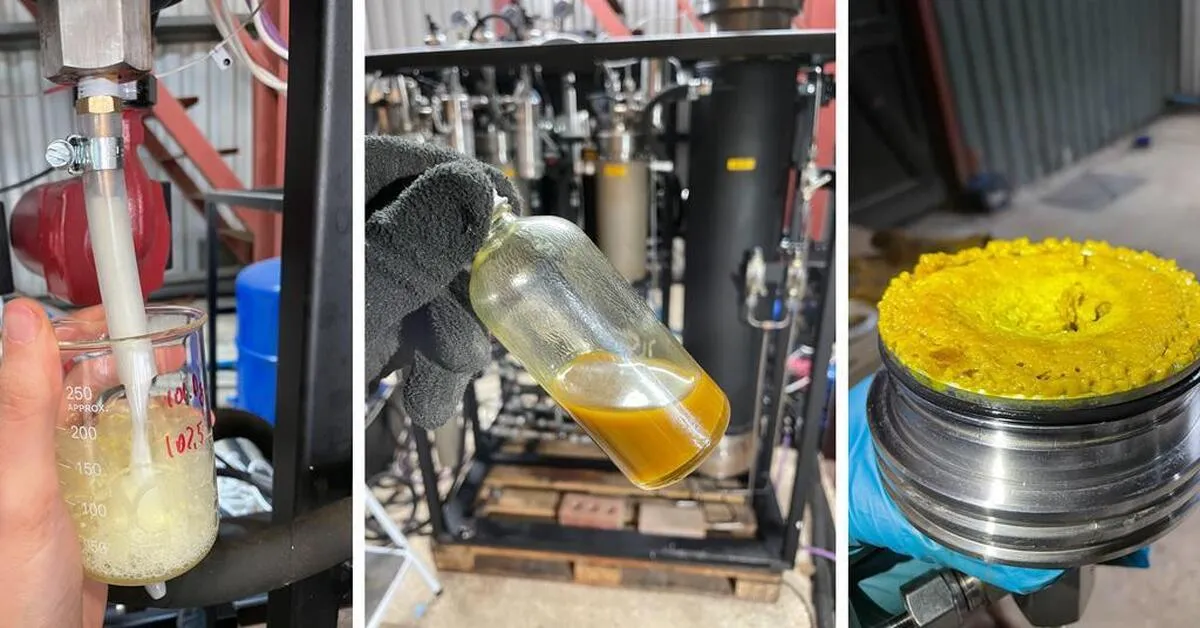
“A supercritical fluid device is a complex, high-pressure system that is applied to use materials in a supercritical state (such as CO₂, water, or hydrocarbons) in processes like enhanced oil recovery (EOR), extraction, separation, chromatography, nanoparticle formulation, and purification,” Mehdi Sediqi said.
Noting that as a new and sustainable technology, the supercritical fluid device has opened its place in various industries as a superior alternative to traditional methods, he said, “Although the initial cost and operational complexity are considered as obstacles, its numerous advantages, including the quality of the final product, safety, speed, and environmental compatibility, provide its economic justification, specially for the production of high-value-added products. Future advances in energy optimization and scaling up of these systems for larger industrial scale use will further expand the application of this technology.”
“The device operates both statically and dynamically,” Sediqi added.
A supercritical fluid (SCF) is a highly compressed fluid that combines the properties of gases and liquids. They are created by increasing temperature and pressure beyond a substance’s critical point. SCFs form the basis of clean technology across multiple industries as alternative solvents for extracting natural products, chemicals and other substances.
SCFs create fluids with densities equivalent to that of liquids and diffusion and viscosities exhibited by gases.
These properties create SCFs that can be manipulated for use in industrial processes by diffusing through solids like a gas, while dissolving materials like a liquid. Carbon dioxide and water are the most commonly used supercritical fluids in industry.
Many substances can achieve supercritical conditions but CO2 has the most accessible critical temperature, 31°C, and pressure, 74 bar. These properties, combined with its non-toxic, non-flammable, chemically inert and low-cost nature, make it one of the most versatile green solvents available.
This means you can use supercritical CO2 fluid at mild temperature conditions without producing harmful organic residues.
4155/v