Iranian Scientists Make Nanosensor in Smartphone for Rapid Detection of Biothiols in Blood
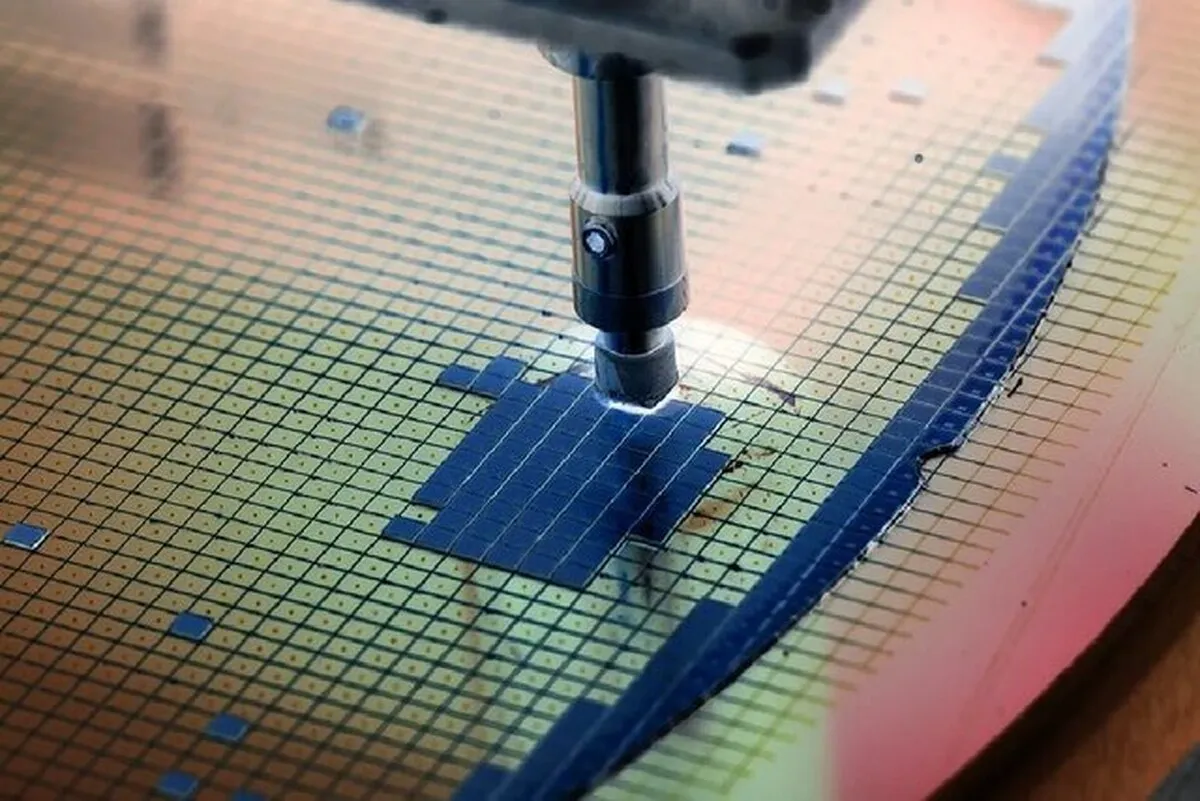
This technology could be a milestone in the development of portable and cost-effective diagnostic systems in healthcare centers and point-of-care (POCT).
The international research group consisting scientists from the Iran University of Science and Technology, Tehran University of Medical Sciences, and the University of Toronto Scarborough, Canada, designed a multifunctional magnetic nanozyme that is capable of rapidly and sensitively detecting biothiols.
This nanozyme consists of a magnetic core of CoFe₂O₄ and a shell of Co₃[Fe(CN)₆]₂ (a model similar to Prussian blue), which has peroxidase-like activity and reacts with several chromogenic substrates, including TMB, OPD, and ABTS. These reactions cause a color change, allowing the construction of a 5x5 colorimetric array that can detect multiple biothiols simultaneously.
An important feature of this system is the integration with a smartphone application that analyzes the color changes of the array, enabling immediate point-of-care (POCT) detection. This technology was able to provide a wide detection range from 0.1 to 1000 μmol with very low detection limits; for example, 0.03 μmol for cysteamine and 0.29 μmol for N-acetylcysteine.
In addition to its high sensitivity, fast response speed, and excellent reproducibility, this nanosensor is also applicable to human serum and plasma samples without protein and does not require complex labeling or preparation. Its magnetic and nano-coating, in addition to its stability, facilitates the transfer of electrical charges, increasing the accuracy and speed of the reaction.
Biothiols are biochemical compounds containing a free thiol group (-SH) that are vital for cellular and physiological processes, including antioxidant defense and maintaining immune function. Common examples are glutathione (GSH), cysteine (Cys), and homocysteine (Hcy).
Abnormal levels of biothiols are linked to various diseases, making their detection crucial for health monitoring and research.
Traditional detection methods for biothiols exist but are often costly and time-consuming, leading to the development of more sensitive and efficient methods like fluorescent probes for real-time monitoring in biological samples.
4155/v
By: Mohammad Jafari