Cold Plasma, Peaceful Application of Iran's Nuclear Industry
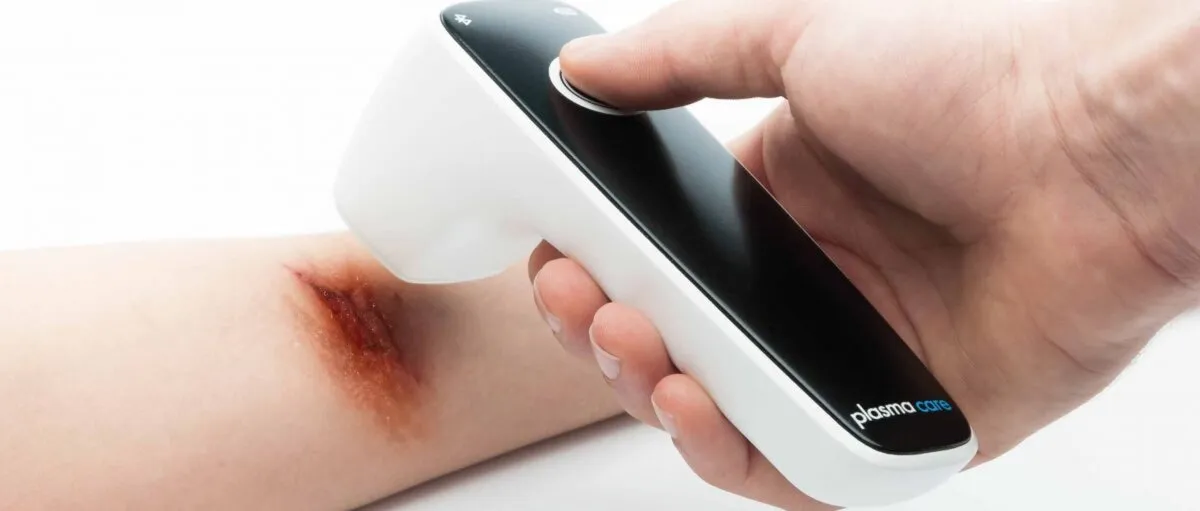
Diabetic wounds, bedsores, burns, and tissue and skin injuries are among the problems that some patients struggle with, and their treatment is difficult and expensive. Using cold plasma technology to treat these types of wounds is a solution that, thanks to the efforts of nuclear industry experts, has become indigenized in the country, and wound treatment centers are using this method to treat patients.
Patients with chronic wounds like burn wounds, diabetic wounds, and bedsores, whose treatment process was long and difficult, are witnessing a significant improvement in their condition with the application of plasma therapy.
Cold plasma helps repair and regenerate chronic wounds in the shortest possible time, without the need for surgery, medication, or light therapy, reducing the duration of treatment with this method, the risk of infection, and the costs of treating the patients.
Cold plasma, also known as non-thermal plasma, is a state of matter where a gas is energized to create a mixture of reactive particles, including ions, electrons, and neutral atoms, while remaining at or near room temperature.
It's a non-equilibrium plasma where electrons are much hotter than other particles. This technology is finding increasing applications in various fields, including food processing, medicine, and surface treatment.
Unlike thermal plasmas where all particles are at the same high temperature, cold plasmas have a significant temperature difference between electrons (very hot) and other particles (near room temperature).
Cold plasma is typically generated by applying high voltage to a gas, causing ionization and the creation of reactive species. Different methods are used, including dielectric barrier discharge (DBD), plasma jet, and corona discharge. These methods create a variety of reactive species that can interact with surfaces and materials.
4155/v