First Green EV charging station opens in Iran
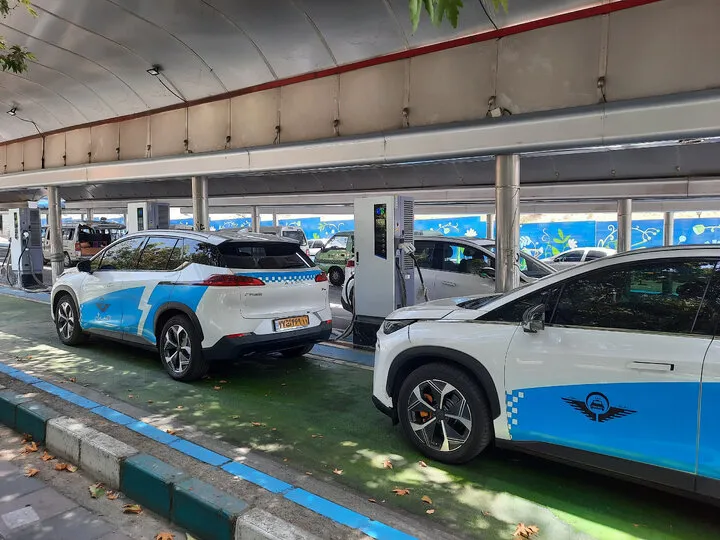
The new charging station, located at Qeytarieh Terminal, is designed to charge up to four electric buses or eight electric taxis and passenger cars simultaneously. Its smart energy management system is intended to reduce the station’s impact on the electricity distribution network.
The project was designed, implemented and commissioned by researchers at Sharif University of Technology as part of efforts to develop smart energy infrastructure for electric transportation.
The integrated system includes four 120-kilowatt DC fast chargers, a lithium iron phosphate (LFP) battery energy storage system with a capacity of 261 kilowatt-hours and a power rating of 125 kilowatts, as well as a 60-kilowatt solar power plant.
According to Moeini Eghatati, an associate professor at Sharif University’s School of Energy Engineering, the key innovation lies in integrating solar generation, commercial-scale battery storage and high-power chargers with an energy management system (EMS). He said the configuration is being used for the first time in the country in this form.
The system can dynamically manage the amount of electricity drawn from the grid and the energy supplied from stored resources based on charging demand, battery status, solar generation and operator instructions.
The battery system is not designed merely as a backup power source. Solar energy can supply part of the station’s demand, while excess electricity can be stored in the battery. During periods of grid constraints or peak demand, the station can reduce its electricity consumption from the grid and use stored battery energy or solar power to supply the chargers.
This approach helps smooth the station’s load profile and allows its electricity consumption to be adjusted according to the capacity and operating conditions of the distribution network.
The researchers say this capability could become increasingly important as electric buses, taxis and passenger vehicles become more widespread. Unmanaged charging could create significant additional pressure on distribution networks, making intelligent interaction between charging infrastructure and the power grid increasingly important.
The project also demonstrates how charging stations can be transformed into controllable, smart loads whose power consumption can be adjusted according to grid conditions. Such a model could support the wider development of demand-side energy management for medium- and large-scale electricity consumers.
The system can also be adapted for other terminals and charging stations. Depending on local conditions, including grid capacity, solar radiation, consumption patterns and the number of electric vehicles, the capacity of the solar plant, battery storage system and chargers can be adjusted accordingly.
The researchers emphasize that the transition to electric transportation involves more than simply deploying electric vehicles. The energy infrastructure supporting these vehicles must also be designed intelligently and in line with the capabilities and requirements of the electricity grid.
The project was fully designed, implemented and commissioned by a Sharif University of Technology research team, with total implementation costs estimated at around 800 billion Iranian rials. The Qeytarieh green charging station is intended not only to supply energy to electric transport fleets, but also to demonstrate an integrated model connecting solar generation, battery storage, high-power charging and the electricity grid.