New hydrogel technology could advance spinal cord injury treatment
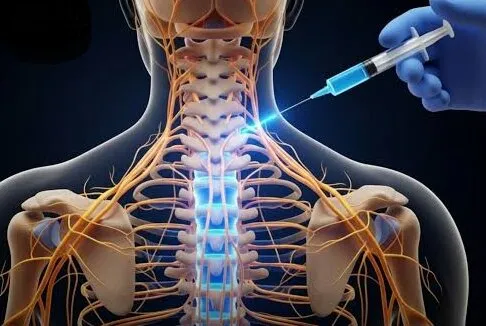
Spinal cord injuries can cause lasting damage, and finding effective ways to deliver treatments to injured cells remains a major challenge.
Researchers at the FAMU-FSU College of Engineering have developed a hydrogel designed to deliver therapeutic particles to damaged spinal cord cells, potentially paving the way for new treatments for spinal cord injuries. Their study demonstrated how a hydrogel containing extracellular vesicles (EVs) — tiny nanoparticles naturally released by cells and carrying therapeutic biomolecules — could be used to target injured spinal cord cells.
The researchers embedded EVs in a polymer material known as a hydrogel, which can absorb large amounts of water. Because of their high water content, soft structure and porous nature, hydrogels closely resemble living tissue, making them promising materials for biomedical research.
Yan Li, one of the researchers involved in the project, said an EV-rich hydrogel acts like a delivery package carrying therapeutic messages. When damaged cells receive these packages, their condition improves.
The researchers applied the therapeutic gel to cultured tissue designed to mimic a spinal cord injury and found that it helped damaged cells recover. While the EVs themselves provide the therapeutic effect, the hydrogel enables their controlled release at the injury site, potentially improving treatment outcomes.
Treating spinal cord injuries is particularly challenging because of a natural protective layer known as the blood-spinal cord barrier. EVs secreted by cells can cross this barrier and reach the injured area, where they can be readily absorbed by local cells.
Previous research on EV-loaded hydrogels had shown that if the particles were released too quickly, they might fail to reach the damaged area. Li and colleagues addressed this problem by engineering the hydrogel structure to regulate its response to pH and control the timing of particle release. This allowed them to adjust how, when and how much EV material was released, substantially improving the prospects for successful delivery.
The researchers found that lowering the hydrogel's pH from 9 to 7 changed its physical properties. As a result, EVs were released gradually rather than all at once, allowing for a sustained delivery process.
"Cells communicate with one another. We can use EVs as messengers between cells," Li explained. "Previously, all these particles were trying to communicate at the same time, making it difficult for cells to receive their messages. Thanks to the hydrogels, they can now communicate one by one, allowing the nervous system to recognize that it is time to begin the repair and recovery process."
Both hydrogels and EVs are considered promising platforms for biomedical therapies. Compared with other therapeutic approaches, EVs are less likely to trigger an immune response and naturally target damaged cells. They are also relatively easy to deliver and have multiple outer layers that provide additional protection as they travel through the body.
However, EVs cannot simply be left to circulate freely. The longer they remain in an unprotected state, the more they deteriorate. Delivering them effectively to their intended destination therefore requires a system that protects the particles and releases them at the right time.
This is where hydrogels play a key role. They exhibit viscoelastic properties, meaning they can behave like both liquids and solids, depending on the conditions. Their characteristics can change in response to factors such as pH and the rate at which mechanical stress is applied.
By adjusting the hydrogel's properties, the researchers were able to gain better control over EV release and improve their potential effectiveness in treating spinal cord injuries.