Pearl-Based Bone Repair Material Receives FDA Clearance
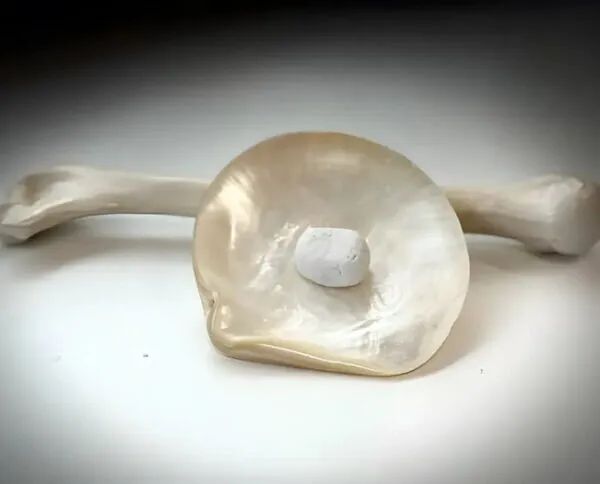
Doctors currently have several options for repairing damaged bones, but each comes with its own advantages and limitations. A new treatment material, PearlBone Putty 1600, made from sustainably sourced pearl oyster shells, has now received FDA clearance.
The approval allows PearlBone to be marketed and sold in the United States as a material for repairing bone fractures.
It is the first bone graft substitute made from nacre, the primary material that forms pearls. Nacre is the shiny, iridescent inner layer of pearl oyster shells. Researchers have developed a process to transform this natural material into a product suitable for bone repair and stabilization, following years of research and development.
The team behind PearlBone developed a chemical reaction that converts calcium carbonate found in nacre into calcium phosphate, the mineral component of human bone. The process takes just 24 hours.
Minghao Zheng, a regenerative medicine biologist at the University of Western Australia and a member of the PearlBone development team, said: "We have developed and patented a technology that transforms nacre, the mineralized structure of pearl shells, into a composite material with a mineral structure similar to bone. In fact, we have found a way to accelerate the biomineralization process, which takes millions of years in nature, completing it in just one day."
The technology is also environmentally sustainable, as it uses by-products from the pearl farming industry that would otherwise be discarded. In effect, the process recycles oyster shells.
PearlBone could potentially be used to repair almost any bone damaged by injury or surgery. However, under FDA requirements, bone graft materials must not serve as an essential component for maintaining the overall structural stability of the bone.
In other words, the material is designed to fill bone defects and allow the natural healing process to take place. It can also be used alongside other fixation devices, such as medical plates and screws.
The FDA clearance brings the technology one step closer to use in hospitals and healthcare facilities, potentially making PearlBone a valuable alternative to existing bone grafting techniques.
One of the most established bone grafting methods involves taking a piece of bone from another part of the patient's body and using it to repair the damaged area. Although this approach offers good biological compatibility, it can cause additional pain and prolong surgery.
Other synthetic bone graft substitutes are also available, but they do not always integrate well with the body and may have limitations in terms of strength and the rate at which they are absorbed.