Local Plant Protein Production to Boost Supply Chain Resilience
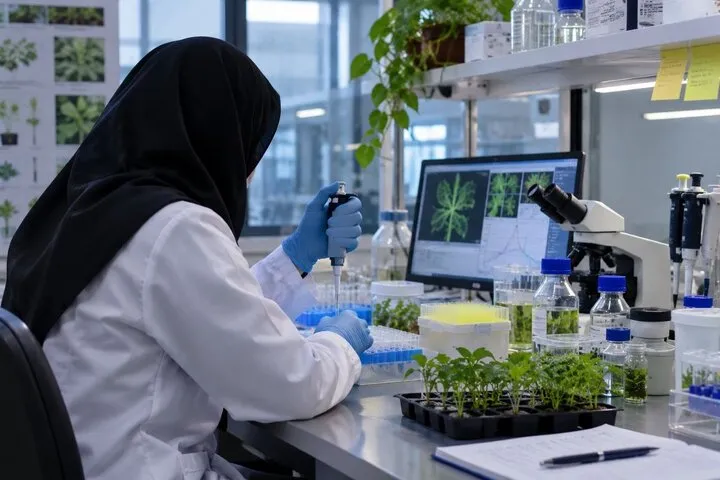
Arefeh Kordjazi, an expert at the Industry Relations Office of the National Institute of Food Science and Technology, made the remarks at a conference on the role of universities and research institutes in national resilience.
She explained that protein production and supply depend on factors such as climatic conditions, access to raw materials, production costs, and supply chain stability. Disruptions in these areas can reduce protein availability or make it more expensive for consumers.
She noted that the animal protein supply chain relies heavily on imported livestock feed, making livestock and poultry production vulnerable to disruptions in trade and transportation, as well as fluctuations in exchange rates and global prices. Such disruptions can increase production costs and affect the price and availability of protein products.
Diversifying Protein Sources Beyond Imports
Kordjazi stressed that replacing one imported input with another does not necessarily improve supply chain resilience, as dependence on limited sources and supply routes may simply shift existing bottlenecks.
She identified diversifying supply sources and localizing production technologies as key strategies, emphasizing that sustainable resilience requires the ability to process domestic and alternative resources.
Turning Agricultural Waste into Alternative Proteins
Referring to a proposal submitted by the National Institute of Food Science and Technology to the Ministry of Science, Research and Technology, she said the initiative focuses on developing domestic technologies for producing alternative plant proteins from two main resource groups.
These include agricultural and food industry by-products, such as non-soybean oilseed meals, oil extraction residues, and bran, as well as drought-tolerant crops suited to Iran's climate, including quinoa, legumes, and unconventional oilseeds.
The technology development process covers protein extraction and purification, structural modification, formulation, and the production of finished products.
Developing Plant-Based Meat Products
Kordjazi cited several ongoing research projects, including functional meatballs made from emerging plant proteins, meat analogues produced through wet extrusion, 3D-printed plant-based meat, non-thermal modification of quinoa proteins, and meat analogues made from extruded soybean meal.
These projects aim to diversify Iran's protein portfolio, reduce dependence on soybean meal and oil, add value to agricultural and industrial waste, improve protein properties, and strengthen cooperation between industry and academia.
From Laboratory Research to Industrial Production
Addressing commercialization challenges, Kordjazi said laboratory achievements are only the first step toward industrial production. Process reproducibility, product quality, reliable raw material supplies, production costs, and market acceptance must also be assessed.
She emphasized the need for cooperation among research institutes, industry, and government agencies to advance these technologies from laboratory optimization to semi-industrial pilot production and industrial evaluation.
She also proposed targeted funding for scalable research projects and the establishment of an integrated protein supply chain monitoring system in cooperation with the Customs Administration, the Ministry of Agriculture Jihad, and trade associations.