Iranian Scientists Produce Deuterated Methanol
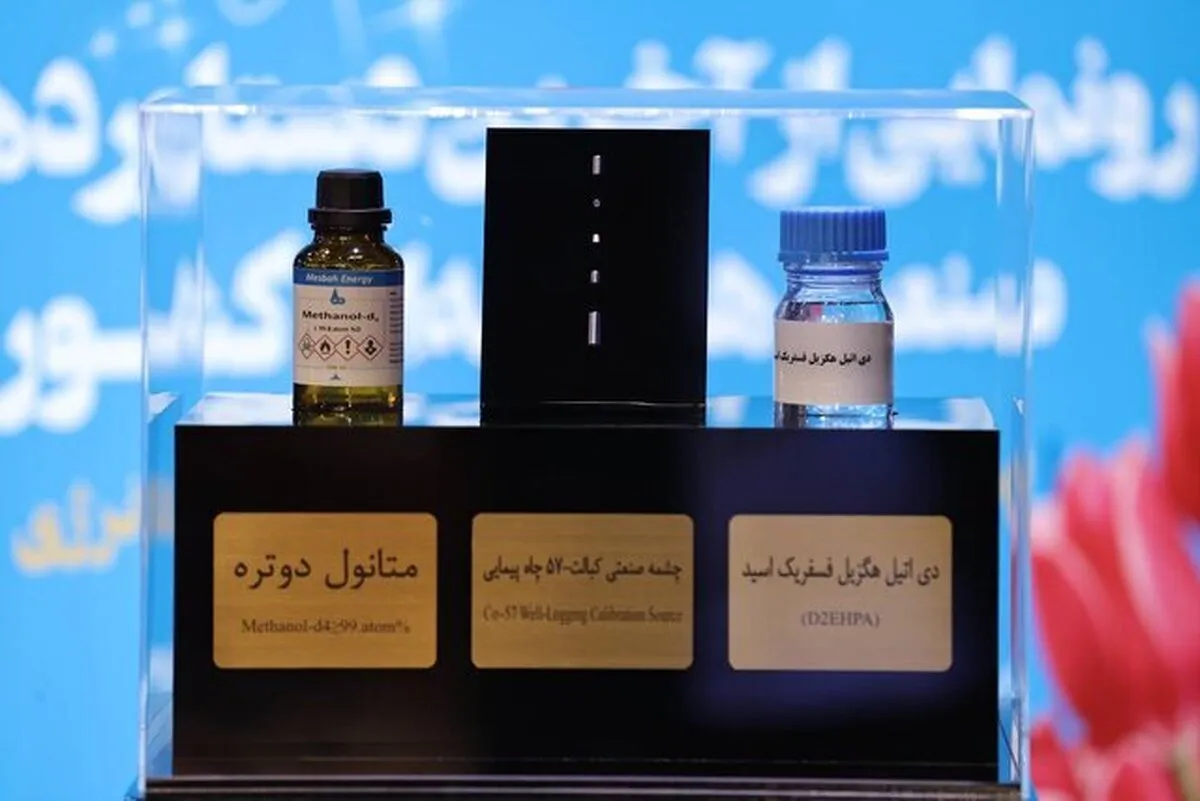
“In Iran, three main methods have been used to produce deuterated methanol; direct synthesis from CO and heavy water (D₂O) using a metal catalyst, the isotope exchange method (H/D Exchange) in which ordinary methanol receives deuterium in the presence of D₂O and catalysts such as Pd/C or PtO₂, chemical reactions with methylated compounds such as dimethyl sulfate in the presence of heavy water, and the advantages of domestic production include reduced foreign exchange dependence, high-purity domestic supply (up to ≥99.9%), support for the pharmaceutical and laboratory industries, and development of national technology in the field of isotopic and ultrapure compounds,” said Majid Qashang, a faculty member of organic chemistry at the Islamic Azad University’s Najafabad branch.
He explained that Deuterated methanol is a reference solvent in NMR spectroscopy, adding that due to the absence of an active proton, interfering signals in ¹H NMR are eliminated, allowing for more accurate interpretation of the spectrum.
“The deuterium in CD₃OD also helps the NMR instrument to lock magnetically and maintain magnetic field stability. High purity of CD₃OD (≥99.9%) and low moisture content (<0.05%) are essential to ensure the accuracy and reliability of the data, as minor contaminants can seriously interfere with the interpretation of scientific results,” Qashang said.
“CD₃OD is also used as a source of deuterium in the production of deuterated drugs. Due to the greater stability of the C–D bond, these drugs have a longer half-life, are degraded at a lower rate of metabolism, and therefore require lower doses. These properties reduce side effects and improve pharmacokinetic parameters. CD₃OD is particularly useful in the synthesis of intermediates, new APIs, and the study of metabolic pathways using isotopic tracing. A successful example is the drug Deutetrabenazine, which has shown superior efficacy in the treatment of Huntington's disease,” he underlined.
Deuterated methanol is a form of methanol where one or more hydrogen atoms have been replaced by deuterium, a heavier isotope of hydrogen.
It's commonly used as a solvent in NMR spectroscopy due to its ability to provide a distinct signal in NMR spectra, especially when used as an internal standard. Methanol-d4 (CD3OD) is a specific type where all four hydrogen atoms are replaced by deuterium.
4155/v