Physicists Crack 50-Year-Old Quantum Puzzle
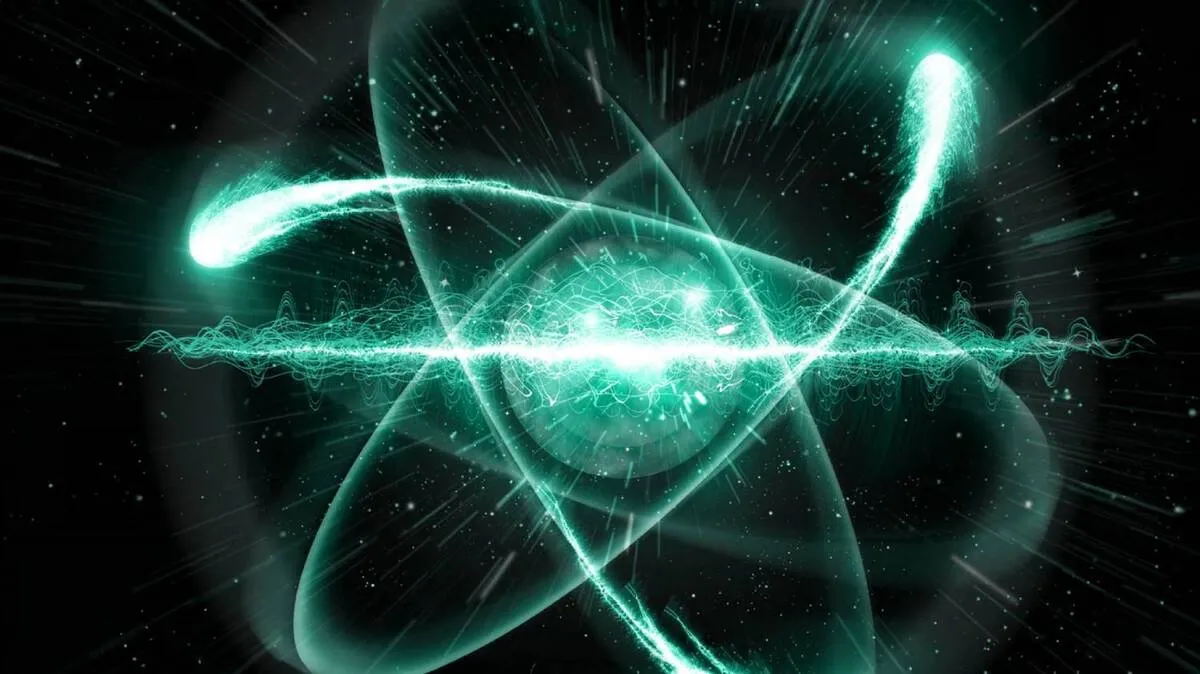
Over the past century, quantum mechanics has dramatically reshaped our view of the universe, uncovering a strange and counterintuitive realm where particles can also behave like waves, and where observation itself can influence outcomes, the journal Physical Review Research reported.
More recently, scientists studying this phenomenon, known as wave-particle duality, have developed methods to gauge how much a quantum object leans toward wave-like or particle-like behavior. These measurements have offered insight into the conditions that cause quantum systems to shift between acting like particles and acting like waves.
Now a team from Stevens Institute of Technology has introduced a major advancement. They have derived a straightforward yet highly precise formula that captures the exact mathematical connection between a quantum object’s “wave-ness” and its “particle-ness.”
“Wave-particle duality is the cornerstone of quantum mechanics,” says Xiaofeng Qian, the paper’s lead author and an Assistant Professor of Physics at Stevens. “Researchers have been working to quantify wave-particle duality for half a century, but this is the first complete framework to fully quantify wave-like and particle-like behaviors with optimum quantitative measures that are relevant at the quantum level.”
Previous research showed that wave-ness and particle-ness could be expressed as an inequality, with the sum of an object’s wave-like behaviors (such as visible interference patterns) and particle-like behaviors (such as the predictability of its path or location) being equal to or less than one. “That’s important, because it means that if an object is fully wave-like, then it shows no particle-like behaviors, and vice versa,” Qian explains.
Such models were incomplete, however, because they can describe situations in which an object’s wave-like and particle-like behaviors increase simultaneously—the opposite of the actual exclusive relationship between the two behaviors. To remedy that, the authors introduced a new variable: the coherence of the quantum object.
“Coherence is a tricky concept, but it’s essentially a hidden description of the potential for wave-like interference,” Qian explains. “And the conventional measure visibility represents the amount of wave-ness can be extracted. When we quantify and compensate for coherence, alongside the standard metrics for wave-ness and particle-ness, we find they add up to exactly one.”
That enables the calculation of both wave-ness and particle-ness with far more precision. By measuring the coherence in a system, in fact, it becomes possible to calculate a quantum object’s level of wave-ness and particle-ness—not simply as “less than one,” but as an exact value.
The relationship between wave-ness and particle-ness can then be plotted as an elegant curve on a graph—a perfect quarter-circle for a perfectly coherent system, and a flatter ellipse as the level of coherence declines.
Besides expanding our understanding of foundational physics, the team’s breakthrough has significant potential applications in fields such as quantum information and quantum computing.
To demonstrate that, Qian’s team applied their theory to a technique called quantum imaging with undetected photons (QIUP), in which an object aperture is scanned with one of a pair of entangled photons. If the photon passes through unimpeded, coherence remains high; if it collides with the walls of the aperture, coherence falls sharply.
By then, measuring the wave-ness and particle-ness of the entangled partner-photon, Qian’s team could deduce its coherence—and thus map the shape of the aperture. “This shows that the wave-ness and particle-ness of a quantum object can be used as a resource in quantum imaging, and potentially many other quantum information or computational tasks,” Qian says.
Remarkably, imaging remained possible even as external factors, such as temperature or vibrations, degraded the overall coherence in the quantum system. Such factors equally affect both high coherence situations (where the photon passes through the aperture) and low coherence situations (where the photon impacts the scanned object), so it remains possible to detect the difference in coherence between the two scenarios. “The ellipse gets squeezed, but we’re still able to extract the information of the object we need,” Qian explains.
Further research is needed, most notably to determine how wave-particle duality plays out in more complex multipath quantum scenarios. “The mathematics make it look simple, but we’re a long way from exhausting the weirdness of quantum mechanics,” Qian says. “There are still plenty of frontiers left for us to explore.”
4155/v