Polar Bear Fur’s Game-Changing Chemistry
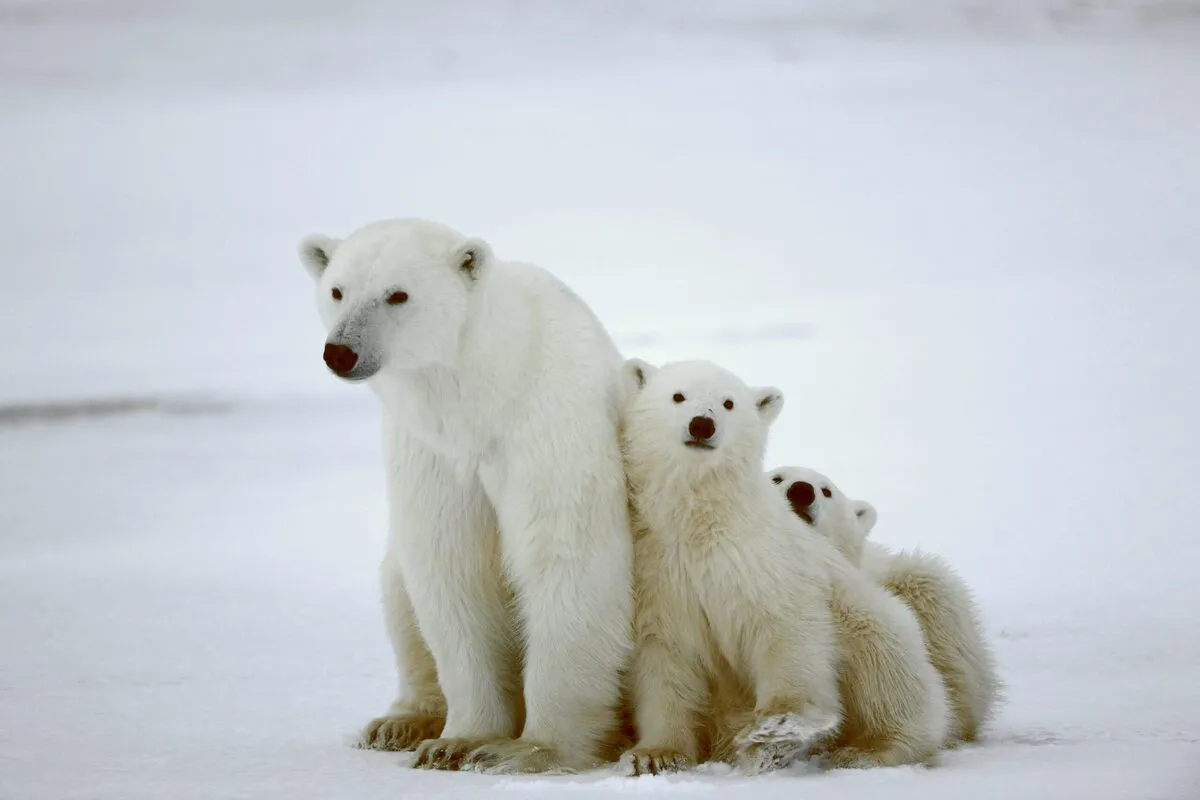
Polar bear fur naturally resists ice formation, and scientists believe this unique ability could lead to safer, more sustainable ways to prevent ice buildup in industries like aviation and renewable energy. Researchers at the University of Surrey, in collaboration with an international team, have uncovered how the fur’s oily coating helps keep ice from sticking, even in the extreme cold of the Arctic.
A study published in Science Advances reveals that the secret lies in the fur’s sebum, a natural oil produced by the skin. This sebum contains a specific mix of lipids, including cholesterol and diacylglycerols, which significantly reduce ice adhesion. As climate change increases the risk of ice buildup on critical infrastructure like wind turbines and aircraft wings, this natural defense mechanism could inspire new anti-icing solutions.
The University of Surrey’s computational chemistry team played a key role in the discovery, using advanced quantum chemical simulations to analyze how the fur’s lipids interact with ice.
Dr. Marco Sacchi, Associate Professor at Surrey’s School of Chemistry and Chemical Engineering, is co-author of the study who led the group:
“We found that specific lipids in the sebum, such as cholesterol and diacylglycerols, exhibit very low adsorption energies on ice. This weak interaction is what prevents ice from adhering to the fur.”
Experiments confirmed these theoretical findings, measuring ice adhesion strength before and after the fur’s natural oils were removed. Researchers found that untreated polar bear fur performed on par with high-performance fluorocarbon coatings used in sports and industry. However, when it was washed to remove the sebum, ice adhesion was four times higher than unwashed samples.
The study also explored the fur’s hydrophobicity – its water-repelling properties – and how it delays the onset of freezing in the harsh Arctic, where temperatures drop below -40°C. Yet these properties alone could not explain the superior anti-icing performance.
Using techniques such as gas chromatography-mass spectrometry (GC-MS), liquid chromatography-mass spectrometry (LC-MS/MS), and nuclear magnetic resonance (NMR), the team found it was a unique mix of lipids – particularly an abundance of cholesterol and diacylglycerols – responsible for this ability.
Commenting on the revelation, Dr. Sacchi said: “It’s fascinating to see how evolution has optimized the sebum’s composition to avoid ice adhesion. We found squalene, a common lipid in other marine mammals, was almost entirely absent in polar bear fur. Our computational simulations revealed squalene strongly adheres to ice, and this absence significantly enhances the fur’s ice-shedding properties.”
Led by the Norwegian Polar Institute and the University of Bergen – with contributions from Trinity College Dublin, University College London, and the National Museum of Denmark – the research also highlights the importance of Indigenous knowledge of the Arctic and builds on that. Inuit communities have long recognized the unique properties of polar bear fur, using it in tools and garments.
Dr. Sacchi added: “Our findings highlight the power of interdisciplinary collaboration. We combined experimental evidence, computational chemistry, and Indigenous Arctic insights to uncover a fascinating natural defense mechanism – which could transform how we combat ice in everything from aviation to renewable energy.”
Dr. Sacchi’s computational team at Surrey included Dr. Neubi F. Xavier Jr. and Adam Pestana Motala, who carried out the molecular modeling that underpins the study’s conclusions.
4155/v