Official Announces Plans to Recover 2 Billion Cubic Feet of Flare Gas
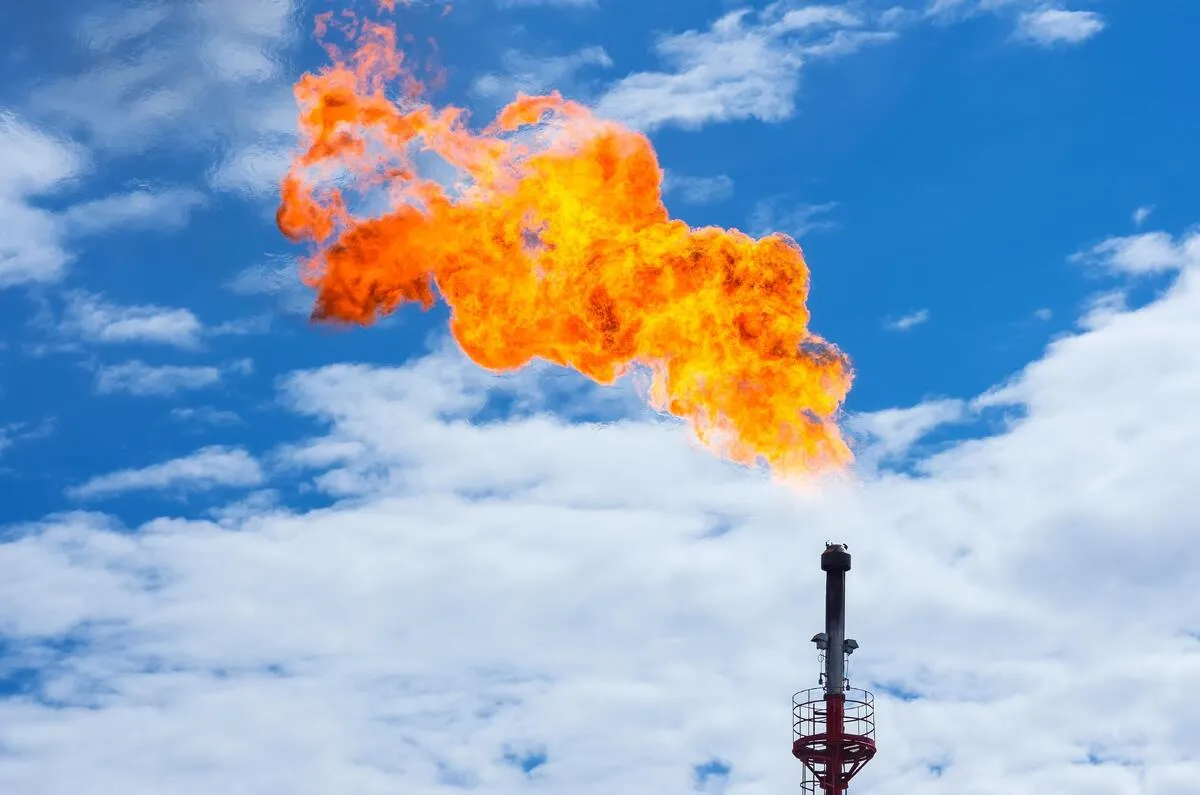
“The capacity to collect and process associated gases and flares is about 2 billion cubic feet equivalent to 57 million cubic meters per day in the form of 5 long-term plans and 14 sales auctions,” Ansari said.
He underlined that one of the main priorities of the oil ministry in the field of environment is the management of associated gases and flares and the reduction of atmospheric pollutants.
Ansari underlined the need for the oil ministry’s projects to reduce burning torches to reach full progress.
“Fortunately, 5 billion dollars have already been invested in this sector, and the capacity to collect and process associated gases and burners is about 2 billion cubic feet, equivalent to 57 million cubic meters per day, which will be implemented in the form of 5 long-term plans and 14 sales auctions,” he said.
Earlier, in January, the managing-director of an Iranian knowledge-based company had announced plans to gather and increase the pressure of flare gases from Marun 6 oil field in Southwestern Iran, saying that the goal is to prevent burning of oil gases and air pollution in the Southern cities of Iran.
“Considering the fact that nearly 1.2 billion cubic feet of gas is burned in the country every day, and Iran is one of the most polluting countries after Turkey and Iraq by production of flare gases, we gathered and increased the pressure of flare gases of the Marun 6 oil field because it is of great importance in terms of economy and environment in Iran,” Seyed Ezzatollah Hejazi told ANA.
“The purpose of implementing this plan is to prevent burning of oil gases and air pollution in the Southern cities of the country and to use them as petrochemical feed and gas for Iran’s gas network,” he added.
Hejazi said that no similar foreign sample of this product exists in the world, adding, “We have signed a contract with Armenia for export.”
Due to safety and control considerations, gas flaring is inevitable in chemical processes. In 2018, 17.3 billion cubic meters of flare gas had burned in Iran, which implies a significant economic loss and the emission of almost 150 million metric tons of greenhouse gases to the atmosphere. This significant amount of flaring has made Iran the third largest flaring country in the world.
4155/v


















