Iranian-made dental X-ray system competes with US and European models
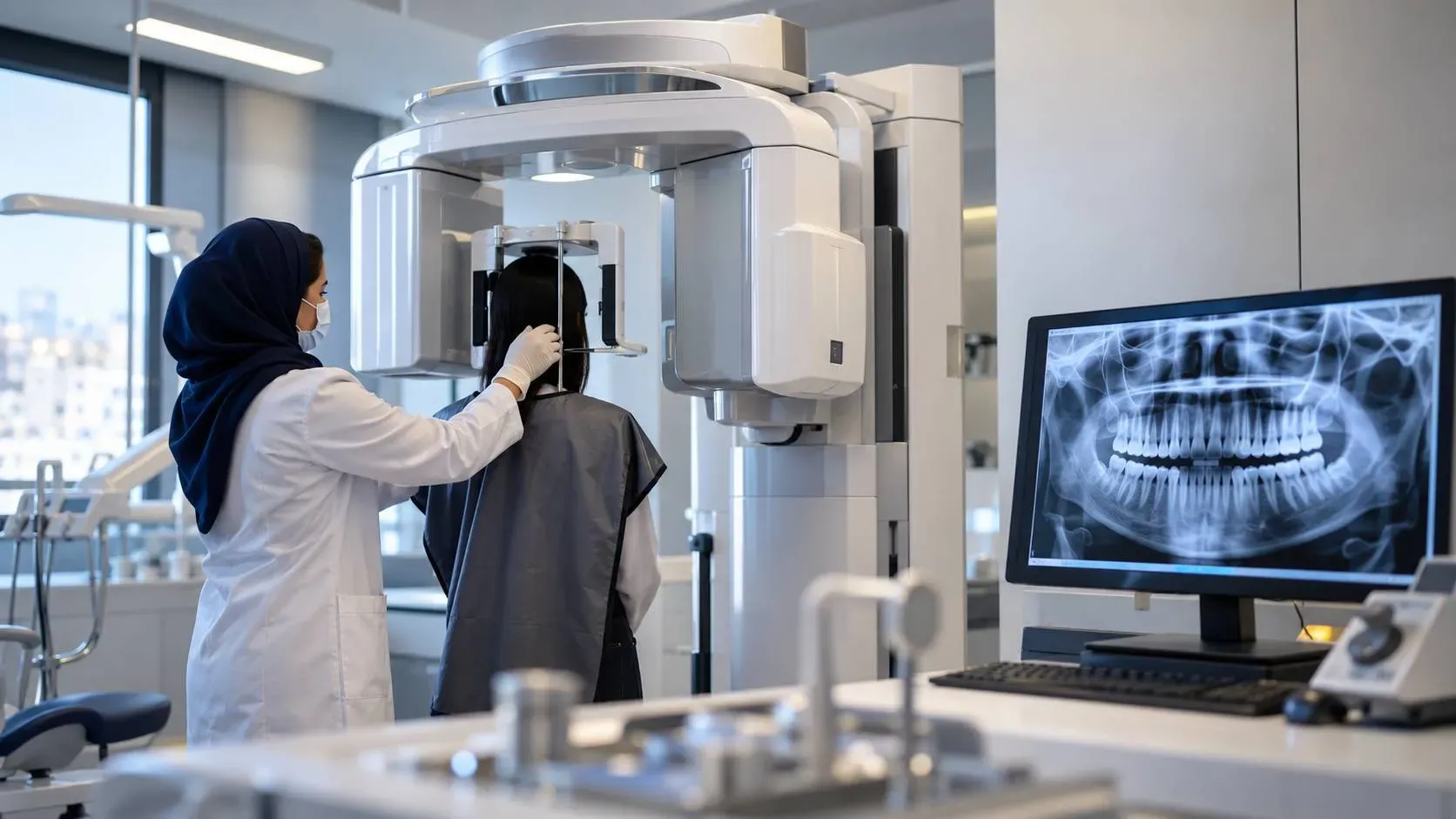
Hossein Nejatifar, CEO of knowledge-based company Nevsad Technology Qarn, said production of the dental radiography system began in 2021, adding that the device is manufactured entirely in Iran. Before its launch, the country’s demand for such equipment was met through imports.
He said the product has no domestic equivalent and can compete with the latest US and European dental radiography systems. “The quality of the device is such that it also has export potential,” he said.
Lower radiation dose through indigenous technology
Nejatifar said the system uses a focal-spot tube with a 0.4-degree emission angle, a type of tube manufactured by companies in Japan and Italy.
“We have also developed the device’s generator as a DC system,” he said. “A DC generator allows X-rays to be produced at the lowest possible voltage and milliamperage while delivering high-quality images with a lower radiation dose. As a result, the radiation received by patients is significantly lower than with analog and AC systems.”
Regarding imaging quality, he said the technology is proprietary, while the software, hardware, electronics and mechanical components have also been developed in-house.
“The device is calibrated as it leaves the production line so that its maximum error is below 0.1 percent, while the error rate of foreign systems is reported to be as high as 3 percent,” he said.
Proprietary light collimator technology
Nejatifar also highlighted the system’s light collimator technology, saying it is not used in any other device worldwide.
“The technology projects the angle and radiation field onto the patient’s face as visible light before the X-ray is emitted,” he said.
According to Nejatifar, this allows technicians to verify the patient’s position and the radiation angle before imaging. This can reduce positioning errors and the need for repeat scans, while preventing issues such as cone-cutting and double exposure.
He added that the system provides high-resolution images with high levels of sharpness.
Capacity to meet domestic demand
Nejatifar said the company has the capacity to meet the country’s entire annual demand for dental radiography systems. “Iran’s annual consumption is about 202 units, and producing this number is not difficult for our factory,” he said.
However, he pointed to challenges in the domestic market, including competition from importers operating through lobbying and import quotas.
“Given the influence of these networks, competing in the domestic market is difficult. That is why we decided to focus on expanding exports rather than entering this competition,” he said.
The CEO said the project began in 2021, while the product entered the market and reached mass production in 2023. “So far, 1,473 units have been installed across the country,” he said.
Regarding current exports, Nejatifar said the company’s exports have effectively fallen to zero due to closed borders and existing restrictions.
“We are therefore seeking to establish a production line in Oman so that we can continue our export activities and relocate part of our production capacity outside the country,” he said.
Foreign-exchange and supply-chain challenges
Nejatifar said securing raw materials and components remains a persistent challenge for the company.
“We face multiple challenges in obtaining raw materials. We wait for months to receive foreign currency, and then face customs and transportation problems during the import process,” he said.
“These problems have not been resolved and have even intensified over time. Every year, instead of resolving some of the existing challenges, new ones are added.”
Despite these difficulties, he said the company has retained its workforce and continued production.
“We have maintained our workforce and continued production despite all these challenges. We hope domestic consumers will support locally manufactured products, taking into account the current conditions and the quality of the product,” he said.