Ovarian Tissue Freezing Offers New Hope for Preserving Female Fertility
Infertility is a major global public health challenge. Its prevalence has been linked to factors such as lifestyle, environmental pollution and social changes. The World Health Organization (WHO) defines infertility as the inability to achieve pregnancy after 12 months of regular, unprotected sexual intercourse. The condition affects an estimated 10% to 15% of couples worldwide.
In Iran, infertility prevalence is estimated at nearly 20%. The issue appears particularly pronounced in urban areas, where delayed marriage and the challenges of urban living may play a role. Infertility has multiple causes, including hormonal fluctuations, ovulatory disorders, obesity, stress, reduced sperm quality and blocked fallopian tubes. Certain medical treatments, particularly chemotherapy and radiotherapy, can also directly damage reproductive function.
Several approaches are available to treat infertility. These include ovulation-induction medications, laparoscopic surgery and assisted reproductive technologies. The latter include in vitro fertilization (IVF) and intracytoplasmic sperm injection (ICSI).
However, women undergoing intensive cancer treatment may not have enough time to collect mature eggs before therapy begins. Medical circumstances can also prevent them from undergoing conventional fertility-preservation procedures. Ovarian tissue cryopreservation has emerged as an option for these patients and women with diminished ovarian reserve.
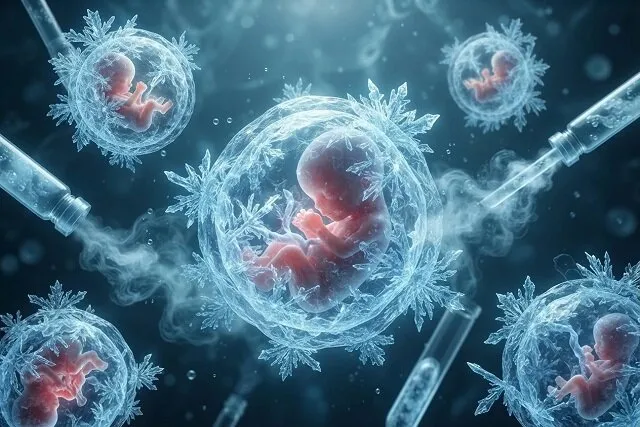
The procedure involves surgically removing a portion of ovarian tissue and preserving it at very low temperatures. After the patient recovers from the underlying illness, the tissue can be transplanted back into her body. The aim is to restore reproductive function using the patient’s own tissue, thereby avoiding the risk of rejection associated with donor tissue.
Against this background, Dr. Mohammad Reza Nateghi, from the Saream Research Center for Women, Obstetrics and Infertility, affiliated with Saream Super-Specialty Hospital and Iran University of Medical Sciences, conducted a comprehensive review with two colleagues. The study examined advances in ovarian tissue cryopreservation, existing barriers and future prospects, with a particular focus on fertility preservation.
The researchers used a review-based approach to develop a broad understanding of the field. They collected, classified and critically assessed existing scientific studies and findings. Their goal was to trace the development of the technology and evaluate its current status.
The findings indicate that ovarian tissue cryopreservation is an effective and promising method for long-term fertility preservation. Researchers have made considerable progress in tissue freezing and thawing techniques. These advances have improved the prospects for successful treatment.
Nevertheless, important challenges remain. These include reduced cell survival rates, difficulties in fully restoring tissue function after transplantation, ethical concerns and high treatment costs. The researchers emphasize that further improvements are needed to address these limitations.
The study concludes that research continues to refine the technology despite its technical and economic challenges. The authors suggest that ovarian tissue cryopreservation has the potential to become a routine clinical option in the near future. Such an approach could expand fertility-preservation opportunities for women at risk of ovarian damage.
Further developments may help improve outcomes. Researchers are investigating advanced cryoprotectants, substances that help prevent damaging ice crystals from forming in ovarian tissue during freezing and thawing. These compounds may improve tissue preservation and cell survival.
Other promising approaches include ultrarapid cooling, nanotechnology to improve heat transfer and stimulate cell growth, and tissue engineering. The latter may combine stem cells with three-dimensional cell-culture systems to support the restoration of transplanted ovarian tissue.
Advances in genetics and personalized medicine could also help clinicians select the most appropriate freezing method for each patient. Such decisions could be tailored to individual biological characteristics, potentially improving treatment outcomes.
The study was published in the Saream Medical Research Quarterly, affiliated with Saream Super-Specialty Hospital, and made available to the scientific community and the wider public.