New Nanosenors Detect Brain Cancer Types with High Accuracy and Low Cost
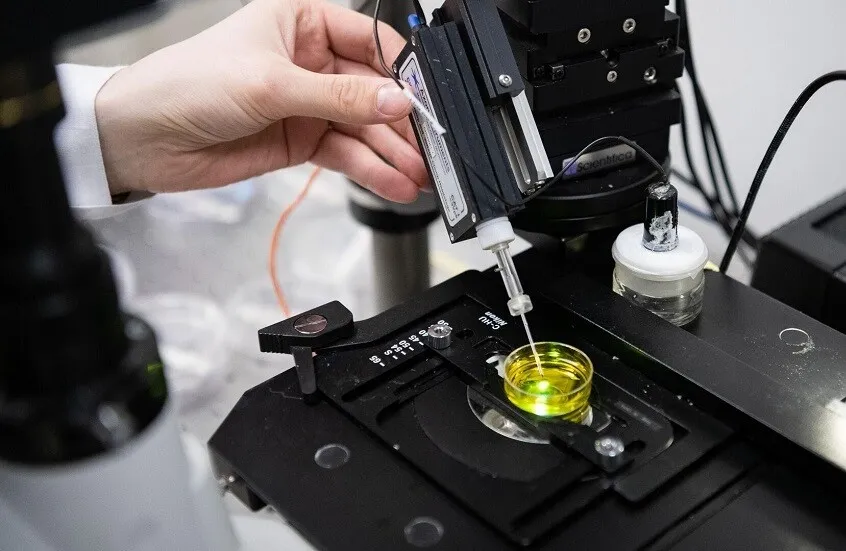
A team of American molecular biologists has introduced a novel diagnostic technology that can identify various forms of brain cancer in patients with remarkable precision. By analyzing characteristic protein features in blood samples, the system can determine tumor type while streamlining diagnosis and reducing costs, according to a study published in Nature Nanotechnology.
The research, led by Professor Daniel Heller at Cornell University, combines liquid biopsy techniques with machine learning. “Our system does not require specialized analytical methods or complex sample preparation,” the researchers explained. “It can utilize standard plasma samples collected during routine blood tests, achieving 98% accuracy in tumor detection and 71% accuracy in tumor classification.”
The technology relies on carbon nanotubes coated with DNA strands that bind selectively to specific biomolecules in blood samples. When these biomolecules attach to the DNA sequences, the nanotubes’ fluorescence properties change under laser illumination. This allows detection of extremely low concentrations of proteins and other biomolecules associated with brain cancer development.
Using this approach, the team developed DNA-based nanosenors that recognize proteins linked to gliomas, meningiomas, schwannomas, and other brain tumor types. Researchers tested the system on blood samples from 700 brain cancer patients and 200 healthy volunteers. Machine learning analysis revealed that blood composition features could identify brain cancer patients with 98% probability and accurately classify the tumor type in 71% of cases.
This innovation represents a significant step toward more accessible, cost-effective brain cancer diagnostics, potentially enabling earlier detection and personalized treatment strategies.